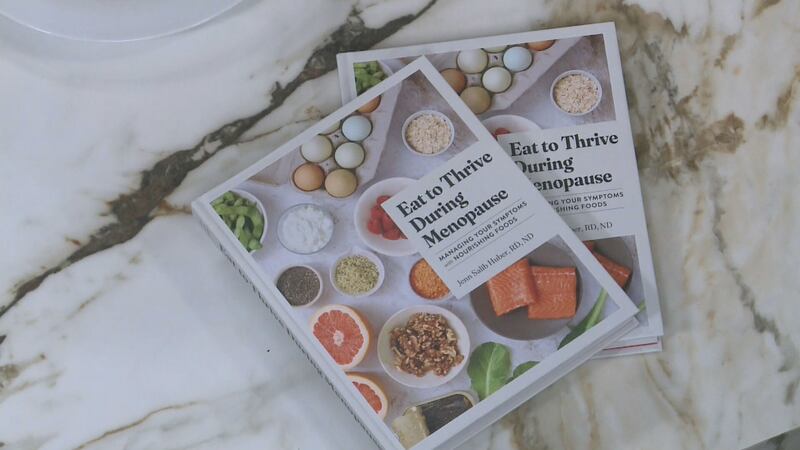
Jenn Salib Huber, a registered dietitian, naturopathic doctor, and certified intuitive eating counsellor says her new book “Eat to Thrive During Menopause: Managing Your Symptoms with Nourishing Foods” shares how food can help ease menopause symptoms.
“It’s the book that I needed 10 years ago. It really prompted me to look into the science of how food can help to ease our symptoms and make our life more comfortable, but more importantly support our health during this season of life,” Salib Huber told CTV Your Morning Atlantic’s Crystal Garrett on Wednesday.
According to Salib Huber, phytoestrogen-rich foods can help ease the vasomotor symptoms of menopause like hot flashes, night sweats and palpitations.
“Tofu, edamame, and flax seeds are good sources of phytoestrogens. Including foods like these in your diet can help to relieve and reduce hot flashes and night sweats,” she said.
Salib Huber says another common menopause symptom is sleep changes. She suggests adding more carbohydrates, protein, and calcium into meals.
“When we have protein with carbohydrates it helps it to get into your brain where it can be made into serotonin and melatonin which can help us to fall asleep and stay asleep more easily,” she said. “But calcium intake, which we can get in foods like cottage cheese, yogurt, dairy products and leafy greens like kale, is also associate with better sleep during menopause.”
Mood changes can be another symptom of menopause. Salib Huber says it important to support the brain and the heart.
“Foods rich in omega-3 fats are associated with better sleep, better mood, and better brain health. So salmon is a great source of omega- 3 fats. We can also get this from canned fish,” said Salib Huber. “Then we have nuts and seeds, walnuts, chia seeds, they provide the precursors that our body can make some of, not as much as fish, but still a great source of omega-3 fats.”
For more Nova Scotia news, visit our dedicated provincial page