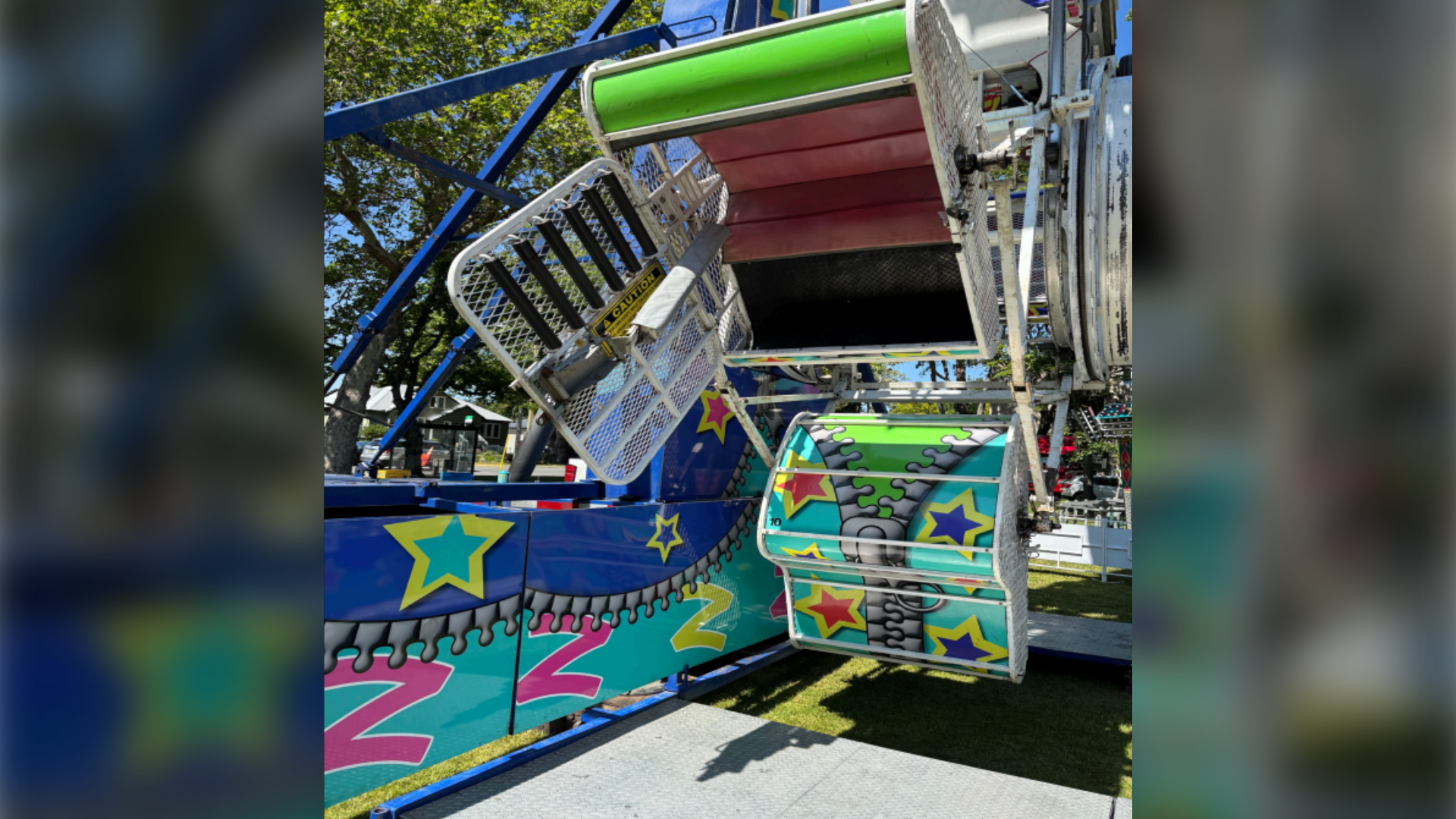
The fact that a 9-year-old child was unloading passengers off a carnival ride has been listed as a contributing factor in an incident where a patron fell out of an open car while the ride was in motion, according to a report from a B.C. safety regulator.
The Technical Safety B.C. report on the May 31 incident in Port Hardy says one of two passengers hadn’t exited The Zipper ride car when an operator activated the ride with the door wide open, and when the unit was six-to-eight feet in the air the patron fell to the ground, breaking multiple bones.
The ride was built in 1973 and consists of 12 cars attached to a boom, which rotates them simultaneously, the report explains. The cars each individually rotate as well, creating a swinging and rolling motion. The ride is activated by pressing and holding a single button.
The regulator noted that The Zipper is considered a “more advanced” ride to operate and is normally run by more experienced employees.
Despite there being a warning sign on the attraction saying people should not ride it while under the influence of drugs or alcohol, the two customers appeared intoxicated, one of the attendants telling investigators the pair were “hammered” and left a bottle of alcohol in the Zipper car. The injured patron had also been removed from the carnival the day prior.
At the time of the incident, the nine-year-old child of the foreman, who left to wash up, was helping passengers get on and off the ride along with one experienced operator. The child was described as “really good at cracking buckets,” meaning loading and unloading a cage-style ride, and had done the job on several occasions at multiple fair locations, according to TSBC.
“The younger attendant had been trained in the specific procedures of loading and unloading the (passenger carrying unit) but did not have the experience or assertiveness necessary to deal with situations that deviated from the normal routine,” the report reads.
The child told investigators the person who ultimately fell appeared “half asleep and half awake” but didn’t feel confident denying entry to the ride.
The intoxicated passengers rode The Zipper for one cycle, and their car stopped in front of the young attendant. One rider got out, but the second was “taking much longer than normal to exit the ride,” according to the report.
The older attendant loaded and unloaded their car and signaled to the operator the carrying unit was ready, but the child had not communicated to the operator that there was a passenger taking longer to get off.
The operator, who told TSBC they were “focused on the bucket in front,” pressed the activation button to move the next cars into the loading and unloading position without checking the other car was empty, investigators say, estimating the button was held down for about 2.5 seconds.
“The (passenger carrying unit) rose approximately six (to) eight feet as it would have with the door and lap bar in place. However, in this case, with the door opened, the weight of the door tilted the PCU forward and ejected the unsecured rider onto the ground below,” the report reads.
The foreman told investigators he believes the existing protocols and training are good but that seasonal refreshers and a spring-loaded button would help, saying “finger slip makes sense, I’ve done it, other people have done it.”
The regulator said factors that led to the incident included that there was no defined communication requirements between the attendants and operators to confirm that ride was safe to move, or an official policy for loading and unloading two carriers at the same time to ensure both cars are closed and locked.
The report also pointed to the fact that the operator usually has their fingers on the activation buttons constantly, “increasing the likelihood of unintended ride operation,” and that employees are given no formal training to assess whether a passenger is fit to ride.
In addition, the regulator noted the control panel requires only one button for activation and has no secondary or redundant switch to prevent inadvertent movement and there is no interlock between the restraints and activation of the ride, allowing it to move with the door open.

