The Ottawa Food Bank’s eighth annual Hunger Report says broken social systems are leading more people, including seniors and two-parent families, to turn to them for food.
The report, titled “Food Insecurity in a Broken System,” was released Friday. It says the number of visits to the Ottawa Food Bank has doubled since 2019, to nearly 589,000 visits in 2024. More than 25 per cent of households in Ottawa experienced food insecurity last year.
“Unfortunately, the numbers this year are numbers we never imagined were possible. We know that affordability is driving people to need a food bank, we’re seeing more people who are unemployed,” Ottawa Food Bank CEO Rachael Wilson told CTV News Ottawa at a press conference on Friday.
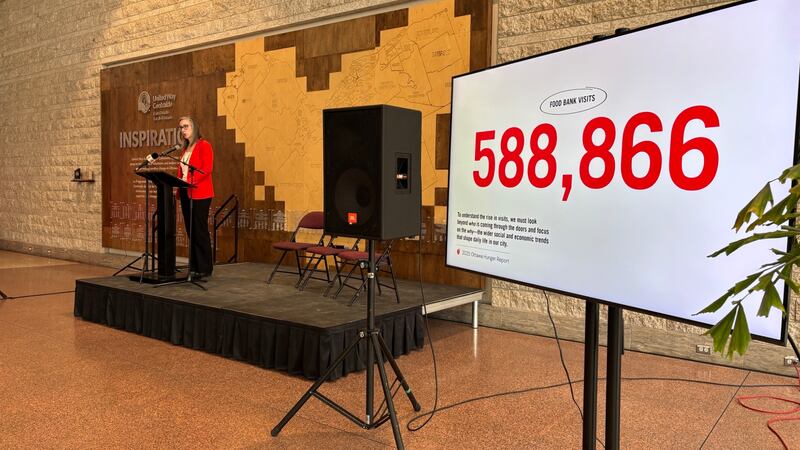
“Emergency food banks were never meant to be the backbone of a city’s social safety net. Yet the network of 71 member agencies has become just that — an essential service for thousands, without stable funding or recognition,” Wilson says in the report.
The report highlighted seniors, two-parent families, and newcomers as groups seeing a rise in food bank use. Visits by seniors are up 90 per cent compared to 2019, the report says, as the cost of living rises against their fixed incomes.
“By 2030, one in five Ottawa residents will be a senior — the fastest-growing age group in Ontario, with millions entering retirement in the coming decades. For many, these years bring growing food insecurity,” the report says.
“Ensuring older adults can age with security, community, and dignity will require continued attention, commitment, and systems change.”
Two-parent families represented 29 per cent of visits to the Ottawa Food Bank and its partners last year, up from 20 per cent in 2019.
“Many of these households are working, renting, and raising children, but cannot keep up with the rising costs of housing, childcare, and daily essentials. The sharp rise among two-parent families reveals a deeper issue: many earn just above the threshold for income-based assistance, but far below the real cost of raising children in Ottawa,” the report says.
Visits by newcomers to Canada have also nearly doubled, which the report says is a result of barriers and inequities built into Canada’s settlement, employment, and social support systems.
“This isn’t just a statistic. It represents real families struggling to put food on the table and afford basic needs. Food insecurity goes beyond empty bellies. It impacts physical and mental health, child development, and increases the risk of chronic disease,” Ottawa’s Chief Medical Officer of Health Trevor Arnason said.
Former Ottawa Food Bank user Jonathan Brizard says he knows first-hand the impact food banks can have.
“The first time I remember accessing the food bank is when I was a child. My parents struggled with addiction and because of that, we had to rely on the Ottawa Food Bank to get our food,” Brizard told CTV News.
Brizard says he relied on food banks and drop-in centres for 15 years, but after finding full-time work four years ago, he no longer uses the services.
“I was getting emotional just thinking back on my own life and my own struggles and the people that are here gathered to try to make changes,” Brizard said.
“It’s very heartwarming to see that the community cares about, the people are struggling and less fortunate.”
Broken social systems
The report’s theme of broken social systems focused on income, everyday expenses, and the cost of housing.
“Food insecurity arises when the cost of living — housing, food, and other essentials — outpaces income. These pressures are often beyond the control of individuals or families: they are systemic,” the report says.
It points out that the minimum wage of $17.60 an hour remains below what is considered a living wage of $23.40, enough to afford basic expenses and savings. For people on social assistance, such as Ontario Works (OW) or the Ontario Disability Support Program (ODSP), the gap is even greater. The average family of four receiving Ontario Works payments spends 67 per cent of its income on rent and 48 per cent on food.
“In Ottawa, a family of four receiving Ontario Works faces a monthly deficit of $1,017 after paying average new-tenant rent ($2,831) and the cost of a basic nutritious diet ($1,180),” the Ottawa Food Bank says.
The report points out that food prices have risen by 27 per cent since 2020, and rents have gone up 61.3 per cent since 2006, outpacing the growth in wages.
Amid all of this, food banks are struggling to meet demand. Seventy-two per cent of the Ottawa Food Bank’s 71 member agencies increased food purchases because of a decline in donations. The same percentage also reduced the amount of food given out in hampers and baskets to help serve more families. Twenty-nine per cent of member agencies reported having to turn people away because of a lack of food.
Demands of government
The Ottawa Food Bank is calling on all levels of government to do more to repair social systems and make life affordable.
It is asking the City of Ottawa to build and protect deeply affordable housing, make public transit more affordable and accessible, and expand funding to the Ottawa Food Bank and its member agencies.
“We don’t receive any provincial or federal funding. So, we rely heavily on donations in our community to make up that $30 million budget,” Wilson said.
The Ottawa Food Bank Network receives 77 per cent of its funding through private donations and 23 per cent from the City of Ottawa. It receives no provincial or federal funding. Last year, member agencies reported an operating budget of $158.4 million, with $121.5 million coming from private donations and grants.
It is asking the provincial government to raise social assistance rates and index them to inflation, invest in housing and rent supports, exempt federal supports from being deducted from Ottawa Works and ODSP, and strengthen tenant protections.
It is calling on the federal government to strengthen the Canada Disability Benefit, reform Employment Insurance, scale up affordable housing, create inclusive pathways to permanent status for long-standing temporary residents, and commit to reducing household food insecurity by 50 per cent by 2030, aligning with Food Banks Canada’s proposed national target.
“Food insecurity is a symptom of systems that aren’t working,” the report says. “It is the result of insufficient income and rising cost of basic needs — like housing, transportation, and food. Life circumstances that limit earning capacity or access to affordable services — like single parenthood, illness, or disability — can make things harder.”
Statistics
Who is supported by the Ottawa Food Bank Network?
- 40 per cent are single adults
- 9 per cent are seniors
- 29 per cent are two-parent families
- 16 per cent are single-parent families
- 32 per cent are newcomers to Canada
- 50 per cent live in private housing
- 35 per cent report their primary source of income as social assistance or disability-related benefits
- 11 per cent report their primary source of income as employment
Full report
RELATED STORIES:

