At a time when Canada is defending itself in a trade war with the U.S., a new report casts doubt on whether the nation’s immigration policy is able to retain the global talent required to bolster the economy on the home front.
Highly educated and skilled immigrants are the most likely to leave Canada within five years of landing, according to a new report commissioned by the Institute for Canadian Citizenship (ICC).
In a report released Tuesday titled “The Leaky Bucket 2025,” the ICC found that one-in-five immigrants leave Canada within 25 years of being accepted as permanent residents. The trend, referred to as “onward migration,” peaks at the five-year mark.
More alarming are the statistics that show that individuals with a doctorate are more than twice as likely to move away from Canada than people with a bachelor’s degree. That number grows to three times as likely when immigrants face job prospects that don’t provide income growth.
Daniel Bernhard, chief executive officer for the institute, says the increasing skepticism around immigration is leading to shrinking talent, which he thinks will hurt Canada’s ability to respond to its current economic challenges.
Prime Minister Mark Carney has set a goal for Canada to double its non-U.S. exports in the next decade. Bernhard says losing immigrants and their experience of working in countries outside the U.S. will hurt Canada as it aims to diversify its trade
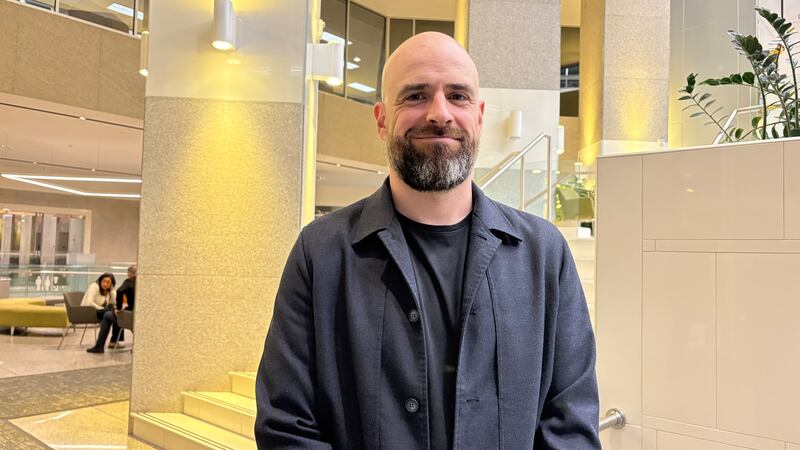
“These are the people who have built exactly the things – the railways, the infrastructure, the housing projects – in other countries, where they do it better than us, faster than us and cheaper than us. They’re the ones who can help us catch up. When we lose those people, we lose critical expertise that helps Canada succeed,” said Bernhard in an interview with CTV News.
In the 2025 Annual Report to Parliament on Immigration, the federal government chose to stabilize permanent resident admissions at 380,000 for the next three years, until 2028. The institute projects that if the current trend of onward migrations persists, 20,241 immigrants will leave Canada by 2031.
“The people who are uniquely positioned to help us realize our own goals, as declared by us, are the ones who are leaving the fastest,” Bernhard said. “This is not just the moral cost of selling a talented immigrant a false promise – this is avoidable self sabotage.”
The study points out that the fastest-growing occupations with the weakest retention are in the areas of business and finance management, information and communications technology, engineering and architecture management, as well as manufacturing and processing engineering.
The ICC’s stats show that experienced managers and executives leave at a rate of 193 per cent of the average rate for all immigrants, while immigrant health-care professionals leave at 36 per cent higher rates.
In crunching its numbers, the institute used data from Statistics Canada’s longitudinal database, which links immigration data with personal tax data. The sample includes people who were granted permanent residence between 1982 and 2020. It also included people who were granted permanent residence when they were 18 years or older, and have filed their taxes in Canada at least once since arriving.
Bernhard notes that more than 60 per cent of the newcomers reflected in the data are in the economic category who are granted permanent residence based on their ability to contribute to the Canadian economy.
The statistics also show that the trend of onward migration has not decreased in 40 years. Bernhard says this shows the government needs to develop a retention strategy, adding that immigration services are geared towards people who don’t speak English, but these are services highly skilled immigrants don’t use at all.
Bernhard also would like to see Immigration, Refugees and Citizenship Canada (IRCC) refocus its efforts from being a “bouncer” for Canada, and instead, become a human resource department for the country.
“Is (IRCC) the recruiter and making sure people come here and succeed or is it the security guard to make sure that the bad people don’t come in?”

