STOCKHOLM — CTV News is reporting from Sweden in the third of a multi-part series ahead of Swedish King Carl XVI Gustaf and Queen Silvia’s trip to Canada Tuesday.
As Swedish royalty landed in Canada, the battle over which fighter jets to add to this country’s military fleet revved up.
Executives from its national manufacturer Saab are along for the state visit of King Carl XVI Gustav and Queen Silvia, making a sales pitch for the Gripen, adding to rumours swirling about the Canadian Armed Forces considering a purchase of the Swedish aircraft.
- What Sweden can share with Canada about defence
- 10,000 new jobs could soon come to Canada, Swedish manufacturer says
Proponents of the F-35 have launched a counter-offensive, saying the advanced fifth-generation stealth fighter is best suited to Canada’s needs, and that it would allow smooth operability with U.S. Forces also flying the F-35 to best protect North America.
On Friday, Saab showed off the Gripen E to CTV News on a tarmac in Sweden. The head of flight test pilot, Mikael Olsson, described the jet as an easy-to-handle aircraft with a small footprint, and he praised its software, over which Canada would have control.
“State-of-the-art systems are acting here,” says Olsson.
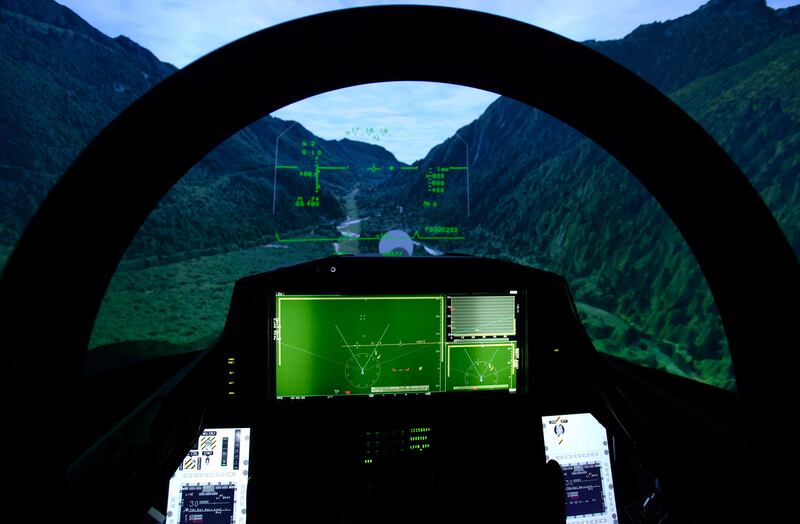
Part of the company’s sales pitch is that the jet is perfectly suited to protect the Arctic.
“We designed a system to withstand the extreme, max cold, minus 40, minus 45 degrees Celsius,” says vice-president and head of business unit for Gripen, Johan Segertoft. “We are able to land on a road packed with ice and be able to turn around in ten minutes to refuel with a minimum crew.”
Saab also confirmed that it held talks with Canadian companies, including Bombardier and CAE, about assembling fighter jets on Canadian soil that could create ten thousand manufacturing and research jobs, the company says.
Saab also told CTV News that it held talks about fully assembling its GlobalEye airborne early warning and control system, a surveillance plane, in Canada. A deal would be contingent on Ottawa adding some of the GlobalEyes to its fleet. The Swedish company says this could potentially translate into three thousand jobs in Canada.
Currently, Saab uses a Bombardier long-range business jet, outfitting it with advanced surveillance equipment in Sweden.
“Its space platform is the Global 6500, and with that, Saab has added its advanced sensors,” says the GlobalEye’s chief flight test engineer Weston Pike, who is from British-Columbia. “This coordination has been ongoing for a long time and has been very successful. So, it is nice for that to continue, and it would make sense for all that to come to Canada.”
But some defence contractors say a deal with Gripen that would see fewer F-35’s within Canadian military ranks could also cost jobs, and that the economic fallout of anything less than an 88 F-35 fleet would be significant.
Canadian Aerospace company L3 Harris focuses on aircraft maintenance in Mirabel, Quebec.
“Here, we are talking about preserving the jobs of 1,600 Canadians today, and the creation of an additional 5,000 jobs for the F-35,” says Jon Rambeau, president of the Integrated Mission Systems segment for L3 Harris.
The company has been in talks with Maryland-based Lockheed Martin, the F-35 manufacturer, about setting up a maintenance hub for Canada’s F-35 as well as a portion of the U.S. fleet.
“I am confident that if Canada is to move forward with the full purchase of the F-35’s, there is a very high probability that opportunity will be there in the future,” says Rambeau.
In 2023, Canada finalized a contract to purchase 16 American F-35’s, which are assembled in Fort Worth, Texas, with an option to scale up to a total of 88 to replace its ageing fleet.
But Ottawa announced a review of the deal earlier this year in the middle of a trade war with the U.S. and has not ruled out buying fighter jets from several companies. This launched speculation that Canada could reduce its order of F-35’s and run a dual fleet including Gripens.
Industry Minister Melanie Joly said that she considered SAAB’s offer to create 10,000 jobs, which she characterized as an “unsolicited bid,” an interesting proposition.
“I don’t believe that we have had enough jobs created and industrial benefits done out of the F-35 contract. I think it is not enough,” said Joly.
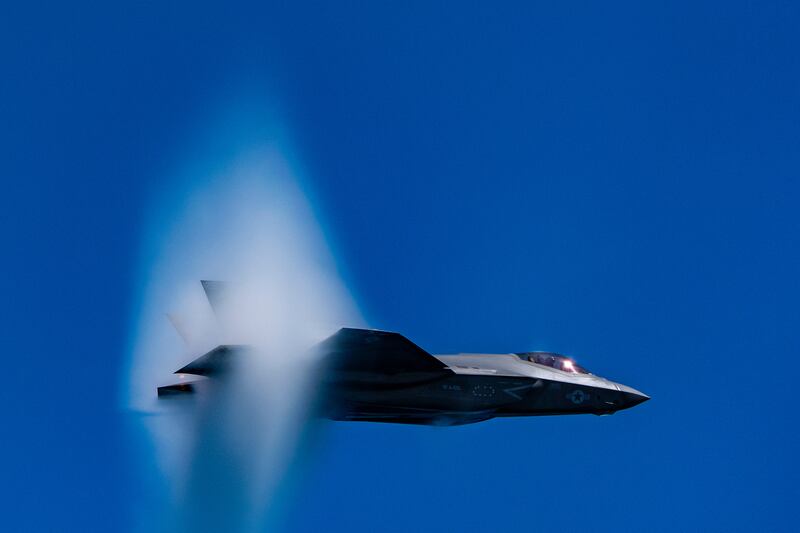
In a statement to CTV News, F-35 vice president and general manager of Lockheed Martin, Chauncey McIntosh, said that to date, over 110 Canadian companies have contributed to the aircraft’s supply chain, and that approximately 30 Canadian suppliers are now active in that chain.
“We expect to produce over $15.5 billion in industrial value for Canada. That includes current and projected production and sustainment opportunities since 2007 and spanning through 2058,” said McIntosh. An estimate Chauncey says have been third-party verified and based on an 88 F-35 Canadian fleet.
“Many of our Canadian suppliers have gained additional work in this space and on other international programs as a result of the capability and experience they’ve gained being part of the global F-35 program,” Chauncey added in the statement.
An order paper question tabled in Parliament on November 3rd shows that if the Canadian government makes changes to its Memorandum of Understanding with the U.S., potential liabilities linked to the changes would need to be assessed and negotiated.
The first 8 F-35’s already purchased are set to be delivered for Canadian aircrew training from the end of 2026 to mid-2027.
The timing for a final decision from Ottawa on whether Canada will go ahead with its original plan to run an 88 F-35 fighter fleet or run a dual program including or adding the Gripen remains elusive.

