One day after the House of Commons passed the federal budget, Government House Leader Steven MacKinnon says federal public service job cuts will be “minimal.”
“I believe that the impact on people – involuntary departures – will be minimal, and that is certainly a desirable thing,” MacKinnon said in an interview with CTV Power Play with Vassy Kapelos on Tuesday.
“We believe in their contributions, and we have a lot of work to do,” he added.
Finance Minister François-Philippe Champagne unveiled the federal budget on Nov. 4 – the first under Prime Minister Mark Carney – which outlined a plan to reduce the size of the federal public service by 40,000 people. This would be done through job cuts, attrition, and early retirements, from its peak of 367,772 employees in March 2024 to 330,000 by 2028-29.
But according to figures from the Treasury Board Secretariat, the federal public service has already downsized by about 10,000 employees between 2024 and 2025, meaning another roughly 30,000 positions will need to be cut over the next five years.
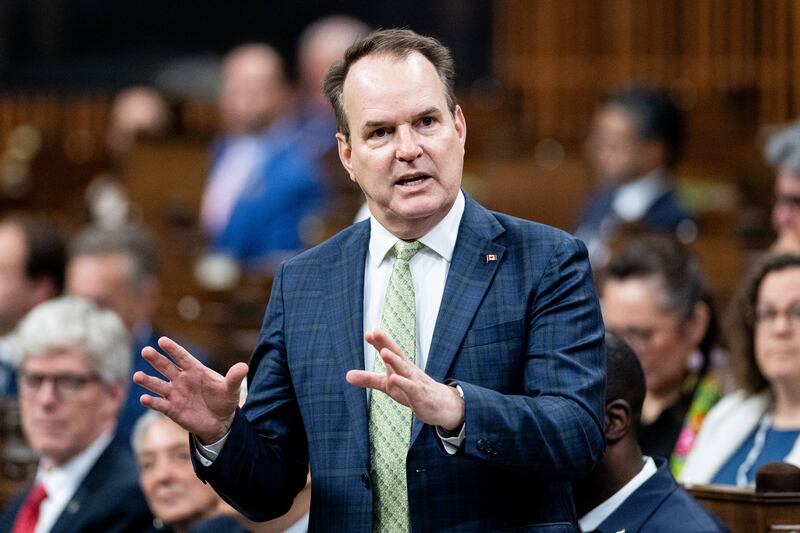
Asked directly by Kapelos how many current public servants will lose their jobs, MacKinnon said “we don’t know that.”
“There is natural attrition. It’s hard to predict, although there are historical patterns,” MacKinnon said. “There will be a voluntary retirement package that people will be able to access, and that may well accelerate retirements and hence avoid layoffs.”
Pressed by Kapelos on whether attrition and early retirement incentives will be enough to hit the federal government’s job cut targets, MacKinnon insisted the federal government did not go into its spending review with the “objective of people losing their jobs.”
“We would find that regrettable if (job cuts) were widespread. I believe it will be minimal,” MacKinnon said.
“I believe that we’ve approached this with a scalpel and not a hacksaw like others would bring to this job. We’re going to make sure that we have a robust public service that can help us deliver on this budget and on our priorities.”
‘Some trimming is reasonable’: MacKinnon
While the federal budget outlined job cuts, Carney had pledged during the federal election campaign that the Liberal government would cap and not cut the public service. He also signalled in the fall that public service cuts – or what he called “adjustments” – would happen through attrition.
The federal budget, meanwhile, outlined $60 billion in operating savings over five years through its expenditure review – with $9 billion in savings for 2026-27, $10 billion in 2027-28 and $13 billion in 2028-29.
But speaking to CTV News prior to the budget, some analysts said attrition alone would not be enough for the federal government to meet its fiscal targets.
In an interview with CTV Power Play in September, interim Parliamentary Budget Officer (PBO) Jason Jacques called that prospect “highly unlikely.”
Former PBO Yves Giroux also told CTV Question Period in October that he did not think the federal government’s spending target could be “achieved through attrition.”
When pressed again by Kapelos on whether he can quantify the public service job cuts for Canadians, MacKinnon did not provide a figure, saying “the public service is a complex organization.”
“We have a plan that we think minimizes the impact on public servants, but we also have a sizable deficit,” he also said, later adding that “some trimming is reasonable” due to the growth of the public service since the COVID-19 pandemic.
The impacted departments and the number of job cuts within those departments were not specified in the budget.
Speaking to reporters on Tuesday, Public Service Alliance of Canada (PSAC) president Sharon DeSousa says the union has not received any new information about possible job cuts since the federal government tabled its budget.
“The budget just passed. We expect that our members will be notified by their managers shortly,” DeSousa told reporters.
The federal budget includes $1.5 billion over five years to cover early retirements, but DeSousa said it’s unclear how many federal public servants will accept an early retirement package.
You can watch the full interview with Government House Leader Steven MacKinnon at the top of this article.
With files from CTV News’ Spencer Van Dyk and CTV News’ Josh Pringle

