Alberta’s government is facing mounting criticism after invoking the notwithstanding clause for the second time in weeks, this time to shield three laws affecting transgender and gender-diverse Albertans from legal challenges.
The move comes during Trans Awareness Week, a time meant to highlight visibility and support. Instead, many in the community say they feel more exposed and less protected than ever.
“It was a real gut punch and we’re reeling. It’s been a very heavy, difficult few days,” said Marni Panas, a Canadian certified inclusion professional based in Edmonton.
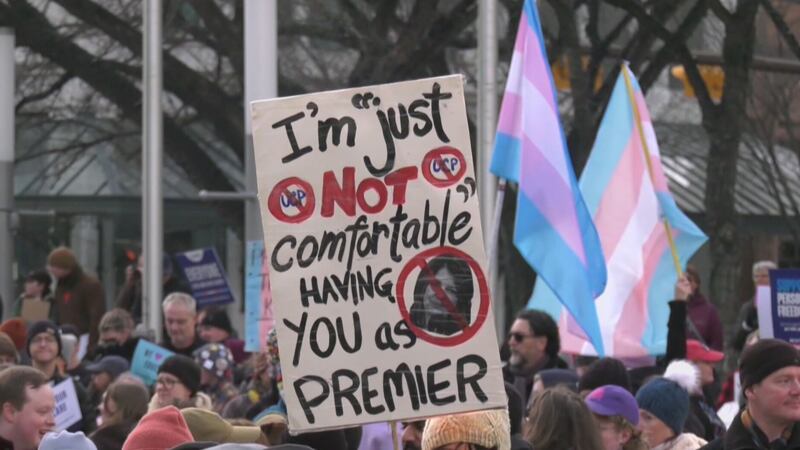
The province invoked the notwithstanding clause as part of Bill 9, which introduces sweeping restrictions including:
- A ban on hormone therapy for youth under 16 years of age and gender-affirming surgery for those under 18;
- Required parental consent for pronoun changes in schools;
- Making sexual-health classes “opt-in” only; and
- Barring trans athletes over 12 years of age from competing in female sports, requiring proof of gender at birth.
The UCP says it consulted teachers, doctors and coaches on the legislation.
Alberta Justice Minister Mickey Amery defended the government’s decision.
“We’ve heard from Albertans, and they expect us to deliver on our mandate to protect young people and their families,” he said.
“We will not apologize for putting our children first.”
Just weeks ago, the UCP used the notwithstanding clause to end the province-wide teachers’ strike, a pattern that alarms constitutional experts.
Kathleen Mahoney, law professor at the University of Alberta, says there are “broader implications of this.”
“Once you can violate the fundamental rights and freedoms of one group, it’s a slippery slope to going to the next group that you don’t like or that you think might make you politically popular with some in your party,” said Mahoney.
Transgender advocates also argue the clause is being used too broadly and too frequently and warn that today’s target could set the stage for future rights violations.
“Yesterday it was teachers, today it’s transgender people. Who’s next?” Panas said.
“By normalizing the notwithstanding clause, by normalizing its use to protect harmful legislation targeting communities, we are weakening the foundation of our democracy,” said Aaden Pearson, a lawyer with the Canadian Civil Liberties Association.
“That’s something all Canadians should be concerned about.”
The broader legality of such moves may soon be tested. Rowan Morris, founder of Trans Rights YEG, notes two Supreme Court cases, one involving Quebec’s Bill 21, which restricts certain public sector employees from wearing religious symbols, and another involving Saskatchewan’s use of the clause to restrict pronoun changes in schools, could set important precedents.
“Those cases are likely going to have an impact on what happens in this (Alberta) case,” Morris said.
Morris added that seeing the province target “such a small, vulnerable group” has left many in the community shaken.
“We’re just trying to live our lives in peace and in our own lane.”

