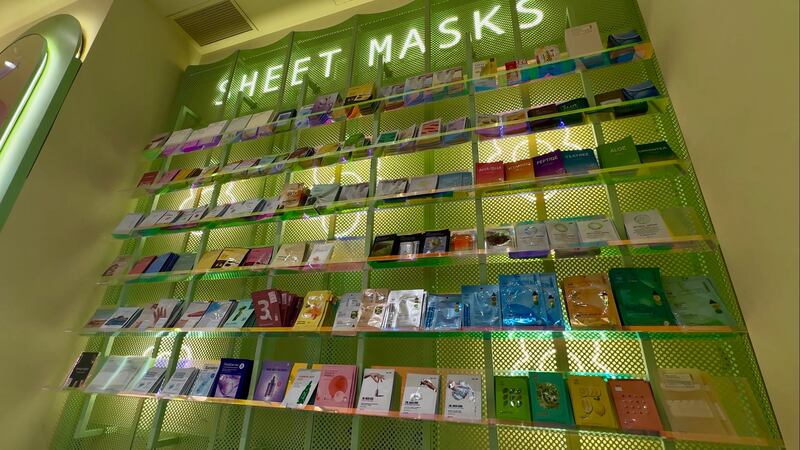
In the middle of a trade war with the United States, Sukoshi, a Toronto-based beauty retailer armed with walls of collagen jelly and snail mucin face masks, is expanding south of the border.
While Donald Trump’s tariffs may have put a chill on other sectors, it isn’t stopping Sukoshi’s ambitions to be the biggest purveyor of Asian beauty products and become the Canadian equivalent of Sephora globally.
Sukoshi already has 16 stores, including two in the U.S. The company has plans to more than double the number of stores it has by the end of 2026 and triple it a year later.
“We want to make Canadians proud,” said Sukoshi CEO Linda Dang in an interview with CTV News. “We want to be the first movers in the space.”
Seventy per cent of the skin care and cosmetics Sukoshi sells is from Korea, followed by products from Japan and China.
“There is so much market demand right now, and especially in the U.S. there is so much opportunity for growth,” said Dang. “So, we’re filling out the rest of Canada. We’re expanding to the West Coast and we’re also expanding across the U.S. in all the major cities.”
Niche market amid a trade war
In September, the company opened a store in New York’s Upper East Side and will be expanding to Miami, Atlanta, Philadelphia and Seattle, just in time for the Christmas rush.
Prior to the interview, Dang had just returned from Manhattan, where she met with fund managers to pitch further growth.
Sukoshi wants to open another 20-40 new stores in the U.S. in the next two years. Dang said she was “surprised” by the level of interest in what Sukoshi could accomplish.
“We have an opportunity to be a category leader. We already work with hundreds of brands, thousands of SKUs (stock keeping units) … and we have insights on where the trends are going. We know the market.”
While some, including former Bank of Canada governor Stephen Poloz, suggest Canada and the U.S. are headed towards an economic downturn, retail analyst Bruce Winder says Sukoshi is in a category that is “bucking the trend.”
“Based on the prevalence on social media – skin care and beauty products – especially for younger people, Gen Z and Alpha, that’s a growth area.”
Winder says he’s impressed by the “vibe” of the stores and that it appears Sukoshi has found a way to be relevant to young consumers who can be extremely fickle.
“That’s the interesting thing, (Sukoshi) may have an interesting niche. Depending on the margins of their product, they may even be able to make a profit even with tariffs,” Winder said.
Cultural relevance
The Trump administration has imposed different tariffs on different countries. Instead of passing on the costs to customers, Dang says Sukoshi has offered to help the Asian brands market expand its presence in exchange for stabilized prices.
She says a key to her company’s success is “connecting” with the K-pop community and turning them into loyal customers.
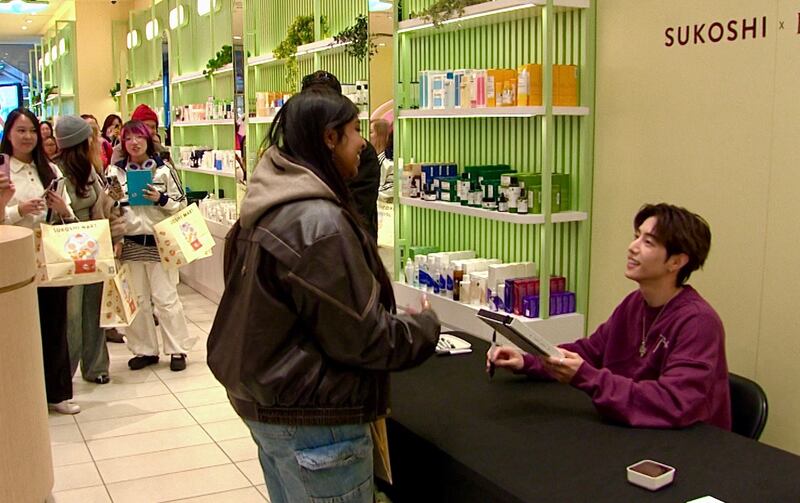
That connection was on display last week at Sukoshi’s flagship store in Toronto’s Eaton Centre, where 150 raffle winners, mostly excited young women, waited patiently in line to see K-pop star Mark Tuan, the Taiwanese American band member of Got7.
They were clutching Tuan’s solo album that they purchased from the store and queued for several hours to get the singer’s autograph.
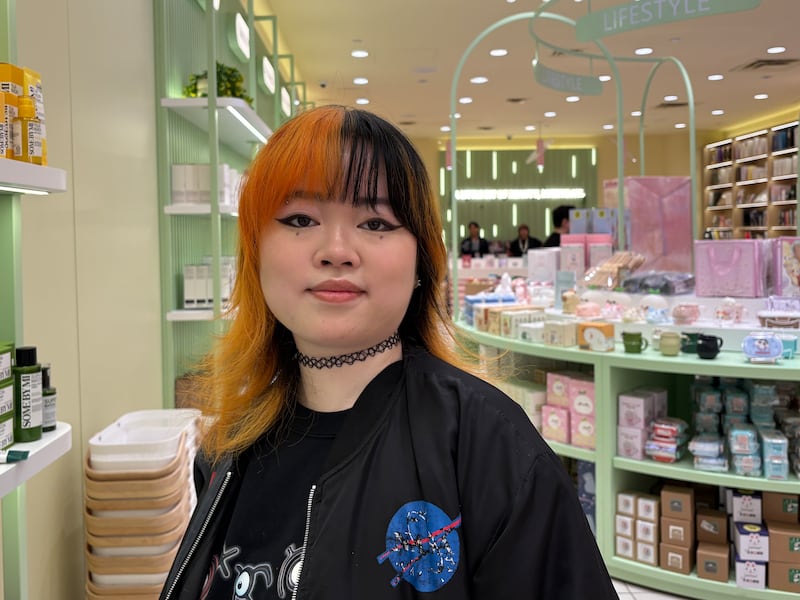
The popularity of K-pop has attracted more customers to peruse Sukoshi’s aisles of cosmetics and creams, including Mars Lun.
The young woman with flame-coloured hair and pinpoint eyeliner started shopping for K-beauty after learning about the music.
“I was definitely more interested in it when K-pop started booming,” said Lun. “BTS and Blackpink, they started getting so popular and everyone was like these people are so beautiful.”
Sukoshi employees often notice Gen Z customers will come into stores in search of a product that has gone viral, according to Dang.
Dang points out that there are 70,000 beauty brands from South Korea alone, so it can be challenging to keep up with the latest trends.
“The technology, the innovation and the speed for manufacturing is incredible.”
That’s why Dang says it’s important that her company of 500 employees, 95 per cent of whom are female, focus on educating customers about the products they want to buy.
With its Canadian roots, powered by a cultural phenomenon, Sukoshi is venturing deep into the United States, undaunted by a trade war.