A new report calls for the implementation of a Manitoba Red Dress Alert System as early as next year in an urgent push to prevent further harm to Indigenous women, girls and 2SLGBTQQIA+ people.
The call comes in a final report issued Tuesday by Giganawenimaanaanig, the group tasked with developing the province-wide system.
“In the last five years alone, 104 Indigenous women, girls, and 2SLGBTQQIA+ relatives have been murdered in Manitoba. That number is already equal to the total number of our loved ones lost in the entire preceding decade,” Giganawenimaanaanig chair Sandra DeLaronde wrote in the report.
“This is a crisis that demands coordinated, urgent action.”
The system is proposed to function like an Amber Alert to trigger a swift and effective response any time a First Nations, Métis, or Inuit woman, girl or 2SLGBTQQIA+ person goes missing.
The report outlines key findings heard during 43 engagement sessions in communities across the province, an online survey and recommendations from national and provincial inquiries and reports. It also analyzes similar alert systems already in use across the globe.
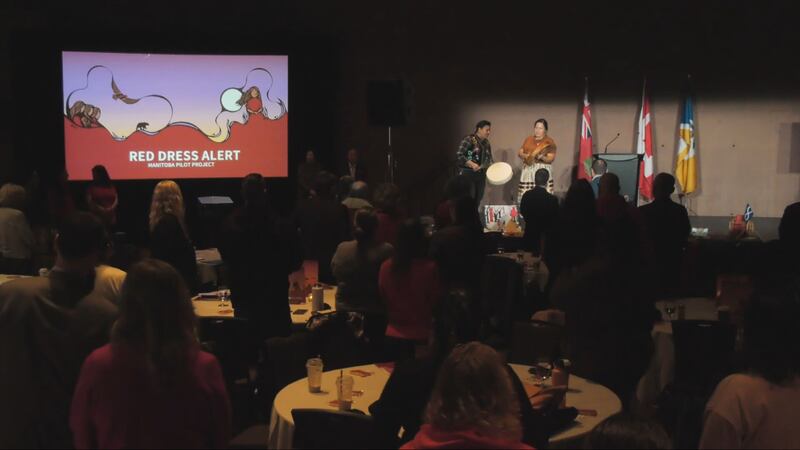
The group heard that communities want an Indigenous-led system that is coordinated with police and other key organizations to issue the public alerts. It should also have the capacity to help impacted families and communities access culturally safe, trauma-informed supports.
The report also outlines a multi-phase blueprint to bring the system online. Among the recommendations are a 24/7 call centre, support for searches, central and regional offices, and continued federal and provincial support so the system can be fully operational province-wide by 2026.
“Families and communities have made themselves clear: they have told us they want a Red Dress Alert System in place immediately. With the release of this report, we bring that same call to our partners in government,” DeLaronde wrote.
‘They listened to us’
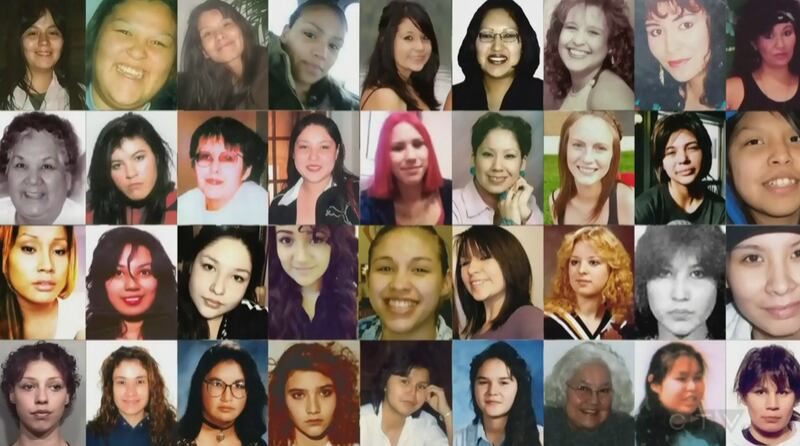
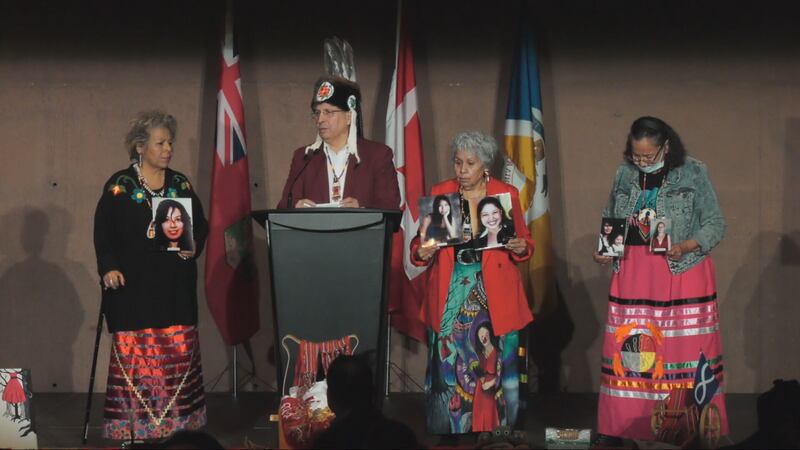
The report was unveiled at a news conference Tuesday at the Canadian Museum for Human Rights. Photos of dozens of murdered or missing Indigenous Manitoba women and girls were displayed on a candle-lit table.
On stage, their loved ones spoke of how each lost life traumatized families and communities.
“We’re struggling on a day-to-day basis to climb out of that crisis, but our people are resilient. We’re still here. We’re still fighting. We’re still moving forward to make our communities strong,” said Sagkeeng First Nation Chief E.J. Fontaine.
Sagkeeng Anicinabe Nation member Marily Courchene recalled how Thelma Favel fought over a decade ago to get help for her teenage granddaughter Tina Fontaine, who she feared was living in danger in Winnipeg.
“She called different districts and they kept hanging the phone up on Thelma, saying, ‘She’s not ours. She’s not our problem,’” Courchene recalled.
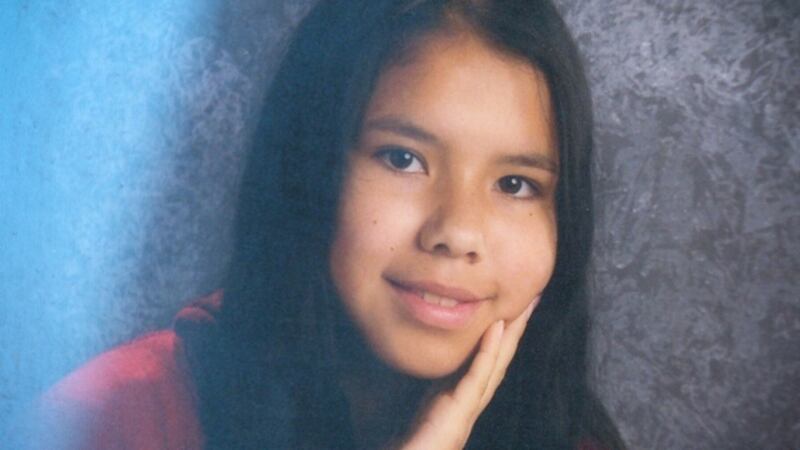
The 15-year-old girl was pulled from the Red River on Aug. 17, 2014. Her death horrified the country and became the catalyst for a national inquiry into missing and murdered Indigenous women and girls.
Over a decade later, Courchene said the crisis persists, but this report gives her hope.
“It’s so comforting,” she said. “They came to see us. They came and listened to us. They came and asked us what we need, and our families told them.”
Winnipeg Police Chief Gene Bowers pledged his support for the report’s findings, saying he believes the Red Dress Alert System will help address systemic gaps across the province.
He said it is important to acknowledge that the relationship between police and Indigenous communities has been strained and marked by harm and mistrust.
“We will continue to take action to restore relationships and culturally appropriate collaboration,” he said.
Province to begin ‘preliminary discussions’
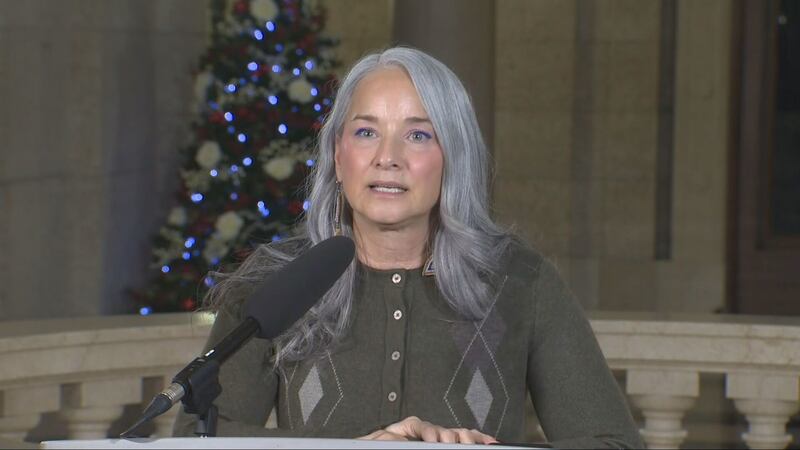
Manitoba Families, Accessibility and Gender Equality Minister Nahanni Fontaine said she plans to meet with Giganawenimaanaanig to talk about next steps.
“This is just a report. It’s not an ask of (the) province right now, so we’re going to have those preliminary discussions with Giganawenimaanaanig and their team and we’ll see what that might look like in Manitoba,” she said.
A spokesperson for Canada’s Minister of Indigenous Services Mandy Gull-Masty told CTV News her office has received the final report and is looking forward to reviewing it.
The full report can be read on Giganawenimaanaanig’s website.
With files from The Canadian Press

