Canada’s fisheries have reached a “decisive moment,” according to a new report.
Advocacy group Oceana Canada released the ninth annual fisheries audit of Canada’s fishery sector on Tuesday. It found some fish are making a rebound, but many others are not.
Rebecca Schijns, a marine fishery scientist with Oceana, says while there is stronger science, clear laws, and progress in fisheries monitoring, only one-third of all stocks are confidently in the “healthy zone.”
“And only 30 out of nearly 200 marine fish stocks that are fully protected by the modernized Fisheries Act, so we’re still lacking important building plans for depleted stocks and there’s still some gaps in both monitoring and science,” she told CTV Atlantic’s Todd Battis.
“So really right now, at a time of economic uncertainty, climate volatility and global trade friction, it’s essential to focus on rebuilding healthy fisheries.”
The report also indicates there are still cases of mismanagement for key stocks like capelin, northern cod, and Southwest Nova Scotia/Bay of Fundy herring.
“This is an underperforming sector, leaving money, jobs, and food off the table by failing to rebuild key species, so we really are at a time where we have all the tools, and it’s about using those tools to ensure that there’s a legacy of abundance and a diversity of fish stocks to depend on,” Schijns said.
Schijns adds Canada’s seafood economy is heavily reliant on a few trading partners and few species.
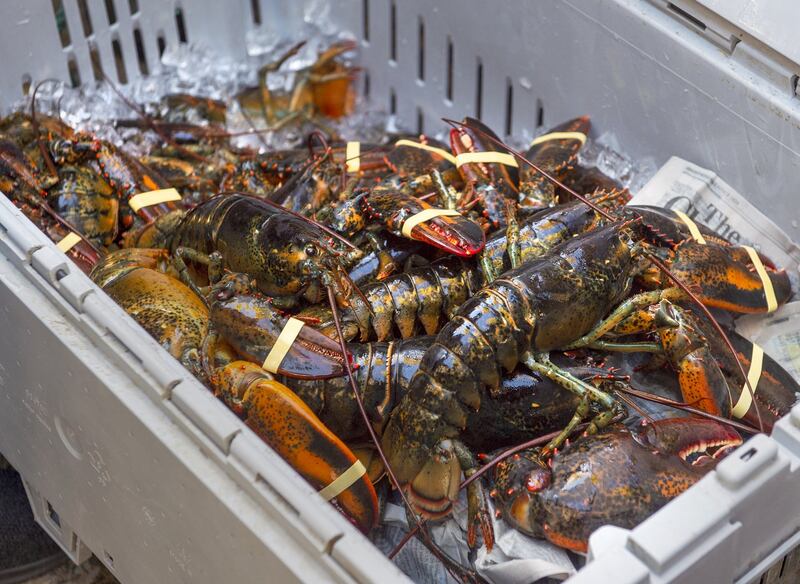
Four types of shellfish — lobster, shrimp, snow crab and scallops — generate 77 per cent of landed value.
“We really need to be looking to rebuild the foundation, these ecosystems, healthy groundfish and healthy forage fish, so that markets are able to develop and can withstand changes from both global economics and these trading relationships, but also climate volatility, because healthy oceans are a buffer against climate change,” said Schijns.
In the report, Derek Butler, the executive director of the Nunavut Fisheries Association, says “counting fish is easy, except they move and you can’t see them.”
“You have to do the annual science, the continual assessment work, to understand what the resource is doing,” he added. “As the climate changes, we need to make sure we’re doing that annual work. If we miss years, we end up like Alaska. They missed a survey year, and when they checked again, literally the snow crab was gone.”
Schijns says, while there has been progress in more up-to-date assessments, there are still some critical gaps, as well as gaps in fisheries monitoring.
“We have a good foundation for science for a lot of these stocks, but it’s really about ensuring that the management decisions reflect both the science and the policies that Canada is accountable for, and with that we can ensure that there’s predictable, profitable fisheries from now and into the future,” she said.
Oceana says Canada can restore healthy fish populations within a decade.
Schijns says the modernized Fishing Act should be fully implemented to deliver benefits to coastal communities and the fishing industry sooner.
“Every year of delay defers recovery. It can prolong losses and inflate future costs. We have to remember that rebuilding fisheries, it’s a long-term investment and it’s a correction to historical overfishing, and so there has to be patience and following the science to achieve those goals, but with these stocks that do have rebuilding plans, some of them can recover within a decade to healthy levels,” she said.
The full report is available online.