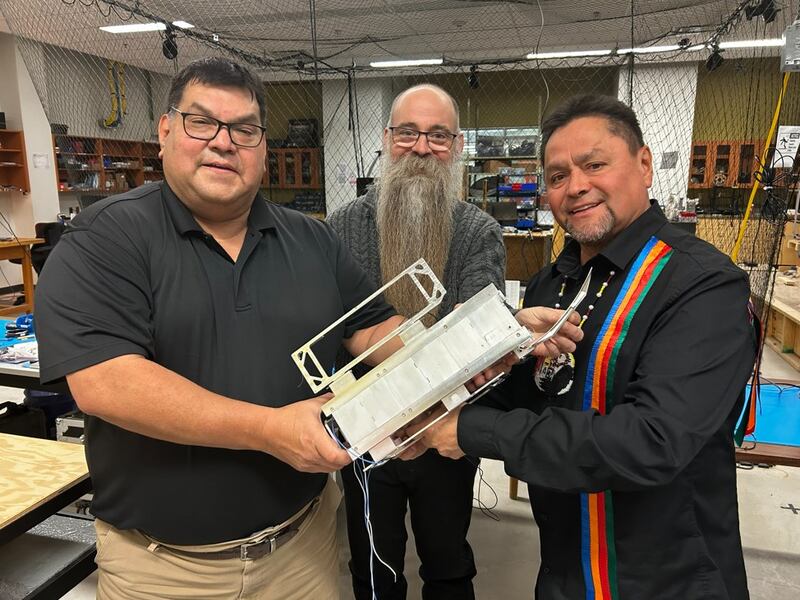
Manitoba researchers are building a satellite that will go to a place where no other Canadian spacecraft has ever gone before: the moon’s orbit.
The University of Manitoba’s STARLab team, alongside Magellan Aerospace, are developing a CubeSat, a milk-carton sized satellite that will not only orbit the moon, but will also map and collect data about the lunar surface.
Through the Canadian Space Agency’s Lunar Exploration Accelerator Program (LEAP), a $6.9-million contract has been awarded to Magellan Aerospace to undertake this project.
It will be the first time a Canadian-made satellite will be sent to the moon.
“Canadian technology has been on the moon before,” said Philip Ferguson, the director of STARLab. “The first thing that touched the surface were the landing feet of the Apollo 11 landing module that, of course, sent Neil Armstrong and Buzz Aldrin to the moon.
“But this is the first time that Canada has ever put a satellite in orbit around the moon,” he added.
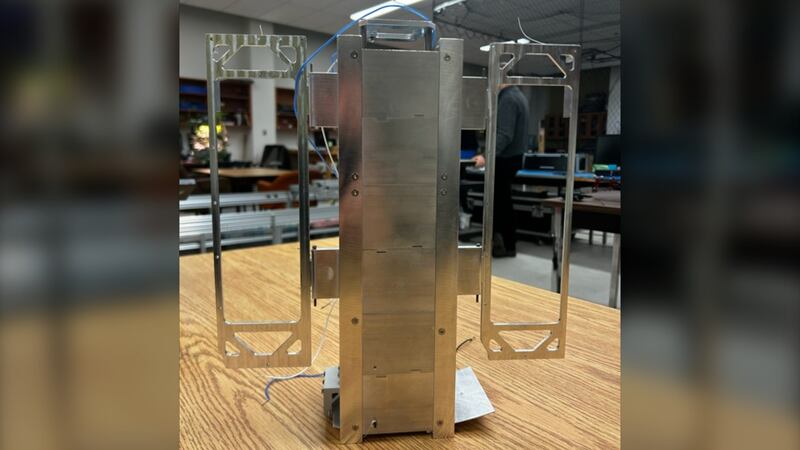
The device is set to launch sometime in late 2027.
“We’re looking for different kinds of minerals to potentially use as fuel, or minerals that we could use to help support life on the Moon, as we practice to get ready for Martian colonization,” Ferguson said.
First of many steps
Canadian astronaut Jeremy Hansen is scheduled to orbit the moon in early 2026 on Artemis II.
The mission will take them farther than any human has ever been before. Their goal is to help prepare for Artemis III, which will see astronauts on the moon for the first time since the Apollo missions in the early 70s.
Ferguson said this exploration will only continue to grow over the next few years.
“We need to learn more about the moon, we need to learn how to live on the moon, but I think more importantly, we need to learn how to navigate the moon,” he said. “This is one of the biggest challenges of this project.”
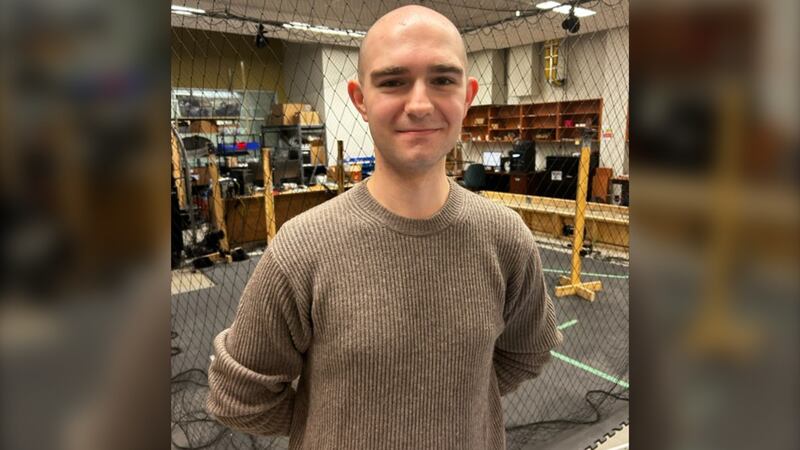
STARLab PhD student Andrew Bowman doesn’t know exactly what role he will play in the development of the satellite, but is nonetheless excited to be part of it.
“On a personal note, I think it’s coming full circle,” he said. “The first space thing that I ever did was in my undergraduate degree working on a concept for a lunar probe, also with Magellan Aerospace, and that’s what really inspired me to come into this lab and pursue graduate studies in space.”
“Now I’m actually working on an actual project with Magellan Aerospace, designing a probe for the moon.”
Bowman says this is a great opportunity for students like himself to work with industry leaders on important projects.
Incorporating Indigenous knowledge, youth
The University of Manitoba is working with the Manitoba First Nations Educational Resource Centre (MFNEC) to incorporate Indigenous knowledge into the lunar navigation system, and to engage Indigenous youth across Manitoba in the science and engineering behind the mission.
“It’s such an exciting venture,” said Charles Cochrane, the executive director of the centre. “When you hear about a project like this, it just brought to me my experience as a child about my fascination about stars, and I know many of our kids are like that.”
He says the opportunities through this project are immense for Indigenous youth.
“When you use today’s education experience, using land based, but also using technology with equipment such as drones, it’s just a natural progression from how it used to be with our ancestors to today, and what our kids will learn today.”
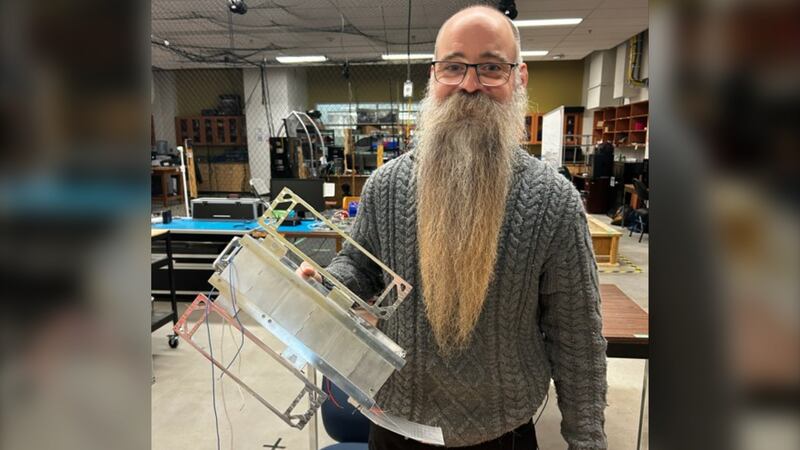
Indigenous educator and storyteller Rockford McKay says he hopes this project will inspire the next generation of Indigenous youth.
“Science and engineering is part of their culture and heritage,” he said. “We want to bring that and give them some exciting applications today.”
“To survive in this harsh world, our ancestors had to be scientists and engineers, as well. If they weren’t, they wouldn’t have had survived in these conditions,” he said.
“(Youth) being part of it, doing the drone work, doing the GPS navigation, the photography and so on, they are going to feel that they can do this stuff and be part of it,” he added. “I think there is going to be a lot of excitement around it.”
Massive step forward for Canada
Ferguson says this is the most challenging mission he’s ever been part of, and he believes this is just the first of many missions led by Manitobans.
“We’re using this opportunity to try to explore, well what is the Moon made up of and how we can we use the Moon in the future as a stepping stone to get to Mars,” he said.
“This is that next obvious step for us to take, which is demonstrating our capabilities on the moon.”