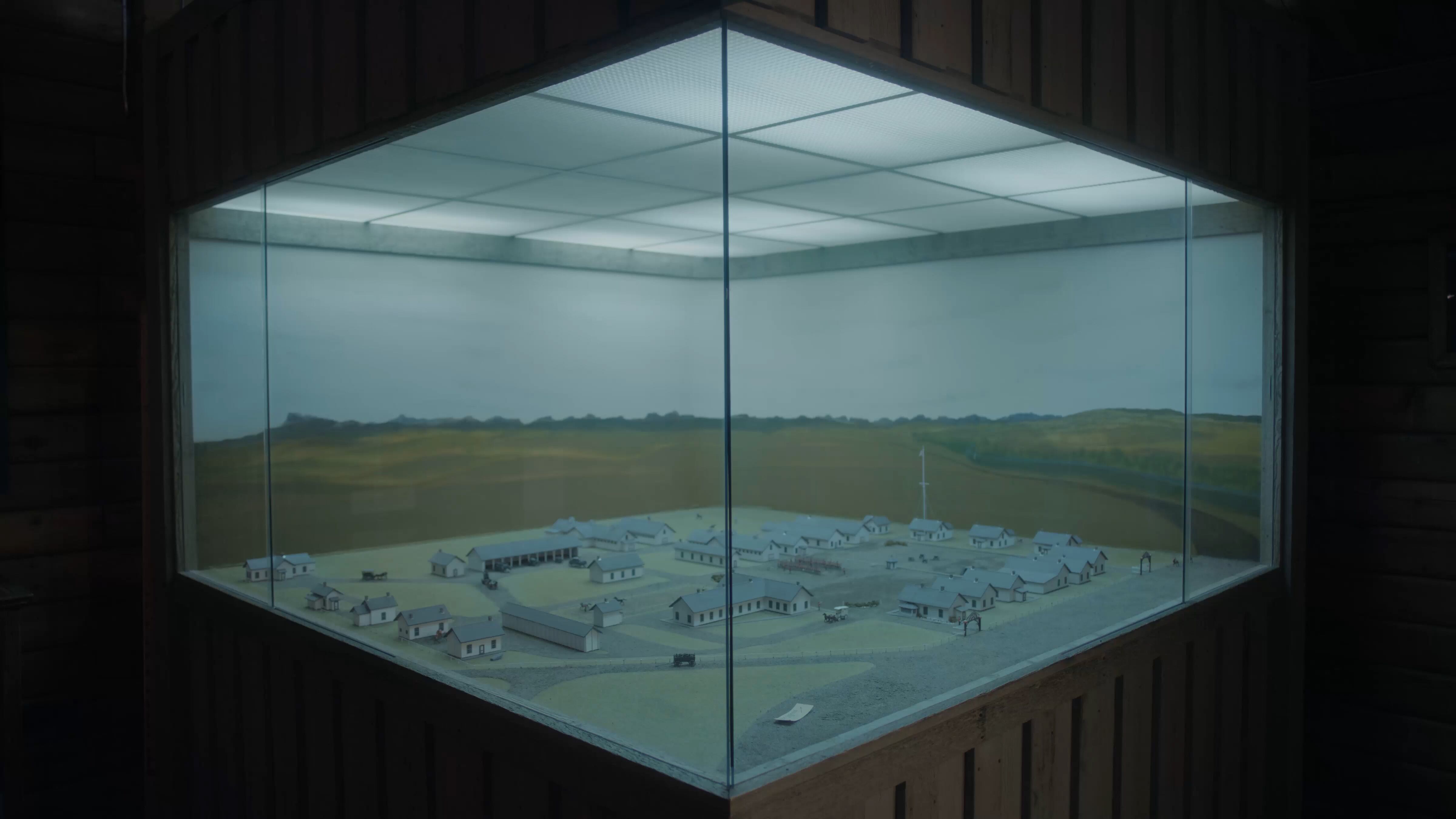
If you’ve journeyed through Alberta’s Rockies, prairies and badlands, you may recognize some familiar, albeit, unusual landmarks in Alexander Carson’s latest film Alberta Number One.
In short, the film refreshes the western genre as a group of filmmakers embark on a project documenting museums, monuments and roadside attractions that are a bit off the beaten path.
Instead of on horseback, the film’s characters travel by car and camper van, wielding cameras and microphones in place of revolvers.
While originally from Ottawa, Carson has lived in Alberta for the last 20 years, making films with North Country Cinema, a production company he created with friends Kyle Thomas and Sara Corry after they finished film school in Montreal.
Carson came up with the idea for Alberta Number One in 2017 while he was living in Olds.
“I was noticing a lot of the small towns in the area had small niche museums,” said Carson. “Because my films have always kind of investigated leisure studies and tourism to some extent, I started to think what could a film be like that ties together this tapestry of museums and public sites.”
Carson said he went to about 60 different sites on his own, going north of Edmonton and south of Calgary. The film itself features 10 to 12 locations.
An ‘unorthodox’ process
But he eventually got bored with his own research.
“I reached a certain limit with what I thought I could supply as a relative outsider,” said Carson. “I thought we needed to get more diverse voices in here. We need to get Indigenous and more BIPOC voices, people of different ages, from different disciplines.”
Carson then invited a group of artists, mostly from Alberta, to participate in a writing correspondence where he would send them a writing prompt. The artists would then generate a self-reflexive piece of writing about their own collecting practices or museum visits.
They would also go on group visits to different locations throughout the province.
“We were generating material through this relatively unorthodox way as far as the writing process goes,” said Carson, who eventually used the material to create characters and write the screenplay for the film. The group of artists later brought those characters they helped create to life.
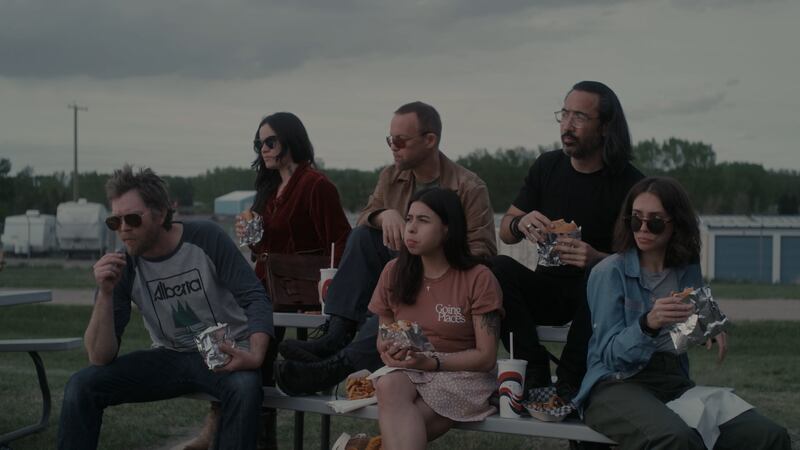
Carson said the process catalyzed his curiosity in trying to actively dismantle the hierarchy of filmmaking.
“It’s all very systemized and almost formulaic in the way it’s ‘done traditionally,’ and I was interested in disturbing that and thinking about how films could be written differently or how we could incorporate difference and divergence perspectives within the same work,” said Carson. “This is by no means a perfect process, it was an explorative process.”
He said he wants to continue this work with future projects, although perhaps not in the same way.
“I just don’t know exactly what that’s going to look like … every project is different, every group of people is different," he said.
This writing and development process started in 2018 and went through 2019. Like most projects, the film came to a halt in 2020 with the COVID-19 pandemic.
While inconvenient, Carson said the two-year break facilitated a reflection that most other projects don’t get.
“We had some really nice moments to reflect on what the heck we were proposing to do, which is a real luxury,” he said. “Most of the time you don’t have those moments of calm, to put things on pause and engage in a process of self-reflection.”
Starring: Alberta
With Alberta often playing the role of another setting, Carson wanted to make sure the province stood out on its own.
“A lot of production companies use Alberta as a kind of stand-in for the midwest, Wyoming or Montana … whereas we really want Alberta to play itself,” said Carson. “The specificity of a place and culture is what makes the film real, especially in the age of AI.”
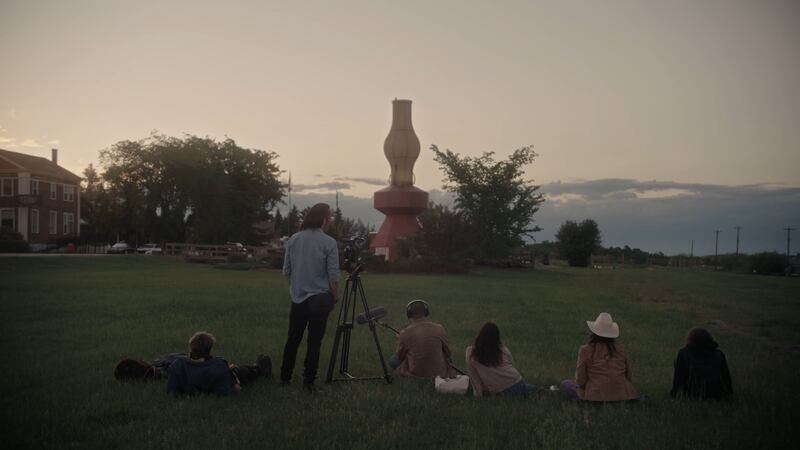
From the now-defunct Miniature Museum in Nanton to the world’s largest oil lamp in Donalda to the UFO landing pad in St. Paul, Alberta Number One takes you to some novel places you might miss whizzing down the highway on a family road trip.
“There is something special about the sites in Alberta that show up in a way that captures a certain kind of weirdness of imagination that is just totally delightful,” said Carson.
While the film is centred around the province’s quirky attractions, it also features a narrative exploring relationship tensions.
“It’s by no means a traditional film narrative plot,” said Carson. “(But) it’s not just looking at museums along the way, there is private drama, there are plot twists, there are secrets … there is that level of tension that gets built and released throughout the film.”
Metro Cinema will host a special screening of Alberta Number One at 6:45 p.m. Saturday, followed by a Q&A with Carson.

