University of Saskatchewan (USask) researchers are tracking storms in outer space to better understand the impacts they have on Earth.
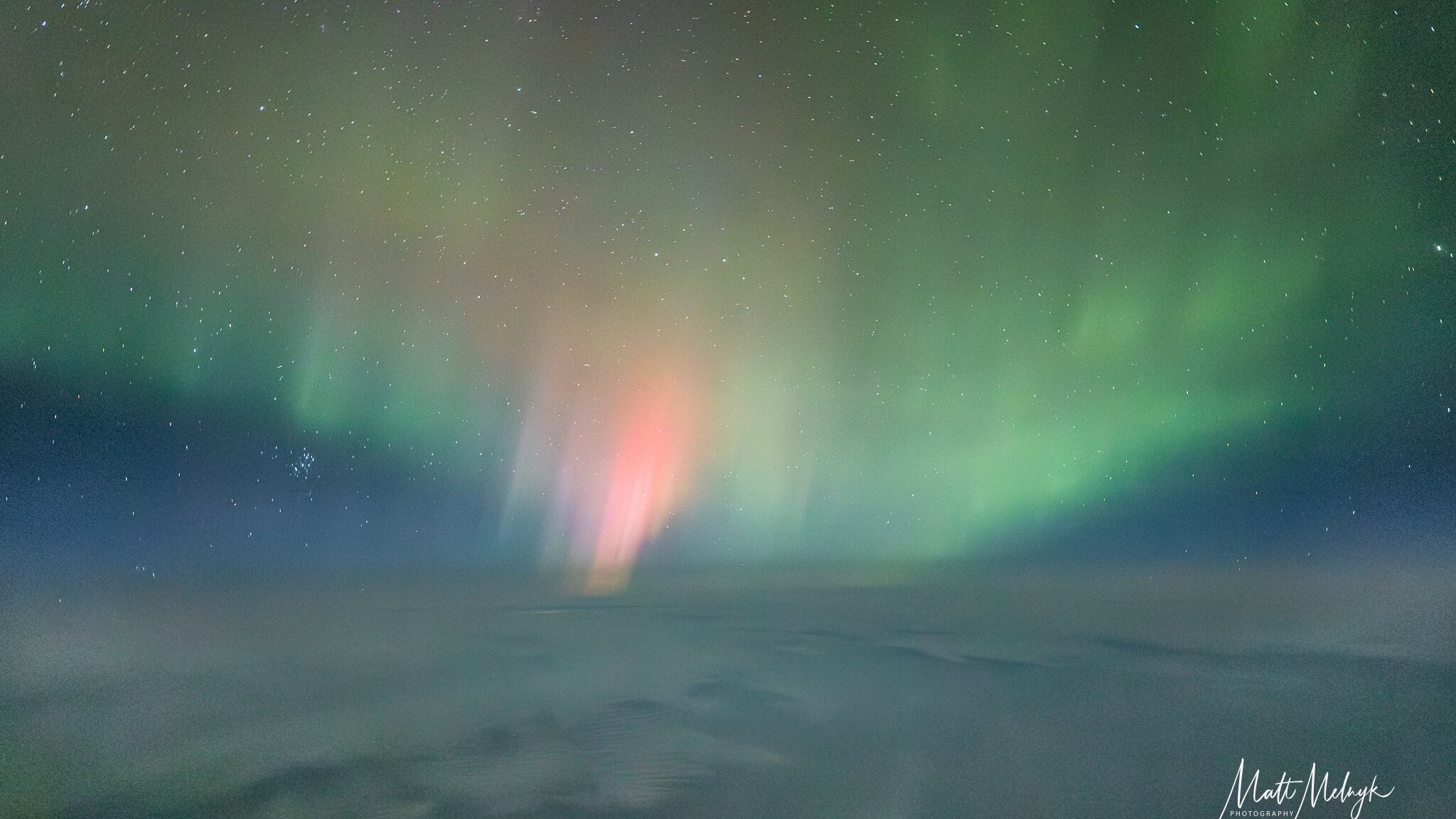
Solar storms happen when the sun releases a big burst of energy and particles. The Northern lights are a result of those particles crashing into Earth’s upper atmosphere, also known as a geomagnetic storm.
“When we see beautiful auroral displays, which we love to go out and watch, that can cause havoc on our modern societies,” said Glenn Hussey, director of SuperDARN Canada.
The organization is part of a global radar network that monitors weather in space.
Solar storms can create powerful electric currents, Hussey said. Studies show they have the potential to knock out power grids, degrade pipelines and interfere with navigation and communication signals.
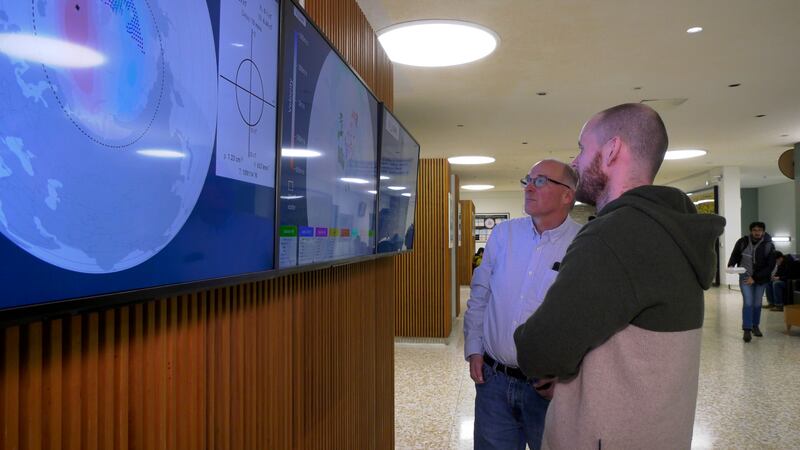
“We look at convection up in the ionosphere, and you can make the analogy that this is like high- and low-pressure systems, except for we’re looking at electric potentials or electric voltages and high and low voltage systems,” Hussey said.
In 1989, a geomagnetic storm and subsequent display of intense aurora induced powerful electrical currents into the Quebec power grid, which led to a province-wide blackout.
In May 2024, a strong geomagnetic storm impacted signals for the GPS in farm equipment, according to Hussey.
“It caused issues with farmers in the field. They weren’t able to seed their crops for a while because there was such a big disturbance,” he said.
Predicting weather in space is much more difficult than forecasting it on Earth, according to SuperDARN assistant director Daniel Billett.
“Anything that happens on the sun gradually makes its way to us and interacts with the upper atmosphere, and that’s what we call space weather,” he said.
The sun is constantly spewing out plasma and other particles in all directions, Billett said, which scientists refer to as solar wind.
Billet largely focuses his studies on the effects solar wind has on low-orbit satellites, such as Starlinks.
“The orbits can change a little bit, and that means they (the satellites) can come down. And if they’re on unpredictable trajectories, that means there could be risk of collision,” he said.
Billett says they collect data everyday through SuperDARN’s five radars in Canada, including one just outside of Saskatoon.
This is a particularly exciting time for their research as the sun is reaching its peak of an 11-year cycle, known as solar maximum, which means solar activity is at its highest.
“We get a lot more data and it’s also, in general, a bit more interesting,” Billett said.
Matt Melnyk has been photographing auroras for about 20 years. He says the solar maximum is also an exciting time for him.
As an airline pilot, he gets to see the stunning light shows from 39,000 feet in the air.
“They just look so much more defined and bright,” he said. “You can pick out and see all of the movements … it’s quite amazing.”
For the most part, Melnyk just gets to enjoy the aurora. But there have been a few times when strong solar storms have affected his high-frequency radio. Occasionally, the storms have also determined his flight path.
“We’ll be flying lower and at a more southern route during major solar storms, sometimes, depending on how active it is,” Melnyk said.
Hussey says space weather forecasting lags behind Earth’s weather predictions by about 50 years. But the SuperDARN team is hopeful that their research can complement other work being done to help modelers bridge the gap.

