The need for food support has been increasing at a “staggering rate,” according to a new report from Harvest Manitoba.
The annual report, called Harvest Voices 2025, shows around 60,000 people in Manitoba are accessing food banks each month.
Forty-five per cent of those users are families with children.
“Family sizes are getting larger, the demographic of folks that are accessing our services are getting younger and they are feeding more children,” said Meaghan Erbus, who is the director of network, advocacy and education at Harvest Manitoba.
The report found the number of families with children under the age of 18 increased from 32 to 45 per cent over the past five years.
Those with a post-secondary education and also using food banks increased from 33 per cent to 61 per cent, and 62 per cent of Manitoba families using food banks go hungry once a month.
“It’s terribly concerning,” Erbus said.
‘It makes us pretty upset’
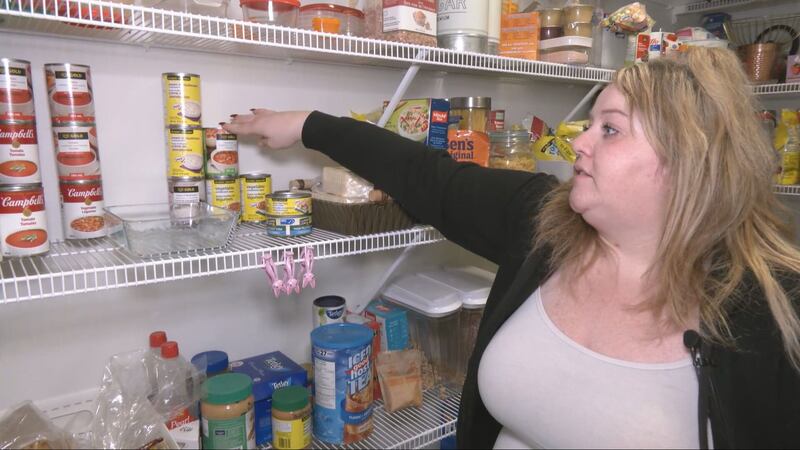
The last few years have been difficult for Jaclyn Stone and her family.
She’s finding it hard to make ends meet as costs continue to skyrocket. She has been going to a local food bank for the last year.
“It’s heartbreaking. It’s hard,” she said. “We try to take things day by day because if we look at the bigger picture of things, it makes us pretty upset.”
Stone bought a home in 2022, but when mortgage rates skyrocketed, her payments doubled.
She lost her home and is now renting.
“I had some health challenges, and I couldn’t work for a year,” she said. “It was just hard making ends meet.”
Stone is a part-time school bus driver. She also works twice a week in the evenings at a local grocery store.
But even with two jobs, she said it’s hard to keep up.
“Grocery prices are higher, bill payments are higher, rent is higher,” she said. “It’s just been a continuous struggle to go uphill.”
Stone says she can’t afford to feed her family, without help from the food bank.
“I hope more people can afford to just live, that’s the hardest part,” she said. “You can’t even afford to go and do anything. It’s hard enough to just live day to day and put food on your table.”
“You have to borrow the simplest of things from friends sometimes,” she said. “My friend gave me toilet paper, just so I could get through to payday.”
‘Barely getting by’
The report found the majority of families using food banks make less than $20,000 per year, while averaging around $1,600 a month for living expenses.
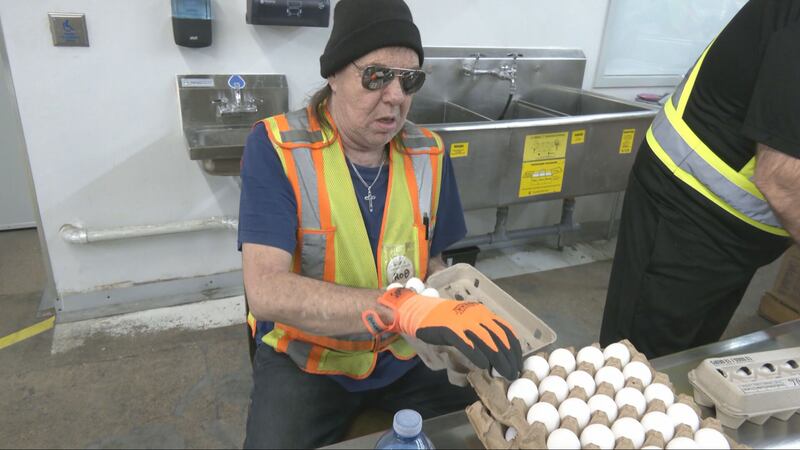
Rob McCaw has been volunteering at Harvest Manitoba for 14 years.
But due to a series of health challenges and rising costs, McCaw was forced to rely on food banks three years ago.
“I rely on the food banks for other things that I couldn’t afford to buy or just have extra things to buy so I could create more meals and be able to survive from paycheque to paycheque,” he said.
He goes to the food bank every Wednesday, four times a month.
He says it’s costing more and more every day to live, which is making it really difficult for him.
“I did a budget and it’s costing me about $1,600 to $1,700 a month to live and that’s roughly about what I get, so I’m just barely getting by. I’m all alone and I really don’t have anybody to help me in life.”
Calls for change
Harvest Manitoba outlined 10 different recommendations to help address food insecurity in the province.
Some of the recommendations on the list include:
- Calls to implement a Liveable Basic Needs Benefit (LBNB)
- Governments at all levels must consult people with lived experience when deciding solutions
- Calling for the Canadian Disability Benefit (CDB) to be raised from $200 to $500 a month
- Prioritize affordable housing
- Take action to address food insecurity in northern Manitoba
Both Stone and McCaw want to see all levels of government step up and help those who are in similar situations as them.
Stone hopes her story sheds light on an issue that continues to worsen every day.
“You find yourself going through the grocery store, grabbing what you need and when you are ready to check out, you pretty much have to do an audit of your cart to see if you can afford everything,” she said.
“Sometimes you have to put things back. It’s embarrassing and disheartening.”
With files from CTV News’ Kristen Yu

