There are calls for changes to the medical training system in Canada as students struggle to get into medical school and further train in their own country.
Pediatric pulmonologist Steve Brennan grew up in St. Albert but now works at a children’s hospital in St. Louis, Mo.
He said he always intended to train and work as a doctor in Canada but after two years of applying to Canadian medical schools without success, he looked elsewhere.
“A friend of mine, who I grew up with, was in Australia and so I messaged him. I was like, ‘What’s this all about? Tell me.’ He’s like, ‘Yeah, it’s awesome. You should come.’” he told CTV News Edmonton in a virtual interview last month.
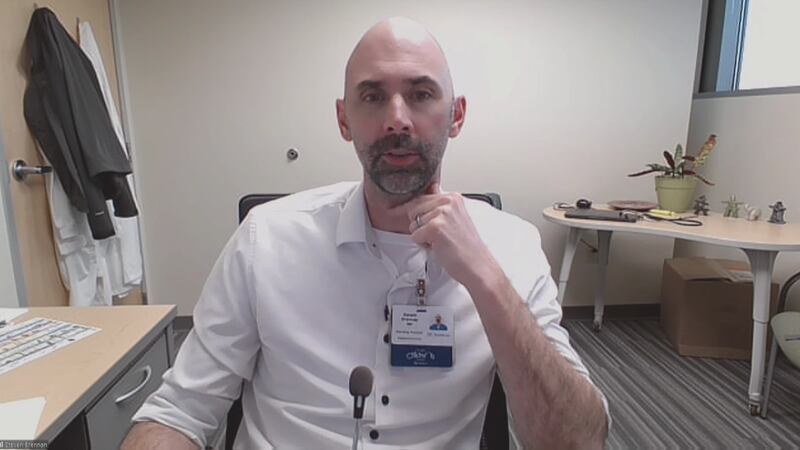
Brennan applied and was accepted to the University of Queensland in Brisbane, Australia.
While studying there, he learned about how difficult it was to get a residency position back home as students trained in Canada are given preference.
“So all those people get to match first and then the rest of the world gets to match next for whatever is left over,” he explained.
“Statistically speaking, your chances in the United States are just far better because there’s more programs, there’s more spots.”
Brennan ended up in St. Louis where he eventually met his wife and started a family.
“It’s other things that kept me here. It wasn’t just the job,” he said.
“It’s a bad system, right? Because again, it’s the same as the medical school thing. You have a lot of people wanting to go to very few spots and there’s just not enough of them.”
Training doctors takes time and resources
The president of the Canadian Medical Association (CMA) agreed Canada needs more medical school seats and told CTV News Edmonton the best way to do that is to expand existing programs.
“The reason for that is the infrastructure to build the programs,” said Dr. Margot Burnell. “It’s very hard to create from scratch.”
The University of Alberta (U of A) just opened a regional campus at Grande Prairie’s Northwestern Polytechnic this past September.
The dean of the U of A’s Faculty of Medicine told CTV News Edmonton the expansion means the university can accept 30 more medical students a year.
“So in four years, there will be 120 medical students there,” said Dr. Brenda Hemmelgarn.
“And that is a number based on what we’re actually able to accommodate, not just in Grande Prairie but we’re also going to have to have clinical placements in other locations in northern Alberta.”
It’s hoped the students will end up staying in those rural areas since that’s where doctor shortages are especially severe.
“Physicians are most likely to practice in the places that they’ve last trained or have been trained in,” Hemmelgarn explained.
The University of Calgary is also opening a regional campus next summer at the University of Lethbridge.
The expansions are part of a $376-million investment over four years by the provincial government to increase medical school graduates.
“We need things like infrastructure, we need faculty and staff resources, partnerships for these clinical placements throughout the province,” said Hemmelgarn.
“The consideration is quite extensive in terms of the resource intensity of actually training a physician.”
‘We’re not doing it at a fast enough rate’: CMA president
While some programs are expanding, Burnell said doctors still aren’t being trained fast enough.
“Because we’re an aging demographic and over a third of doctors are greater than 55 years of age so at that point, they start to plan what their future might look like.”
She said governments should do what they can to retain doctors by decreasing administrative burden and investing in team-based care as well as make it easier for doctors from outside the country to train and practice here.
“And then we need the colleges to work together for what we call multi-jurisdictional licensure so once I’ve been accepted as a competent physician at a given level, then that should be similar, whether I’m in New Brunswick or British Columbia,” Burnell said.
Brennan agreed serious reform and investments are needed to ensure doctors like him don’t end up elsewhere.
“This is a decades-old problem and people just aren’t doing it,” he said.

