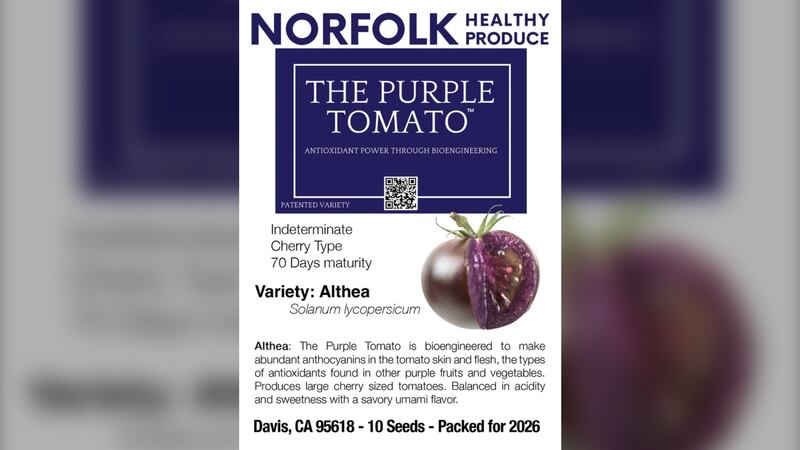
Gardeners and shoppers could soon see a common grocery staple with a distinctive new colour next year.
Norfolk Healthy Produce, a California-based company, has created a purple tomato that can be sold as seeds or in grocery stores. After being approved in the United States in 2022, Health Canada approved the tomato as a food item this past August, allowing it to enter the market.
“It’s a very beautiful product,” said Norfolk Healthy Produce CEO Nathan Pumplin. “It attracts attention all over the place, and especially from chefs and people who want to make interesting dishes with new colours in them.
“It tastes excellent, and it’s a fun product. It’s a cool product. It’s an interesting one to talk about, and it provides this really interesting story about science.”
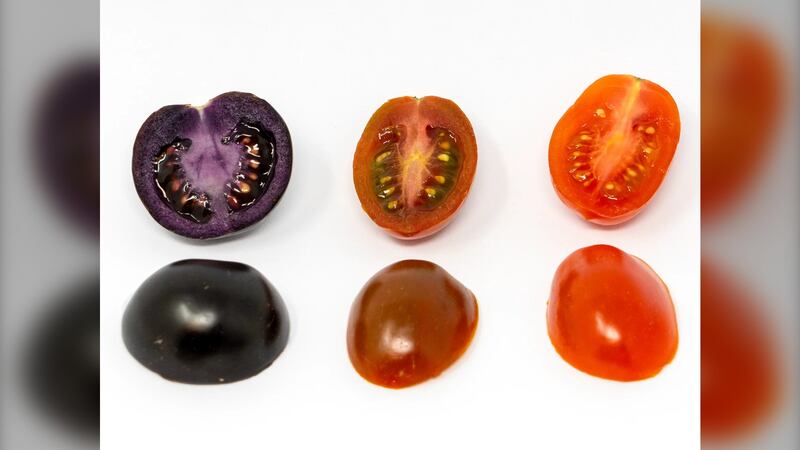
The tomato was created by adding two genes from snapdragons to activate genes in tomatoes that helped change the colour to purple.
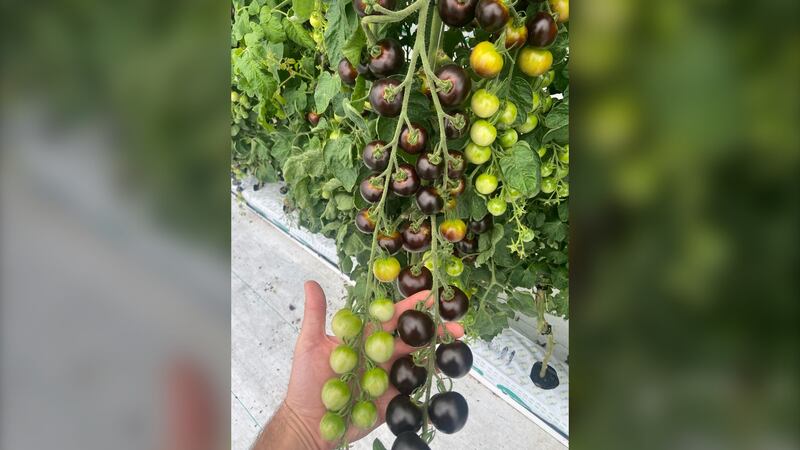
“The way I usually describe it, tomatoes have this purple light bulb, which is usually not switched on,” Pumplin said. “By adding these genes from Snapdragons it’s like adding an on switch to this purple light bulb. We didn’t add in the light bulb, that was always there. We just put the on switch there.”
Pumplin said the colour doesn’t change the flavour of the tomato in any way.
Organization concerned about possible contamination
A Canadian organization, however, is expressing concern about the approval of the tomato in Canada, saying the addition of a genetically modified food in Canada could lead to contamination of the seed supply.
“The organic standard in Canada prohibits the use of genetically engineered seed, and organic farmers take measures to make sure they’re not growing genetically engineered seed and to stop contamination,” said Lucy Sharratt, coordinator of the Canadian Biotechnology Action Network.
“It will become increasingly expensive and difficult for organic farmers to avoid contamination if genetically engineered seeds are widely grown and in gardens across the country.”
Sharratt said the Canadian government currently doesn’t have mandatory labelling of all genetically engineered foods or seeds, and should make it mandatory.
“If they want to sell genetically engineered fruits and vegetables, they should make sure that they are labelled very clearly in a special section,” she said. “We need to take control over our food and seed system to make sure that there is not unwanted genetic contamination from these patented seeds, unnecessary products.”
Pumplin noted the tomatoes have been reviewed by the United States Food and Drug Administration and the Canadian Food Inspection Agency before being approved for sale, and it doesn’t present any risks to other tomatoes.
“These are the most rigorously tested tomatoes that are on the market anywhere,” he said.
Pumplin anticipates the seeds and tomatoes to be available in Canada sometime in 2026.