A black bear cub found barely alive on Dec. 20 is being treated for her injuries at a wildlife rescue facility near Smithers, B.C.
The Northern Lights Wildlife Society was alerted to the one-year-old cub by a long-time volunteer in Dawson Creek. A member of the public saw the bear on a highway and stopped to try to shoo the animal off the road so it didn’t get hit by a vehicle.
“But it was so cold up there, and they felt that it was really in need of help,” said Angelika Langen, co-founder and director of the registered non-profit charity. “That night afterwards it went down to -34 (C).”
A photo taken at the scene shortly after shows a dark lump covered in snow lying under a tree. A closer look shows an outline of a bear.
There was no sign of the cub’s mother.
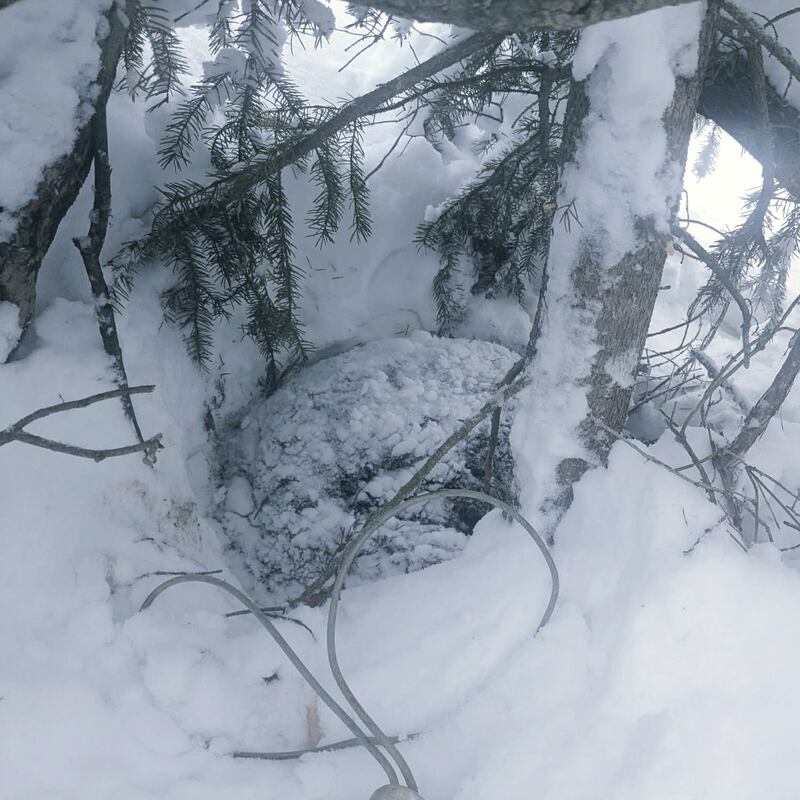
The next morning, after receiving permission from the B.C. Conservation Officer Service, long-time society volunteer Renata Debolt, who lives in Dawson Creek, met up with the man who’d initially seen the bear cub, to try to locate her.
Together they navigated waist-deep snow through a ditch and found the cub barely moving but still alive.
There’s no doubt in Langen’s mind the cub was very close to freezing to death.
After placing the cub in a crate, they then had to somehow carry it back to the road and a waiting vehicle.
Video shows the two rescuers struggling, but clearly determined, to drag the crate through the trees and deep snow.
They were successful, and the cub was taken to Debolt’s home for assessment, and to warm up before being transferred to the wildlife centre for further treatment.
“At the time we all just thought that, you know, we were dealing with something that was extremely hypothermic and we had to warm up slowly,” said Langen.
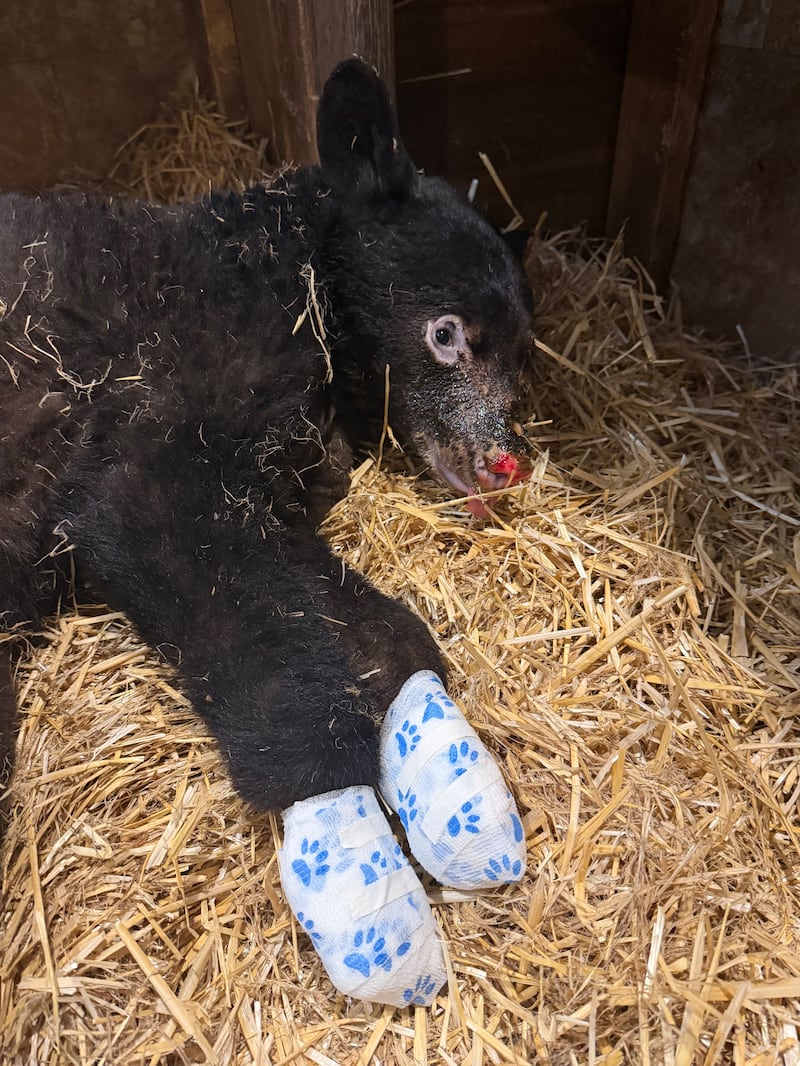
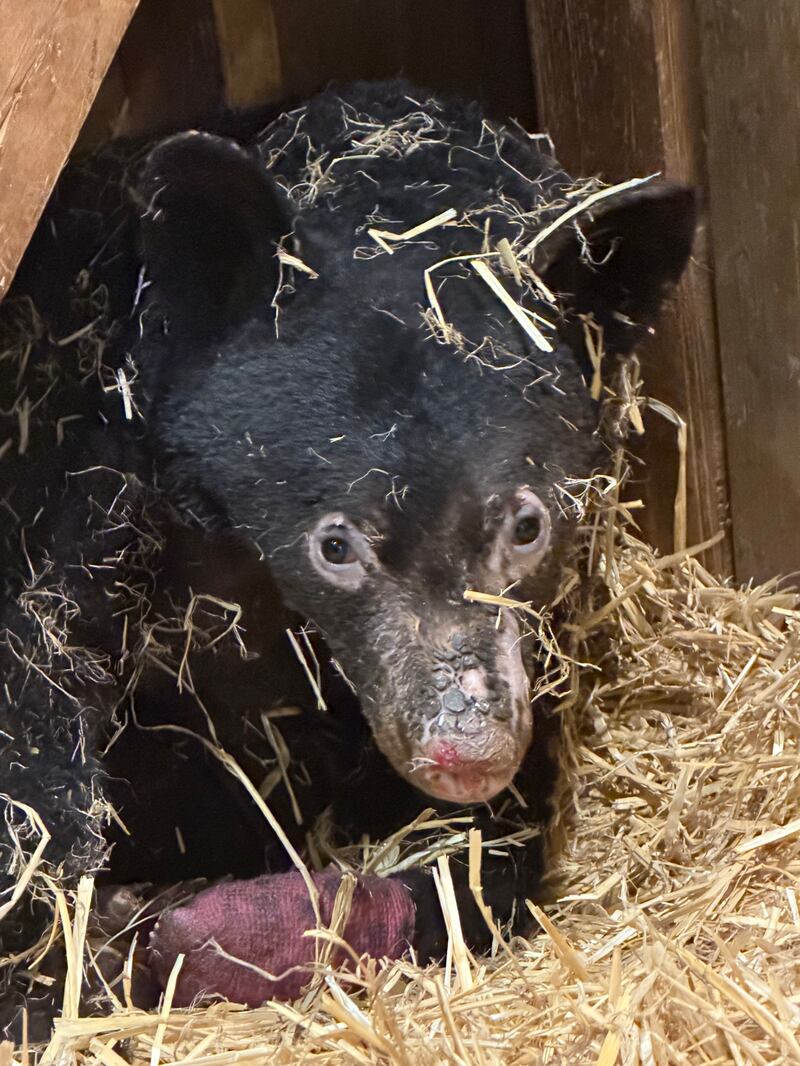
It turns out the cub was also suffering from severe burns to her face and paws.
Langen believes the cub, and likely her mother, had hunkered down under what she calls “a burn pile.”
She said logging operations, whether private or commercial, often leave such large piles of wood in heaps, then burn them when needed. She said animals will use them for shelter and to hibernate.
It’s not the first time she’s seen this outcome for animals.
“We have had cubs that came out of piles where people realised there were cubs in there and actually went in a pulled them out of the fire, little ones, newborns, in the spring.”
This cub was transported the nine-hour drive from Dawson Creek to the society’s rehabilitation facility near Smithers where she was sedated and treated for the burns to her face and paws. At first, initial photographs of the cub’s face led Langen to believe she may have been suffering from frostbite. But a closer look revealed the painful reality.
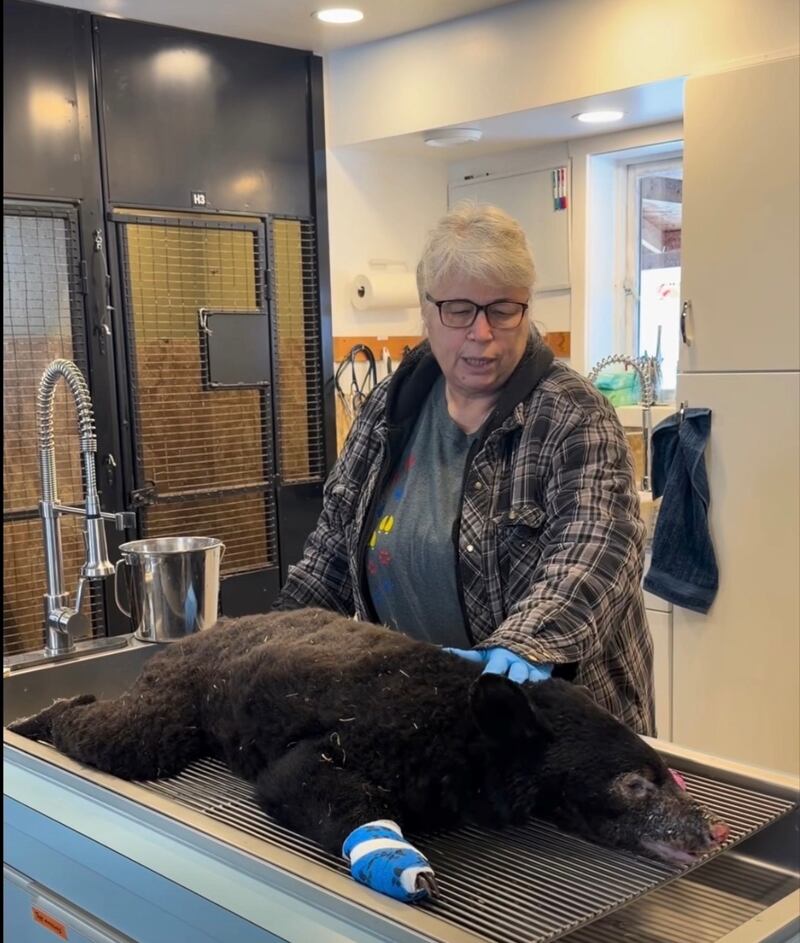
“It became very quickly clear that these were not frostbite. So, those were burns. And we have dealt with burned animals before.”
Langen believes the province should require anyone burning these large piles of wood to first ensure there are no animals concealed under them. She said the piles could be dismantled before burning, thus driving any animals away, or detecting them using thermal-imaging drones. The society itself uses heat drones to track injured animals.
“I think there needs to be more responsibility on whoever is burning these piles. There should be regulations that they have to take certain steps to make sure that they’re not burning the wildlife alive.”
After posting photos and videos of the cub on its Facebook page, the society became inundated with concern from the public. So much so they held a naming contest with voters deciding on “Valkyrie.” The theme for naming animals in rehab this year is “drinks,” so the little no-name cub is now known as a fancy cocktail made with vodka.
A wildlife veterinarian said Valkyrie’s prognosis is good. Amazingly, she is proving to be an ideal patient. She leaves her bandages alone and is eating well. So well, she’s gained eight pounds in just a week.
“I find that they’re incredibly resilient and figure out that you’re actually helping,” Langen said. “We’ve dealt with this before with severe injuries in wildlife and I’m always stunned by how co-operative they are.”
Valkyrie will remain at the facility until late spring, dining on fruits, vegetables, fish and meat, when she’ll then be released with a tracking collar near her old home near Dawson Creek. If all goes well, little Valkyrie will be a bit of a Christmas miracle, alive and free.
For Langen though, the warmth and concern from the public, and the dedication and hard work from the society’s volunteers province-wide, is what has truly made her holiday season special. Northern Lights Wildlife Society has been rescuing and rehabilitating animals since 1990, including what Langen estimates is about 900 bears.
But she says it would not be possible without the support of the public and volunteers like Renata, a fact that sometimes brings her to tears.
“It’s really a team effort,” she said. “We’re so grateful for that.”
If you would like to donate or volunteer to help wildlife like Valkyrie you can contact Northern Lights Wildlife Society by email or through Facebook.

