For more than 50 years, Diane Griffin and Kathy Martin have spent one day each December scanning the skies in P.E.I.’s Hillsborough River region, counting every bird they can find.
Across the country, thousands of volunteers take part each winter in the Christmas Bird Count, one of North America’s largest and longest-running citizen science projects, dating back to 1900.
Participants log the species they see and how many of each, along with temperature, wind and other data points, helping researchers track population shifts over time.
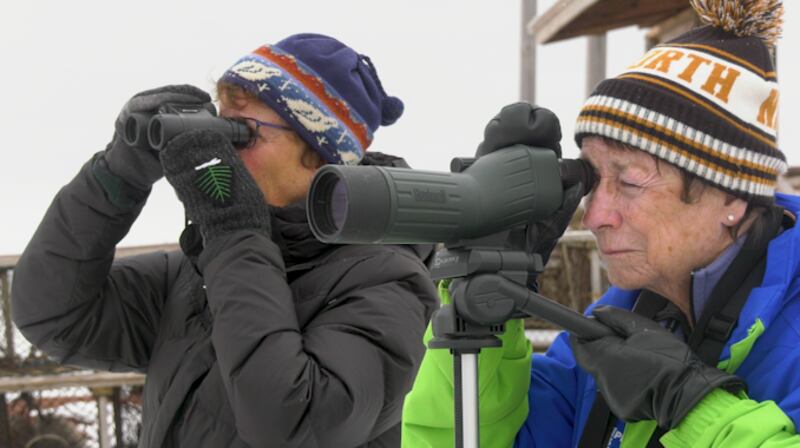
“It’s very hard to do any kind of management or conservation if you don’t know the status,” said Martin, an ornithologist who previously served as a senior research scientist with Environment and Climate Change Canada. “We look for ways to get a sense of how well species are doing. Over 20, 30 years, you can get an idea of how things are changing.”
She added that it also gives volunteers a reason to venture outdoors during the holiday season.
“It gets you out of the house, away from the turkey,” Martin said, laughing.
The pair often logs around 30 species in the area, from black-capped chickadees to blue jays, depending on the day’s conditions. But this year, one bird was high on their wish list: a red-bellied woodpecker.
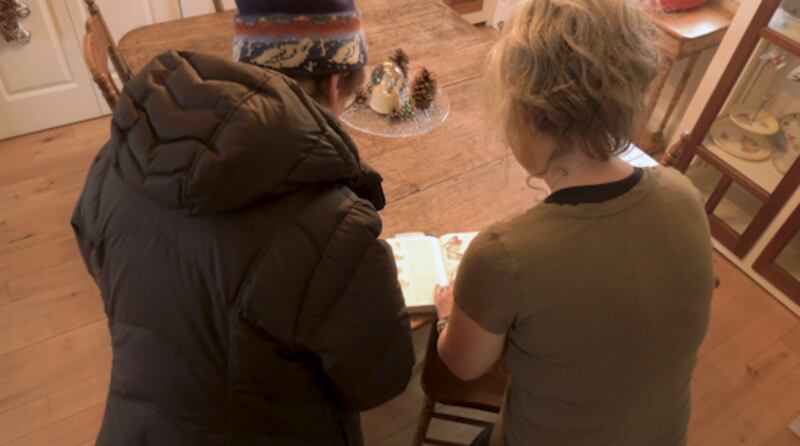
After following the same route for decades, Griffin and Martin have built relationships with families along their path, including Robyn and Kenny Jackson, who reported spotting the woodpecker on their property a few times this year.
“We’re hoping it’ll be there today, so we can count it,” Griffin said.
Shortly after they arrived at the home, a bird with a bright red crown and black-and-white barred wings dropped out of the trees and descended onto a feeder in the backyard. The group rushed to a window in the Jacksons’ kitchen overlooking the spot, watching as the red-bellied woodpecker clung to the perch and nibbled at seeds. Notebooks came up, the count was recorded and there were smiles all around.
Griffin said surprises like that are part of what keeps people coming back, year after year. For example, they never used to see robins in the region, but during one count, they spotted 94 in the trees near a gravel pit.
“You never know what you’re going to find,” she said.
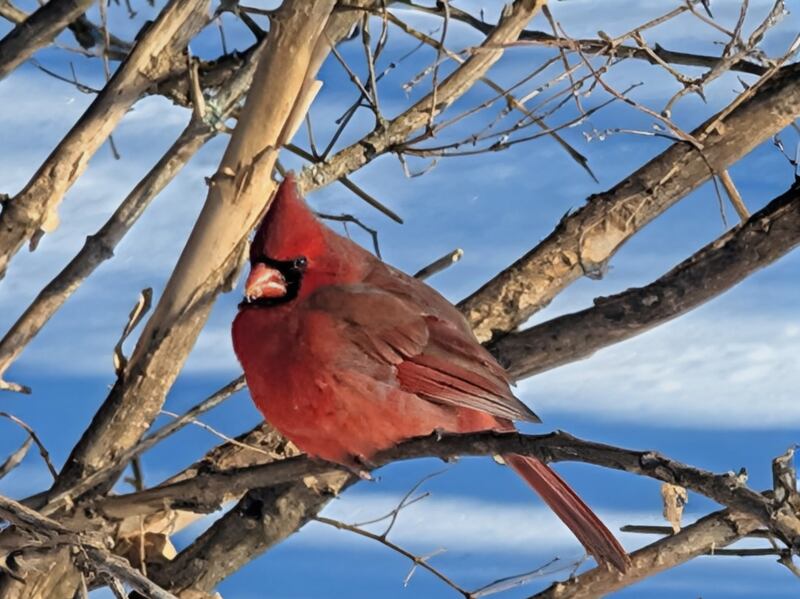
Over the decades, climate change has also shaped what turns up on the list. Griffin remembers the first time she saw a mourning dove when she was about 26. Now, she said, they’re common on the Island.
“The climate is getting warmer. Normally they’ve been further south, but now they’ve come a little further north and they’re here now on a permanent basis,” Griffin said. “And other species have disappeared.”
She pointed to grosbeaks, which are showing up in much smaller numbers than they used to.
The Hillsborough count is one of four held on P.E.I. with teams fanning out across the province.
Martin explained the Christmas Bird Count began as an alternative to an old holiday tradition, in which groups would shoot as many birds as possible. She said concerns about declining populations helped spark a shift in 1900, when organizers launched the bird count instead.
Once the counts are done, results from P.E.I. are submitted through Birds Canada, and added to Audobon’s database – a U.S. based nonprofit.
The long-term record helps scientists and conservation groups spot which species are increasing or declining and where ranges may be shifting over time, including with climate change.

