James Moore is a former federal cabinet minister under prime minister Stephen Harper, and a columnist for CTVNews.ca.
Consensus analysis of the 2025 election results includes this thesis: centre-left ‘progressive’ voters abandoned the NDP and voted for the Liberals under Prime Minister Carney and gave him his victory.
Why? Two broad reasons: 1) to unite against Donald Trump and 2) to unite against the possibility that Pierre Poilievre could be prime minister.
Of course, there is more to it than that, but there’s no question that the worst showing for the NDP in history was accretive to the Liberals and that ‘progressive’ voters gave Mark Carney his victory against Pierre Poilievre despite Pierre’s strong showing – the best vote percentage for a Conservative campaign since 1988.
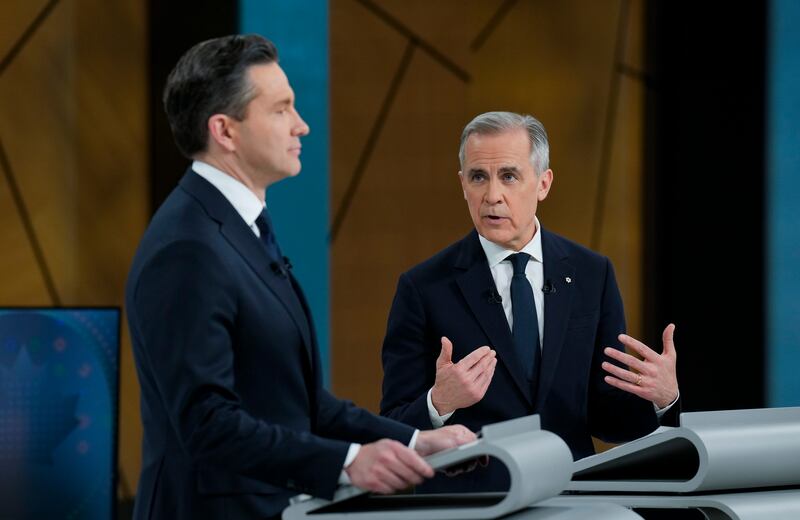
So, if his electoral mandate is owed to the absorption of traditional NDP voters, it has been hard to spot any significant evidence of appreciation for those votes he received.
On a recent thoughtful podcast on the conservative TheHub.ca, host Sean Speer asked the question: “Is Mark Carney dismantling Trudeau’s policy legacy?”
The answer, on a few fronts anyway, is an unequivocal ‘yes.’ Perhaps not in the speed or full form in which a prime minister Poilievre might have done had he won the last election, but the shift is undeniable.
Among Carney’s notable moves:
- Eliminating the consumer carbon tax;
- signing the Memorandum of Understanding with Alberta Premier Danielle Smith on pipeline development;
- drastically reducing immigration inflow numbers;
- scrapping Liberal promised changes to increase capital gains taxes; scrapping the Digital Services Tax;
- promising clear reductions in employment in the federal civil service;
- imposing mandatory minimum penalties for sexual offences involving children and violence against women; and
- increasing funding for the Canadian military by $81 billion in this years’ budget.
All this is evidence that makes it clear Mark Carney is not Justin Trudeau.
But the distancing of the Carney government from the Trudeau government is one thing; being seen to be abandoning progressive voters is quite another. And Prime Minister Carney is coming perilously close to the latter as we enter 2026 – another possible election year.
The policy shift from the far left to the broader middle is so clear under the current government that it is often asserted: ‘Mark Carney is a Progressive Conservative.’ And the assertion isn’t just a consequence of the noticeable shift in policy, but the noticeable shift in personnel.
Chris d’Entremont is now the Liberal Member of Parliament for Acadie-Annapolis, N.S. He was, of course, elected as a Conservative in the last federal election. He crossed the floor, the Liberals rejoiced, Conservatives condemned, the news came, the news went.
D’Entremont, it is said by his critics, is flaunting the democratic will of his constituents, a scoundrel and worse. Whether that’s true or not is up to perspective. But consider another angle: He has been a lifelong conservative politician seeking the outstretched hands of voters for 23 years, as a conservative.
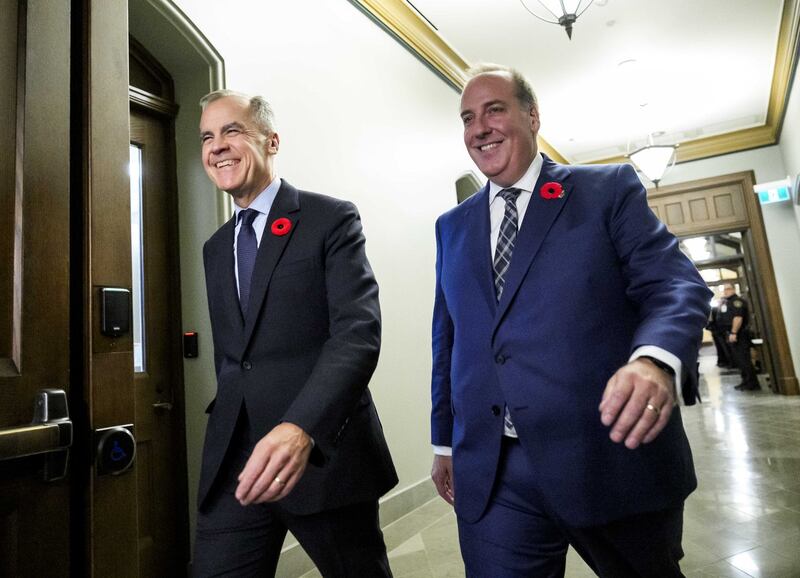
He was a successful provincial Progressive Conservative candidate in 2003, 2006, 2009, 2013 and again in 2017. He served in numerous cabinet roles in the provincial Progressive Conservative government, then, in 2018, he sought and won the Conservative Party of Canada nomination in West Nova to be a candidate under Conservative leader Andrew Scheer.
He won. And he was successfully re-elected under Conservative leader Erin O’Toole in 2021. In 2025 he ran and was re-elected under Conservative leader Pierre Poilievre.
If you’re counting, that would be eight different times he ran as a conservative, talking like a conservative, making conservative promises under various conservative leaders and getting elected.
His decision to cross the floor may be opportunistic, it may be an unprincipled break from his rhetoric, but this can also be said: this longtime conservative found some comfort with Mark Carney’s agenda since the election. Whether it was his style, policy, budget, or appeal back home, a lifelong conservative buckled and became a Carney Liberal.
Michael Ma was a Conservative candidate in 2019 under Andrew Scheer and a Conservative candidate in 2025 under Pierre Poilievre and was elected as a Conservative. He, too, is now a Liberal. The classlessness and fraud of his attending a Conservative Christmas Party as a happy member of caucus, only to join the Liberal Christmas Party and caucus the very next day as a smiley happy new Liberal MP is as cynical and obnoxious as it gets. However, underneath the cringey sliminess of the transaction, is a comfort with the Carney agenda.
Matt Jeneroux, the Conservative MP from Alberta, has a similar story. He ran twice provincially as a Progressive Conservative and was elected in 2012 as the MLA for Edmonton-South West. In 2015 he was successfully elected under Conservative prime minister Stephen Harper, he was re-elected under Conservative leader Andrew Scheer, again under Erin O’Toole in 2019, and again under Pierre Poilievre in 2025.
His adult life, like d’Entremont, has been about championing conservatism and comfortably running for office under various conservative leaders. He, too, has found sufficient comfort with Mark Carney to consider joining his caucus, though he chose not to at the last minute and will be exiting Parliament in 2026 instead.
What does this mean for PM Carney?
So, taken together, what does all this mean for Prime Minister Carney and the nature of his mandate? He was elected by reanimating depressed Liberal voters who grew tired of Justin Trudeau and earned his margin of victory with borrowed NDP voters who fled the rubble of Jagmeet Singh’s failures to stop Pierre Poilievre and fight Donald Trump.
Since the election, those who seem most pleased with the outcome of the government’s actions are former provincial Progressive Conservatives (and current Progressive Conservatives like the premiers of Nova Scotia and Ontario) and softer moderates who find appeal in his shift from Justin Trudeau to the centre.
The political question for Prime Minister Carney in 2026 will be: is this sustainable? Will the NDP rise after their March leadership election and recapture those who drifted to Mark Carney, only to see a government that boosts military spending, drops the carbon tax, signals approval with pipeline development, lowers immigration numbers and cuts the federal civil service?
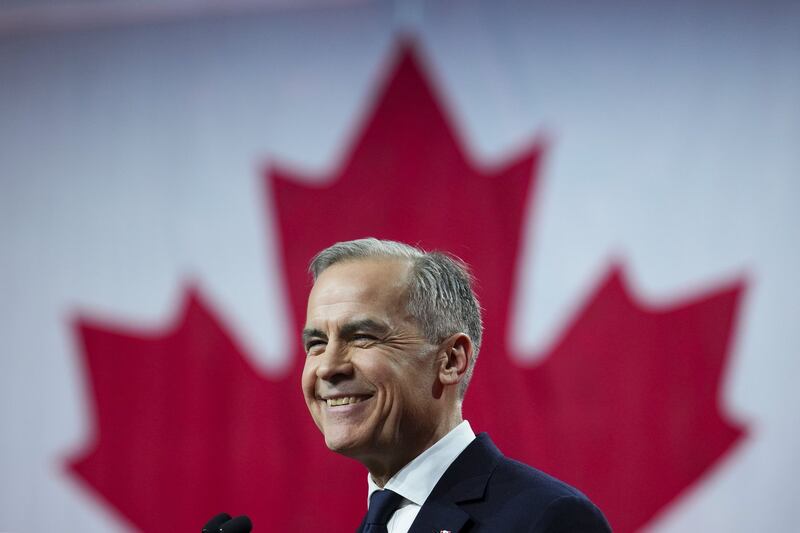
It seems evident that Prime Minister Carney will have to decide: is the broad middle the best course of action for governing and for re-election, or must he enact a progressive pivot to keep those borrowed NDP votes from leaving?
You can’t successfully pretend to always be all things to all people. Choices must be made. In 2026, Prime Minister Carney will have to choose to either make a progressive pivot to the left and fight to hold the confidence of the borrowed NDP from 2025; or double down on his centrist shift away from Trudeau excess with his unique offering of being a ‘Carney Liberal’ in the broad centre, which could alienate those NDP votes that got him his first mandate.
Leadership is about choosing, and Mr. Carney has a choice to make in 2026 that will define his time as prime minister.
More from James Moore:

