John Van Gurp and Heather Dzioba met in 1979 and have been married for 41 years. They built a family, travelled around the world and enjoyed each other’s company.
“We met when we were 17 in high school. I still remember in math class, looking over and thinking, ‘Wow look at that pretty girl, I wonder if I could get to know her,’” says Van Gurp.
Van Gurp remembers the woman she was, the laugh she had and the love they shared. In Spring 2021, he started to notice something was wrong and Dzioba needed to see a doctor.
“I wasn’t sure exactly what the diagnosis would be, but I knew there were issues. My head was spinning, of course, with all the thoughts and where this was going to go. I went online immediately and tried to research frontal temporal dementia, primary progressive aphasia, Alzheimer’s and so on,” says Van Gurp.
He knew she needed a neurological examination and diagnosis, so he started to document her journey and changes on YouTube to show the doctor.
“Rather than try to remember what’s going on, I’m going to make a series of short videos to show to a doctor instead of having notes. The channel just took off. I got all of these subscribers coming out of nowhere and comments and helpful tips and so on and then it became sort of a journal and a way for me to process my emotions and my thoughts and get thoughts off my chest,” says Van Gurp.
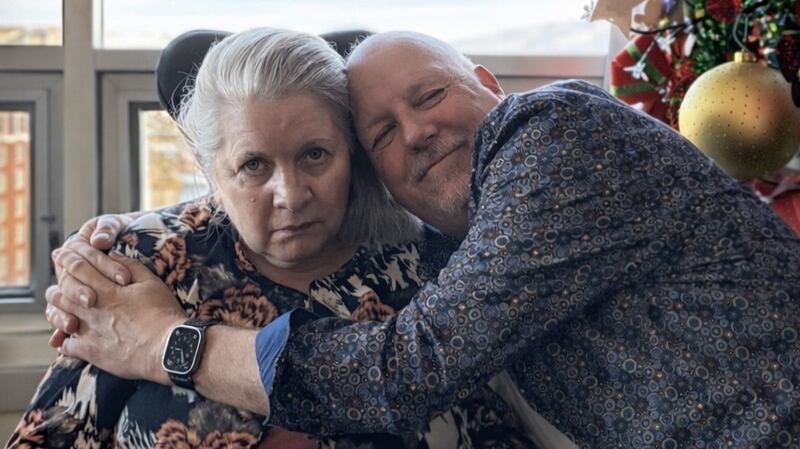
Van Gurp shares his fears, his worries and the good and the bad times on the channel.
Dzioba was diagnosed with primary progressive aphasia in October 2021.
“With Alzheimer’s and other types of dementia, there are actual physical changes happening in the brain. With Alzheimer’s especially there are plaques and tangles that are getting in the way of the brain functioning and the cells are shrinking and dying so there actually is physical change, the person isn’t just giving you a hard time, they are having a hard time,” says Beth House, education lead with the Alzheimer’s Society of Nova Scotia.
House says 16,000 people in Nova Scotia are living with dementia and that number is expected to increase to almost 30,000 people by 2050. She notes two-thirds of those diagnoses are women.
“There has not been a lot of good studies done to say quite why it affects women more than men. We used to think it was about lifespan but there is more involved. It can be things like brain structure and stress response, and it does tend to process a little faster in women than men and the different factors could be around hormones, pregnancy, menopause, estrogen, those kinds of things,” says House.
The Alzheimer’s Society of Nova Scotia says common symptoms it hears are short-term memory loss, not remembering conversations and forgetting where you placed things.
“Some symptoms we don’t always associate with Alzheimer’s are personality changes, so maybe someone is more outgoing or more withdrawn than they used to be, less interested in things that they used to like to do, not just slowing down a little bit, but just that lack of interest,” says House.
For Dzioba, it started with memory troubles and confusion, then progressed to physical challenges. She lost her speech and ability to process language.
For four years Van Gurp was her caregiver at their home, but it became too much and he needed help.
“I decided in December that it was time. I took care of her here as long as I could, with help, with caregiver helpers. But she put on a lot of weight. She was physically difficult to move,” says Van Gurp.
He says putting Heather in long term care was the most difficult decision he has ever had to make, but he knew he had to. His routine consists of daily visits, trying to make her laugh and showing her love.
“It’s very sad, it’s hard, it’s painful, it is what it is. I just have to accept it.”
He plans to continue their YouTube channel, using it as a journal and a space where others can learn and connect. He says there are several resources for those dealing with dementia and caregivers.
The Alzheimer’s Society of Nova Scotia says all cases are different and require different support.
“Awareness is really important. There is a bit of a stigma around a diagnosis of dementia. There are a lot of studies done where Canadians would share their diagnosis with family or friends out of fear of losing friends and changes in relationships,” says House.
January is Alzheimer’s Awareness Month in Canada and Jan. 28 is the National Day of Action, a day to rally public attention and spark conversation. The Alzheimer’s Society of Nova Scotia encourages people to wear their forget-me-not pins to support people affected by dementia.
For more Nova Scotia news, visit our dedicated provincial page

