


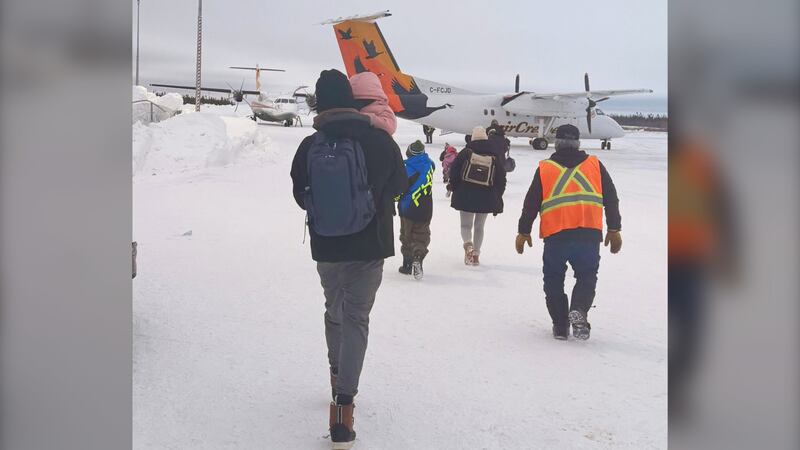
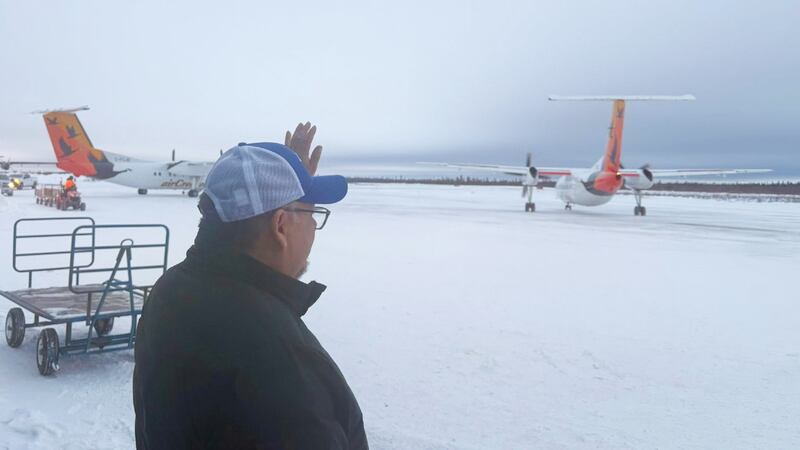
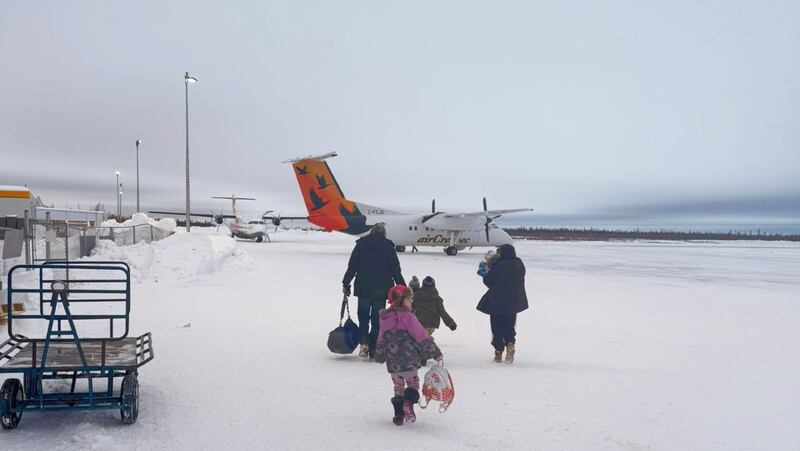
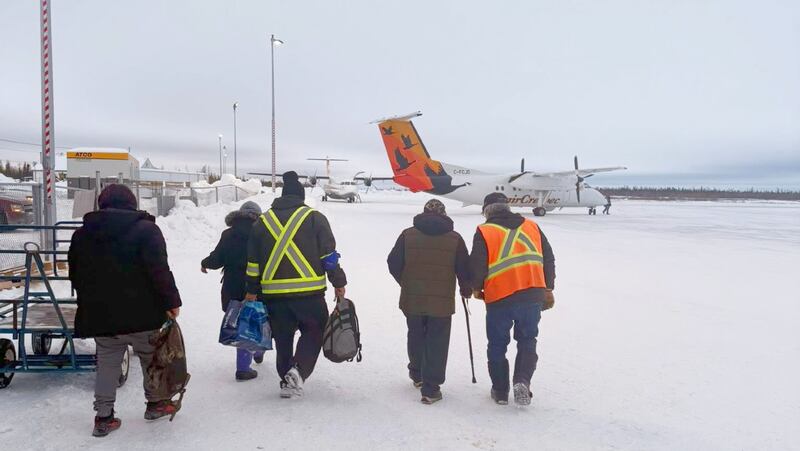
After five flights Thursday, the evacuation of Kashechewan First Nation was halted Friday due to bad weather.
But Chief Hosea Wesley said the state of emergency in the remote northern Ontario community remains in place and the evacuation will resume as soon as possible.
“We’re looking for good weather tomorrow to start the evacuation again and through the coming weekend and through the coming weeks,” Wesley said.
Last weekend, the community’s water treatment system failed, sending sewage into homes and contaminating the water supply.
Indigenous Services Canada sent technicians to help repair the infrastructure, but the chief isn’t sure how long that will take.
“We’re hopeful that everything will be done. I’m not going to say the dates or the days, but we’re just waiting for confirmation from them,” Wesley said.
The First Nation is without potable water and the community’s only health clinic had to be moved to a temporary site after being flooded with sewage.
While the clinic is open, it can only handle emergencies.
It’s why Wesley wants a full evacuation of the entire 2,200 population. So far, 175 vulnerable residents have been evacuated to Timmins and Kapuskasing.
Managing that evacuation is the Loomex Group, which provides emergency social services and transportation hub services across Ontario. The company’s Responsive Ready division is working on the evacuation.
President and CEO Trent Gervais said its emergency operations centre in Peterborough is coordinating efforts in multiple sites.
Once flights out of Kashechewan resume, Gervais said his crews will work to get spaces in Kapuskasing filled before moving on to the next evacuation hub, which is being set up in Kingston.
“I want … to get these people to safety so they have some running water to bathe and drink and have a shower. Everything that we enjoy every day I want to see them out of there to get a break from that,” Gervais said.
Loomex crews deployed to the evacuation hubs to provide wraparound services to evacuees.
“We’ll be there as long as they need us,” he said.
“We’ll ensure that in each one of our sites we’re listening to the community and we’re getting them the support they need.”
Loomex has also set up a transportation hub in Sault Ste. Marie, where planes can refuel and evacuees can eat before heading to their host communities.
“When they’re ready to go home, we’ll do everything in reverse,” Gervais said.
Help for evacuees
Ontario’s Ministry of Emergency Preparedness and Response sent this statement in an email to CTV News:
“Ontario is working with the federal government, First Nations leadership and local partners to support the safe evacuation of Kashechewan First Nation residents that began on Jan. 8 … and is ongoing. The Provincial Emergency Operations Centre is engaged with Indigenous Services Canada and other partners to coordinate planning and logistics and ensure all evacuees have access to wraparound supports and services, including health care, education and other social services.”
In the meantime, contractors have been flown into the community to begin repairing the water treatment system.
Wesley is adamant that Kashechewan needs new infrastructure. Once this crisis is over, there will be a discussion about a feasibility study to replace the aging system.
“Keep going at it, keep pushing what needs to be done in our community,” he said.
Wesley has also invited the Minister of Indigenous Services Canada, Mandy Gull-Masty, to visit his community and see first-hand what the situation is like, but has yet to receive a response.
RELATED STORY:

