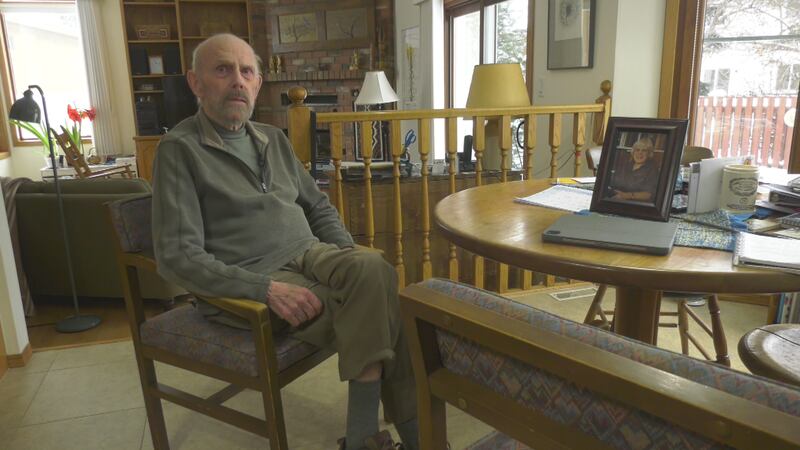
John Campbell is quick to tell anyone that his wife, Margaret, is “quite a lady.”
She has a master’s degree in paleontology, he says. The Edmonton couple, married for an accomplished 61 years, lives alone, and they’re fairly independent, he says.
So when Margaret, 84, fell and broke her hip on Saturday, John’s world stopped for a brief, terrifying moment.
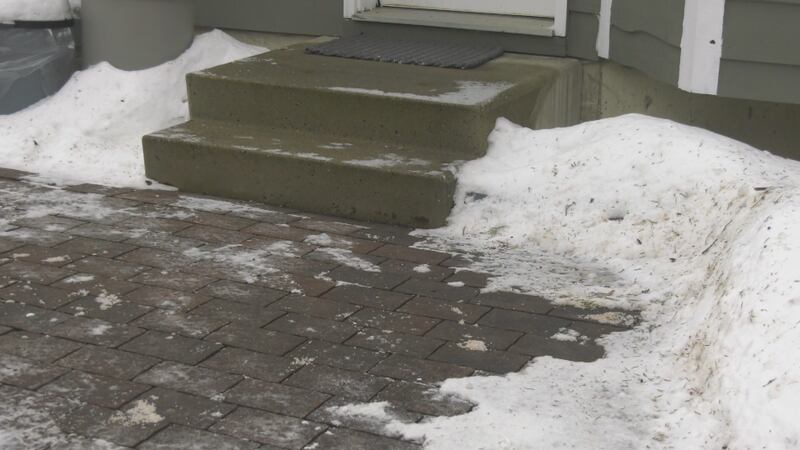
“She was taking the garbage out, which was a normal thing for her to do,” John, 87, told CTV News Edmonton on Friday. “She stepped out, I didn’t see it, onto the back step and fell. It was very, very slippery.”
John found her moments later and called 911. He recalled her not wanting to move because she suspected she had seriously injured herself, so her husband began laying blankets around her while she shivered against frozen patio bricks.
“It took quite a while for the ambulance to come,” he recalled.
In fact, neighbours and witnesses say it took more than an hour for an ambulance to finally arrive for Margaret.
After about half an hour, John enlisted the help of neighbours who were able to put an electric vest and other covers over Margaret while they waited for the ambulance.
“She kept saying, ‘I’m cold. I’m cold.’ It was upsetting,” John said.
They called 911 again – this time, a supervisor told them to warm up a blanket in the dryer and wrap her in it to keep her warm. About 20 minutes later, an ambulance finally arrived, loaded her onto a stretcher and got her to a hospital nearby.
John remembers his wife being brought into surgery fairly quickly once x-rays revealed she had broken her hip. A week later, Margaret is recovering well. She was awaiting a transfer to a rehabilitation facility in Leduc on Friday afternoon.
And while John is relieved to have his wife of six decades closer to home, and ready to take her full recovery one day at a time, he’s still unsure why Margaret had to wait so long in the first place.
“I really wish it had been easier for the ambulance to get here forthwith. I would expect a normal ambulance to be able to get here in short order,” he said. “It was a very icy day … but still, I think somebody should keep her from being chilled.”
In a statement to CTV News Edmonton, Emergency Health Services-Alberta (EHS), which oversees the province’s ambulance and paramedic system, said their response to John Campbell’s second 911 call was upgraded to priority after learning Margaret had been waiting outside.
Once the urgency had increased, paramedics were at their home in less than 30 minutes.
“We recognize that that is still a long time. EHS and ACA (Acute Care Alberta) are working together to address significant system capacity pressures right now,” the statement read.
EMS wait times
Wait times for emergency services have been a point of pressure in Edmonton and across Alberta for some time, according to the Health Sciences Association of Alberta (HSAA).
Mike Parker, president of the union, which advocates for paramedical professionals, said stories like the Campbells’ are indicative of a “failing” system.
“This has been a conversation for not months, but years,” he told CTV News Edmonton in a Monday interview. “We’ve been talking about resource levels in emergency services, in health-care in general, in this province, for a very long time.”
He said paramedics are often reporting out more than 30,000 overtime hours each month, meaning those shifts would otherwise go unfilled.
“Our dispatchers are trying to find ghosts. They have no one to send to these emergencies … our paramedics are doing their job, but there’s not enough of them to do the job Albertans require,” he added.
In March 2025, Alberta Health Services (AHS) shared a memo to EMS staff noting higher-than-normal wait times as backlogged surrounding communities call for ambulances. At the time, AHS said it had been making “substantial progress” on recruitment and retention of EMS staff.
EHS said in its statement Friday that Edmonton staff levels are “strong,” but “acute care pressures create pressures system-wide, including on EHS response times.”
Parker said there was still a paramedic vacancy rate of more than 12 per cent across Alberta.
In October, EHS began trials where eligible patients could be offered a taxi service to the nearest hospital emergency department or urgent care centre at no cost. The six-month pilot project is still underway and could be expanded to other communities outside of Edmonton if successful.
“Does (that) relieve some of the pressure on the system? There’s a good chance,” Parker said. “But again, we don’t know … what we do know today is that in a specific event on the weekend, it played out critically in a failed system.”
Parker says the solution to what he and other colleagues have called a health-care system in “crisis” is complex as Edmonton navigates a population boom, increased demand and strain on workers.
John, meanwhile, is just happy to have the other half of his team back, with Margaret on the road to recovery.
“She’s feeling pretty good, speaking … She was getting to relax and feeling much better and looking much better. So it’s going well,” he said.
“I’m really looking forward to seeing her down in that rehab when she gets there.”
With files from CTV News Edmonton’s Connor Hogg, Brittany Ekelund and Angela Amato

