Imagine having a passing conversation with a stranger who flirts with you, and you decline, only to have a first-hand video of the encounter posted online without your knowledge, consent, or awareness that you’d been recorded in the first place.
That’s exactly what’s happening to a growing number of Vancouver women as a social media “pickup” trend has arrived in the city with multiple accounts posting their rejections, and occasional success, on social media platforms.
Kassy Zanjani had no idea she was targeted by one of the men behind those accounts until a friend sent her a link to a social media video with more than 20,000 views.
“When I saw it, I was in shock and it definitely brought up a lot of anxiety,” she told CTV News, explaining that she’d been enjoying a night out with friends when she was approached at a fast food restaurant in the Granville entertainment district.
At the time, she had no idea the sunglasses he was wearing were Meta smart glasses — which she’d never heard of before — recording the entire conversation, which was later posted to at least two platforms.
“I felt quite humiliated as I felt like the intention behind this was to degrade women, as well as being intoxicated myself that night,” said Zanjani. “Maybe for some, seeing this as some sort of like viral, cheap click kind of video that’s maybe funny to them, but it’s actually really violating for the person that it’s happening to.”
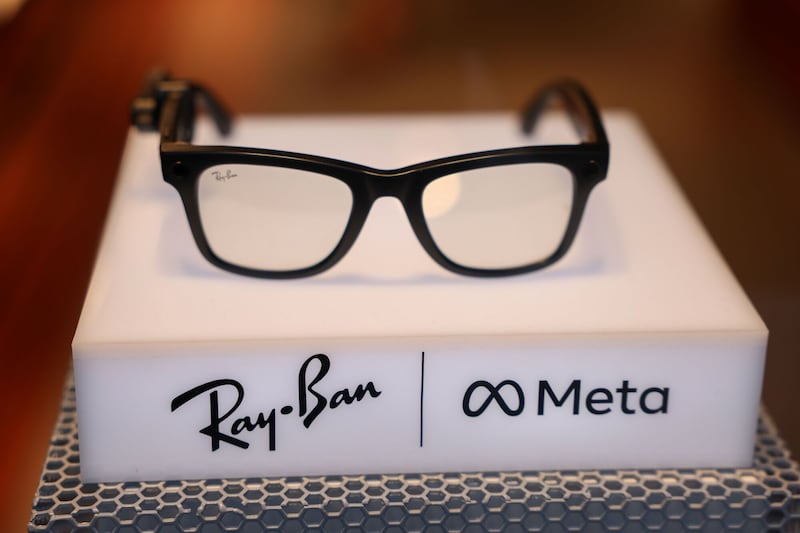
The University of San Francisco takes that issue seriously: In the fall the Office of Public Safety issued a “crime safety advisory” for a suspicious “male and wearing Ray-Ban Meta sunglasses, who has approached women with unwanted comments and inappropriate dating questions,” urging students to report him to security.
Increasing focus on the issue
There’s no shortage of similar videos across the U.S. and Europe, with some accounts garnering hundreds of thousands of views on some posts.
The issue is being hotly debated in the influencer community, with some enjoying the ability to post first-person interactions without fumbling with a phone, as others question the ethics of filming and posting without notification or consent.
Zanjani asked Meta to take her video down from Instagram, which the company did, but she says that TikTok has not responded to her request.
For its part, a Meta spokesperson tells CTV News that “Our terms of service clearly state that users are responsible for complying with all applicable laws and for using Ray-Ban Meta glasses in a safe, respectful manner,” which includes avoiding “activities like harassment, infringing on privacy rights, or capturing sensitive information.”
The company also pointed out that Meta smart glasses have an LED light that indicates when recording, but a quick search on how to block the indicator light produces myriad how-to videos on YouTube and multiple products to circumvent the feature, including packages of blocking stickers.
The latest models feature artificial intelligence, which can provide real-time transcription for those with hearing problems, for example, as well as other features that can help disabled users or those looking for increased day-to-day efficiency.
The AG takes notice
In 2024, British Columbia became a leader in addressing online harms when the governing NDP passed legislation targeting the removal of non-consensual intimate images to social media platforms, which has seen hundreds of complainants reach out to the province for support.
The attorney general expressed frustration at the new trend of non-consensual “pickup” videos, which victimize, typically, young women in a new way.
“It’s my view that our legislation and our laws just generally have not kept up with online harms, and that people are experiencing all these new types of harms as technology changes and there’s another version of it,” said Niki Sharma.
When CTV News asked if it was possible to draft legislation to capture scenarios not contemplated at the time of writing, she explained that government had tried to make the definitions as broad as possible, but that they knew they’d have to adapt it as new issues emerge.
“Something that like 50 years ago made sense of what privacy meant probably doesn’t make sense right now,” said Sharma. “We think that there’s a need for a federal-level intervention because they have the biggest tools to hold companies account, to set a standard across the board of what online harm is in Canada, but if we need to fill gaps in B.C. with our legislation, then I’m absolutely looking for that.”
RELATED STORIES:

