


Despite U.S. President Donald Trump’s latest actions in Venezuela and ramped up rhetoric about acquiring Greenland, both of which have renewed speculation from some about Trump’s American expansionism goals, experts say an attempt to annex Canada using military force is “far-fetched.”
On Jan. 3, Trump launched a military operation in Venezuela, during which U.S. troops captured Venezuelan President Nicolas Maduro and transported him to the United States.
Maduro’s government has not been officially recognized by several countries, including Canada, for years.
Trump has also made threats against Greenland, saying the U.S. should take over or acquire the Danish autonomous territory to prevent Russia and China from doing so first.
And, in recent weeks, he’s made public comments about American pre-eminence in the Western hemisphere.
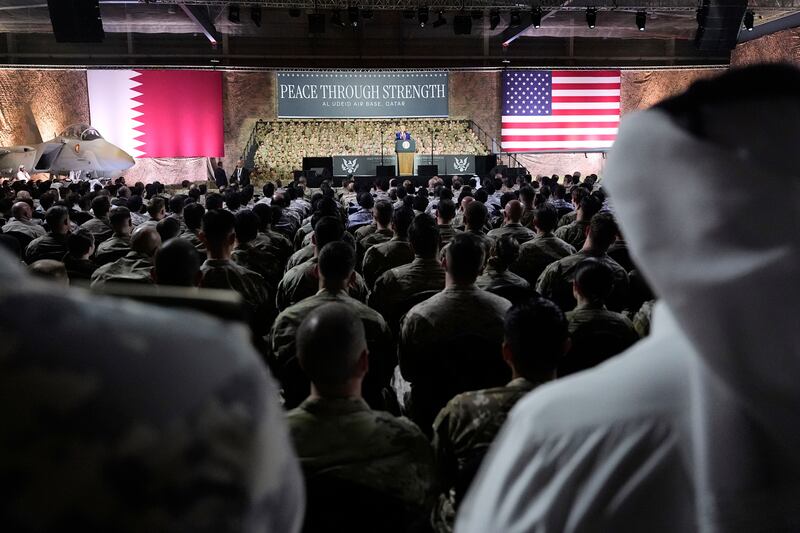
According to a national security strategy released by the White House in November, the U.S. is aiming to “restore American preeminence in the Western Hemisphere” as a “condition of our security and prosperity.”
The Canadian Press also reported Wednesday that new polling suggests nearly a third of Canadians — and one-in-five Americans — believe the United States might attempt “direct action” to take control of Canada.
‘Off the table’: Lawson
Still, experts say U.S. military action against Canada is highly unlikely.
“I think that even in the wildest dreams that we’re having about this horrible kleptocracy that’s developing in the United States, they would go to any lengths to avoid that scenario,” said former chief of the defence staff (Ret’d) Gen. Tom Lawson in an interview with CTV News.
Lawson said he was referring specifically to “action that would bring American military personnel in direct contact with the Canadian population, and worse, Canadian military personnel,” calling it “off the table.”
“First of all, I think it’s too unpredictable what could happen and what it could descend into,” he said. “Second of all, I don’t think it backs up any strategic outcomes that are beneficial for the Americans. So, I think they will bend over backwards (to avoid it).”
Canada’s NATO membership a factor
Venezuela and Canada also present very different contexts for myriad reasons, including Canada’s membership in NATO, and its historically close relationship with the United States.
NATO’s Article 5 outlines the principle of collective defence and asserts that an attack on one member is considered an attack on all members. That would mean if Canada were attacked, all NATO member countries — including the United States — would, under well-established norms, consider that an assault on all and be met with a proportional response.
In a post to Truth Social last week, Trump again criticized NATO, saying member countries were not pulling their weight until he forced them to upon re-election last year.
Still, the president asserted the U.S. will “always be there for NATO.”
What are experts saying?
Trump’s former national security adviser John Bolton called the idea of U.S.-led military action against Canada “far-fetched” in an interview on CTV Power Play with Vassy Kapelos last week.
Asked what Canada should take from Trump’s comments about American dominance in the Western Hemisphere — including a social media post by the U.S. State Department calling it “our” hemisphere — Bolton called the president “impulsive” and “transactional,” and said there is no one in his administration to caution him against taking actions that could have serious consequences.
“I think any kind of move against Greenland or, even more far-fetched, against Canada, would be the end of the NATO alliance, which would do incalculable damage not just to the United States, but to the entire Western world,” Bolton said. “We’re now down to just a little bit over three years before his term is over, and we have to collectively think of ways to minimize the damage, to turn his attention to something else, lest he cause real damage in NATO.”
Bolton added, however, that Trump’s threats, regardless of whether he has any real plans to follow through on them, cause harm to U.S. relations with other countries.
“I don’t think it’s going to happen, honestly,” said Henry Giroux, chair for scholarship in the public interest at McMaster University, in an interview with CTV News, referencing potential U.S. military action against Canada. “I think we should take it seriously, but the NATO issue would be a fundamental break that he could not justify, making the claim that he has still has some attachment to even the weakest forms of democracy.”
Giroux says there is “no question” in his estimation that Trump would use military force against Canada if he believed it necessary, but added he’s “not suggesting that’s inevitable,” only cautioning the threat should be taken seriously.
He added his larger concern is what U.S. action in Venezuela signals about the resurrection of a form of colonialism and imperialism, and said the issue is more about global capitalism, “a system that extracts resources for profit,” while Trump has “reduced politics to militarization.”
Roland Paris, director of the Graduate School of Public and International Affairs at the University of Ottawa, said that while the impulse to avoid inflammatory statements that could provoke Trump is a good one, Canada and its partners need to stand up for the principles of “sovereignty, territorial integrity and the inviolability of borders.”
“I don’t think the United States poses an immediate or medium-term military threat to Canada, but its actions are creating a more dangerous world, and we are certainly subject to economic coercion by the Trump administration at any time,” Paris said in an interview with CTV News this week.
He added that world leaders should take Trump’s threats seriously, because his actions against Venezuela show he’s willing to follow through on them. He also said the international community is in a “very difficult situation now,” with the rules-based order designed to keep powerful states in check being weakened.
Canada’s military readiness
Canada’s lack of military readiness — from personnel shortages and aging equipment — has been a widespread concern of military leadership, politicians and industry stakeholders for years.
When she was appointed in July 2024, Chief of the Defence Staff Gen. Jennie Carignan warned Canada may not be ready to respond to “conventional” and “unconventional” threats from adversarial state actors, pointing to Russia and China as examples.
“We feel safe in Canada,” Carignan told reporters at the time. “Historically, we have a great friend to our south, we have big oceans, we had a very deep, frozen Arctic, and that has historically shielded us well from many threats, (but) not so much anymore.”
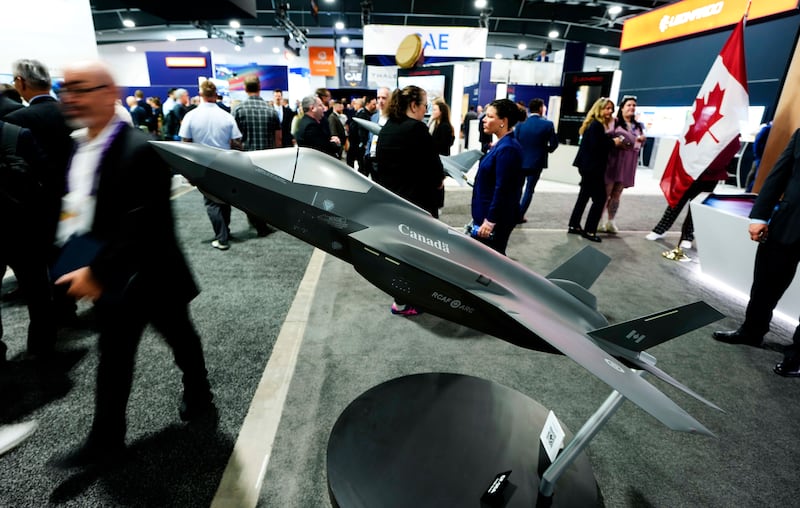
The country’s fighter jet and submarine fleets are aging and both in desperate need of replacement, with the federal government’s still-ongoing, nearly year-long review of its F-35 fighter jet purchase from American manufacturer Lockheed Martin causing diplomatic tension with the United States.
Recruitment and retention have also been longstanding issues.
In 2024, the Department of National Defence (DND) estimated the Canadian Armed Forces (CAF) was short approximately 16,500 troops after years of failure to recruit and retain more members than it lost to retirement or release. Former defence minister Bill Blair called the situation a “death spiral” at the time.
Lawson said factoring the difference in size of the American population and historic defence spending compared to Canada, “their military is about 40 times the mass, strength and funding of the Canadian military.” But he stressed that given the context, any action that would see the U.S. military come into contact with the Canadian civilian population or military is extremely remote.
The federal government, meanwhile, has made several changes in an attempt to right the ship, including by promoting culture change within the organization, boosting recruitment through incentivization, and streamlining the recruitment process.
In August, Prime Minister Mark Carney announced pay raises retroactive to April 1, 2025, including a 20 per cent wage increase for privates in the Regular Force. A new Military Service Pay benefit and additional compensative initiatives were also added.
Carney has also implemented a slate of measures to address equipment shortages, including appointing a secretary of state for defence procurement.
Last month, the federal government also established the Canadian Joint Forces Command, and new CAF command designed to “strengthen leadership, coordination, and accountability for joint military capabilities across the CAF.”
With files from CTV News’ Stephanie Ha, Mike Le Couteur, Genevieve Beauchemin and Judy Trinh

