
When Quebec Premier François Legault announced his resignation last Wednesday, the reaction was mixed, with political leaders praising his leadership and dedication to Quebec and unions and groups representing the English-speaking community pointing to a history of strained relations.
Throughout his seven years as premier, Legault ushered in landmark pieces of legislation, including ones aimed at protecting the French language and making Quebec a more secular province.
He leaves behind multiple bills that are still in the middle of constitutional challenges, including one that is now before Canada’s highest court.
Here is a look at the main ones that remain in legal limbo.
Bill 96
An Act respecting French, the official and common language of Québec
What does the bill do?
One of the most publicized bills from the Legault government, Bill 96 introduced a major overhaul of the province’s Charter of the French Language.
Adopted in May 2022, its effects on Quebec society are large in scope by requiring more French signage for businesses, requiring new immigrants to receive government services exclusively in French six months after their arrival, capping enrolment at English-language CEGEPs, authorizing search-and-seizure powers without warrants for the province’s French-language watchdog, among other reforms.
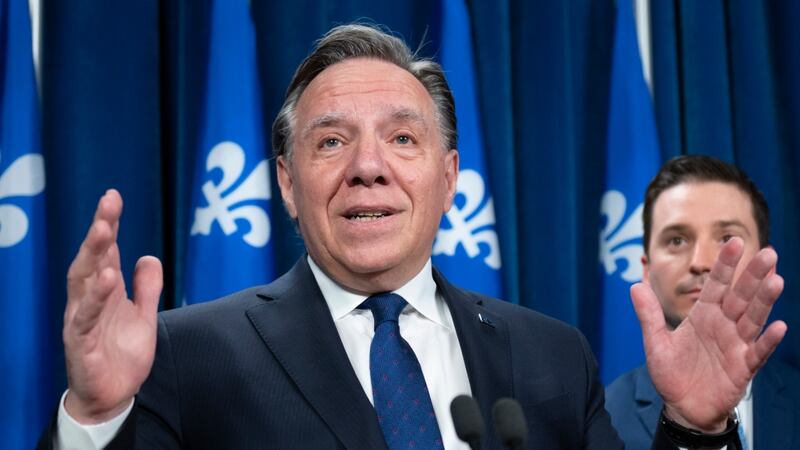
The Coalition Avenir Québec (CAQ) government has said the law is needed to protect the French language, which the premier says is in decline in Quebec. Critics say the sweeping language reform infringes on the rights of the English-speaking community and forces unlawful and unrealistic legal requirements on businesses and newcomers.
The Legault government passed the law by proactively invoking the notwithstanding clause, a parliamentary tool that allows governments to pass laws that violate certain sections of the Charter of Rights and Freedoms for a five-year term and shield them from constitutional challenges.
What is the current status?
One of the main groups challenging Bill 96 is the English Montreal School Board (EMSB). The EMSB has won partial victories when the Quebec Court of Appeal struck down provisions that would have required English school boards to communicate exclusively in French.
- No deadline extension for businesses to conform to Bill 96 rules: Roberge
- Following LaSalle College fine, English groups protest Bill 96
The suspension of parts of Bill 96 will continue until the courts rule on the merits of the law, which could take several years. The constitutional challenge is still before the Superior Court.
Many other groups have sued the government over the language law, and those cases are ongoing. Some observers speculate that the bill could reach the Supreme Court of Canada.
Bill 21
An Act respecting the laicity of the State
What does the bill do?
Bill 21 was adopted in June 2019. It bans public workers in positions of authority, such as teachers, principals, police officers, lawyers, and judges, from wearing religious symbols at work. The banned symbols include hijabs, kippahs, turbans, and large crosses.
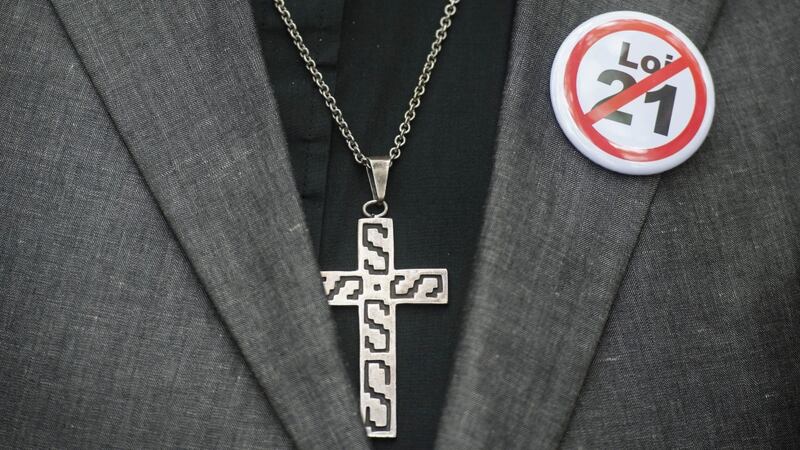
The Legault government defended the law by stating it is “reasonable” and accepted by the majority of Quebecers, and is needed to protect the secular nature of Quebec. The bill’s opponents call it a “discriminatory” law that violates people’s religious freedoms and disproportionately affects Muslim women who wear the hijab.
What is the current status?
Bill 21 has reached the Supreme Court of Canada, a move that will be watched closely by rights groups and constitutional observers.
Several groups are challenging the law, including the EMSB, the National Council of Canadian Muslims, the Canadian Civil Liberties Association, and teachers’ union the Fédération autonome de l’enseignement.
- Five things to know about Quebec government’s new secularism bill
- Religious minorities feel less safe, welcome in Quebec since Bill 21 was adopted: survey
In 2021, a Superior Court judge upheld parts of Bill 21, but exempted English-language school boards from it and allowed members of the Quebec legislature to wear face coverings.
Then, in February 2024, the Quebec Court of Appeal upheld the secularism law, ruling in a unanimous decision that it is constitutional. In a legal victory for Legault’s government, the Court of Appeal overturned an exemption for English school boards.
The EMSB then voted in April 2024 to ask the Supreme Court to hear their appeal. Hearings at the Supreme Court are expected to begin on March 23.
Several other groups have intervened in the case, including the federal government, which is asking the Supreme Court to rule on Quebec’s preemptive use of the notwithstanding clause and to set limits on it.
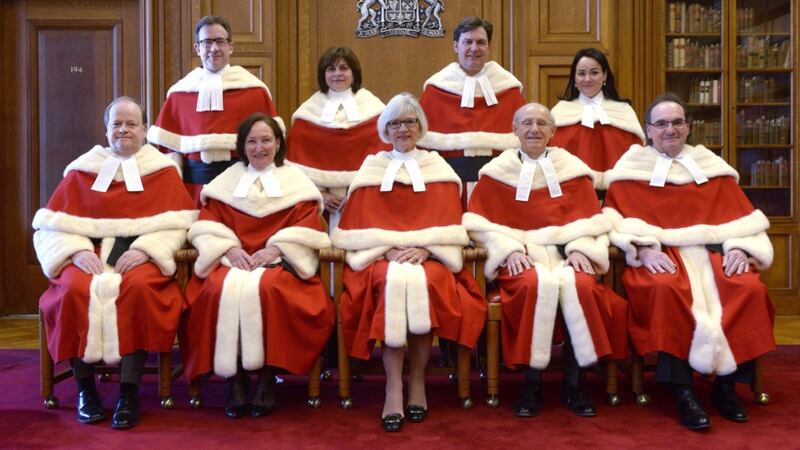
“This will be one of the most important constitutional decisions of the last few decades, nothing less,” Louis-Philippe Lampron, a Laval University Faculty of Law professor, told The Canadian Press last September.
Bill 89
An Act to give greater consideration to the needs of the population in the event of a strike or a lock-out
What does the bill do?
Bill 89 was adopted in May 2025. It effectively allows the labour minister to end a labour dispute and force arbitration in certain circumstances.
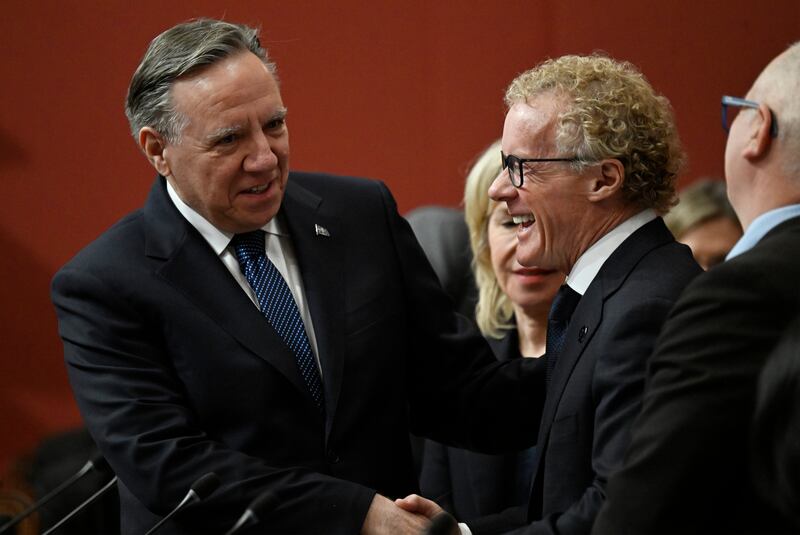
Specifically, it sets a framework for maintaining “minimum services” during a strike or lockout to ensure the “well-being of the population” and to avoid “disproportionately affecting the social, economic or environmental security” of the population.
Boulet has defended it by saying Quebec has far more strikes than any other province, and the law strikes the right balance between the right to strike and the needs of the public. Critics say it is an “authoritarian” law that gives too much power to the labour minister and is an affront to longstanding workers’ rights.
What is the current status?
Labour groups, including the CSQ, the CSN, the FTQ, the CSD and the APTS are challenging the bill in Superior Court, arguing that it violates their fundamental rights to freedom of association and freedom of expression.
- Unions slam Quebec government for adopting law limiting strikes
- Bill 89 faces constitutional challenge from McGill law professors, unions
A group of McGill University law professors has also joined a legal challenge to the law’s constitutionality.
Bill 40
An Act to amend mainly the Education Act with regard to school organization and governance
What does the bill do?
Bill 40 was adopted in February 2020. It overhauled the education system by converting school boards into government-run school service centres.
To pass the bill, the Legault government invoked closure — a legal tool that limits debate on a bill and fast-tracks it into law.
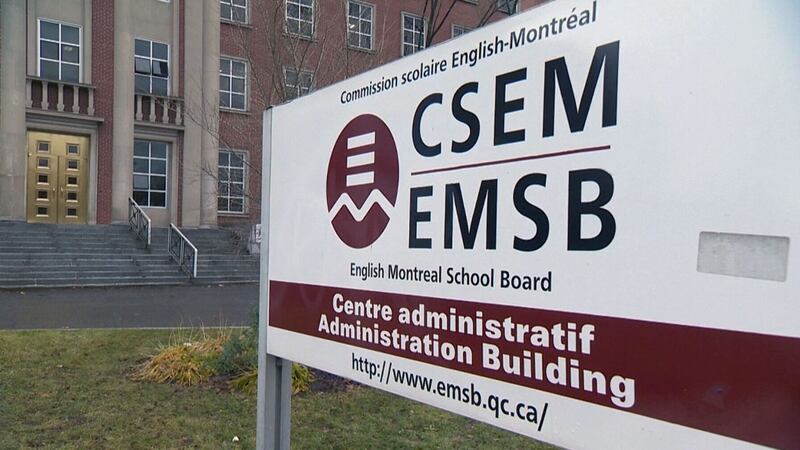
Then-education minister Jean-François Roberge said at the time that the law was meant to modernize the Quebec school system by giving more power to parents by eliminating elected commissioners.
Those opposed to the law say it weakens English-language education rights and that the English school board system offers more independence for minority linguistic groups.
What is the current status?
In May 2025, the Quebec government applied to the Supreme Court of Canada for leave to appeal a lower court decision that ruled parts of the bill were unconstitutional.
The Supreme Court has not yet decided whether it will hear the case.
Quebec wants the Supreme Court to weigh in on the case after the Quebec Court of Appeal ruled in April 2025 that parts of the bill violated fundamental minority education rights enshrined in the Charter of Rights and Freedoms. Anglophone groups called it a “historic decision.”
The appeal court upheld a 2023 Superior Court ruling, which stated that English school boards have the right to manage their own schools, and that the bill went too far in trying to abolish them.
Bill 94
An Act to, in particular, reinforce laicity in the education network and to amend various legislative provisions
What does the bill do?
Adopted in October 2025, the bill aims to broaden the existing ban on religious symbols for public sector employees to include even more school workers and even volunteers, but it also includes provisions that affect English school boards.
Part of the bill replaces the elected commissioners on a committee that manages and distributes school tax revenue to the two English-language school boards on the Island of Montreal — the EMSB and the Lester B. Pearson School Board (LBPSB) — with the director general of the school board. Under the changes in Bill 94, the majority of the people sitting on the Comité de gestion de la taxe scolaire de l’île de Montréal (CGTSIM) would be appointed by the provincial government.
What is the current status?
On Dec. 17, 2025, the EMSB filed a lawsuit in Superior Court to contest the constitutionality of Bill 94. The board argues that provisions in the bill that change the composition of the Comité de gestion de la taxe scolaire de l’île de Montréal infringes on section 23 of the Charter of Rights and Freedoms.
The lawsuit says the Charter guarantees the right to manage and control language instruction and facilities, “including the right to choose representatives empowered with the exclusive authority to make certain decisions, including decisions regarding the expenditure of funds for minority language instruction and facilities.”
The case is still before the court.
Could Bill 1 be next?
While not yet passed, the Legault government’s Quebec draft constitution bill could join the list of bills that are challenged in court.
Tabled last October, the Québec Constitution Act, 2025, also known as Bill 1, is a sweeping bill that aims to defend what the CAQ government has deemed core values in Quebec, including secularism, equality between men and women, and the status of French as the only common language in Quebec. It would enshrine the rights to abortion and medical assistance in dying and defend the Quebec legislature’s use of the notwithstanding clause while boosting the province’s autonomy within Canada.
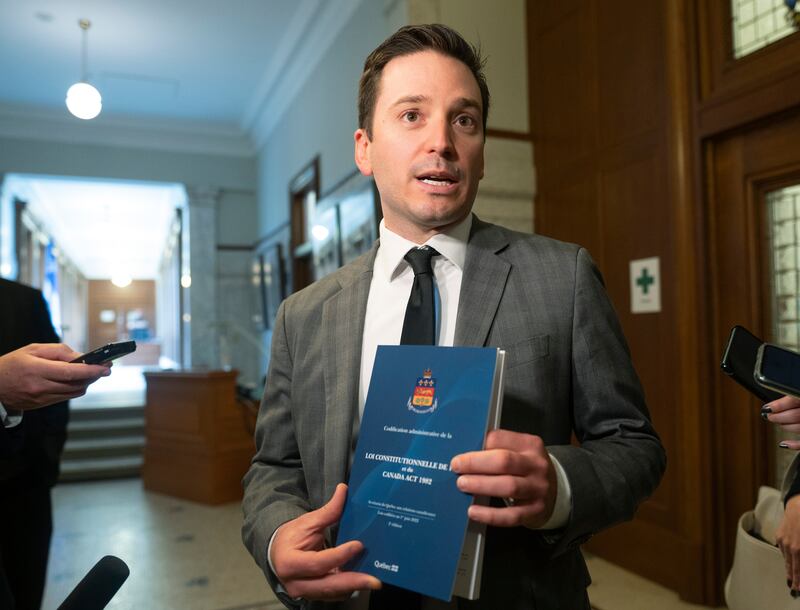
Quebec Justice Minister Simon Jolin-Barrette said the constitution would be “the mirror and shield of the Quebec nation,” and is long overdue.
The number of groups that have condemned the proposed legislation is vast, including the Canadian branch of the International Commission of Jurists (ICJ), which has called on the United Nations to look into the bill, claiming it infringes on universal human rights. In its submission to the UN, the group said the legislation places the collective rights of the “Quebec nation” above those of individuals, minorities and Indigenous peoples.
- Quebec minister fears courts could roll back abortion rights
- Quebec Solidaire calls on opposition parties to fight Quebec constitution bill
One of the provisions that has raised alarm bells among legal experts — and Quebec’s English-speaking community — would ban groups that receive public funding from using that money to launch legal challenges of laws that “protect … fundamental characteristics of Quebec.”
The provincial justice minister cited the EMSB, which sued the government over Bill 21, as an example of a group that would be affected by the provision, saying legal challenges would have to be paid for “in some other way than by using Quebecers’ money.”
Quebec rights organization Droits collectifs Québec is among the groups that support the draft constitution bill.
Other groups that have denounced it as well include the Barreau du Québec (the provincial body that oversees lawyers in Quebec), which described it as bordering on “authoritarian," while others have criticized the CAQ for tabling the monumental bill without first doing any consultations.
After public pressure, consultations started last December and are scheduled to resume in February.
With files from The Canadian Press

