Medical personnel are preparing to evacuate the Kashechewan First Nation just days after the parasite cryptosporidium was confirmed in the community’s drinking water.
Indigenous Services Canada says the community’s nurses are expected to leave sometime Monday, several days after residents were advised of their planned departure.
“Most community members have evacuated and, in consultation with the Chief, nurses will depart after the evacuation of the remaining individuals who choose to leave,” Indigenous Services Canada spokesperson Eric Head wrote in an emailed statement to CTV News.

Tyson Wesley, executive director of the Kashechewan First Nation, says the community’s paramedics are expected to follow, leaving the health facilities empty. The closest hospital with medical assistance is in Fort Albany, a roughly hour-long drive across the frozen Albany River on a winter road.
Indigenous Services Canada says it is working with the First Nation, Weeneebayko Health Authority, Ontario Ministry of Health, and ORNGE air ambulance service to ensure there is a plan for alternative access to health services, which includes virtual access to care for those who stayed in the community.
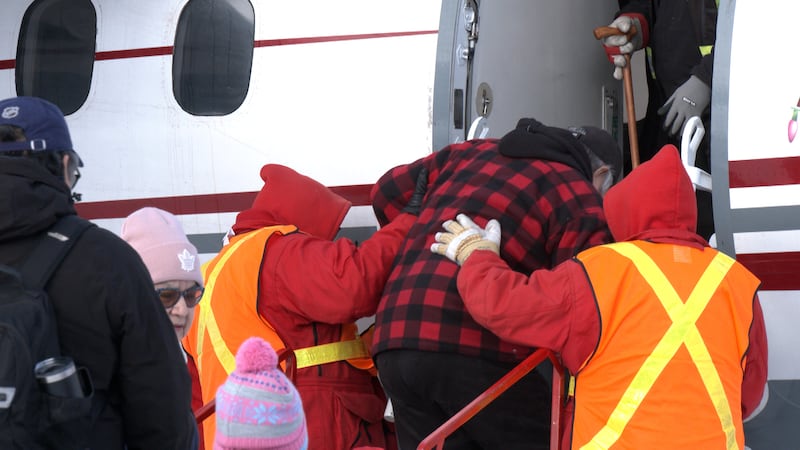
So far, approximately 370 people remain in the remote, fly-in-only community of about 2,300. Those who chose to leave are being temporarily housed in communities across Ontario, including Timmins, Kapuskasing, Kingston and Niagara Falls.
Wesley says plans are in place to evacuate any remaining residents who want to leave.
“We are starting to make plans to get these individuals, these families out of the community,” Wesley said.
In a statement, Public Safety Canada said it’s in contact with several departments and will be ready if the provincial government request additional assistance through a Request for Federal Assistance (RFA).
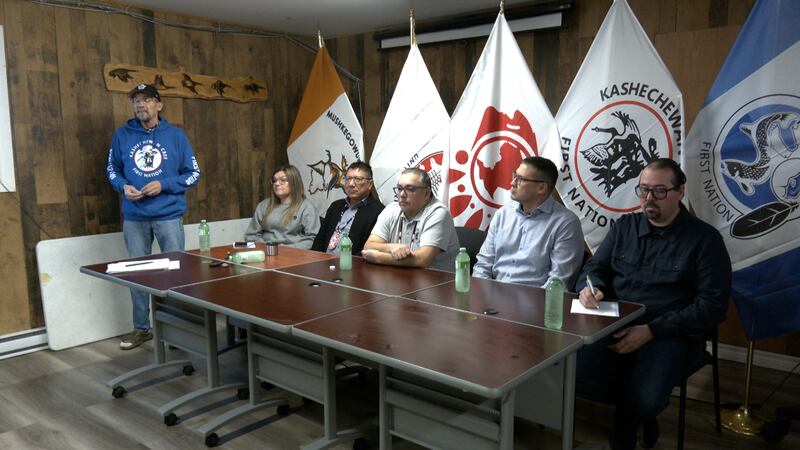
Nearly one month since evacuations began
Evacuations began in Kashechewan last month after a state of emergency was declared when the community’s water treatment facility failed. Defective pumps pooled sewage into the community’s drinking water supply and caused sewage to backup in some homes, as well as the local health clinic.
Late last week, the community’s water tested positive for the presence of cryptosporidium, a parasite that causes gastrointestinal illness. So far, more than 60 people have tested positive for the parasite.
Dr. Isaac Bogoch, an infectious disease specialist, said it isn’t hard to get sick as people can get it from ingesting contaminated food or water, from being around people who have contracted the parasite.
“The vast majority of people will recover on their own and will actually not even require any medication,” he said. “Once symptoms develop, it typically runs its course in about seven to 14 days.”
Bogoch says most people will experience gastrointestinal issues, though symptoms can be worse in the very young, the elderly and those who are immunocompromised.
“Most people won’t have a severe illness, although it certainly can cause severe illness in some and those who are more prone,” he said.”

The community does not know how the parasite got into the water supply, but Wesley says they are looking into it, adding that community leaders are also working with engineers to try and find a solution that will allow residents to move back into their homes.
But for now, however, there is no timeline on when that might happen or what the right solution is.
“We are trying to develop solutions for the water plant and trying to find a timeline, however, we are still working out those details and for our engineers to finish their assessments and talk to contractors,” Wesley said.
Welsey says engineers are looking at options from repairing and replacing the water treatment system, to flushing the entire distribution system to kill the parasite. Individual houses will also have to be deep cleaned to eliminate the cryptosporidium.
In a statement, the office of Eleanor Olszewski, the federal minister of emergency management and community resilience, said “assistance is being provided to the community as it works to find a solution.”
“ISC is supporting Kashechewan and their consultant engineer to assess the water plant and to develop a course of action, which may include disinfecting and upgrading the water treatment system to eliminate cryptosporidium,” said Mathis Denis, Olszewski’s communications director. “We recognize the seriousness of the water crisis and the strain it is placing on the residents of Kashechewan.”
But even when the water is safe to drink again, Wesley says it will take time to build back trust. In 2005, the community dealt with an E. coli outbreak that contaminated the water supply, which he says eroded trust.

