


Transport Canada said on Tuesday it was working with the Federal Aviation Administration over delays in approving Gulfstream jets, after U.S. President Donald Trump threatened to decertify and slap tariffs on Canadian-made aircraft.
Trump said last week that the U.S. would decertify Bombardier Global business jets and threatened 50 per cent import tariffs on all aircraft made in Canada until the country’s regulator certified a number of jets produced by U.S. rival Gulfstream.
While the U.S. FAA is not expected to strip Canadian planes of their regulatory approval, question remains over whether Trump would follow through with his latest tariff threat. Aerospace has generally been less impacted than other sectors by Trump’s U.S.-led trade war, with new planes and parts from Europe and Canada largely crossing borders without duties.
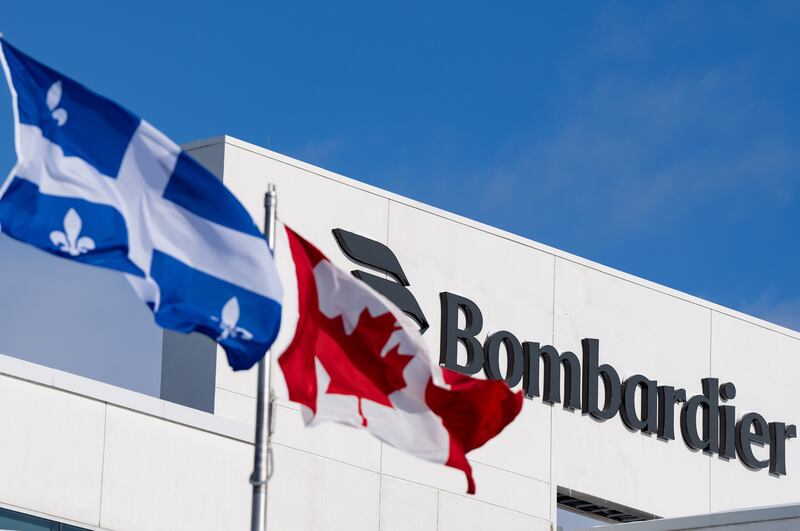
The Canadian regulator said in a statement it was working with the FAA, Bombardier and Gulfstream Aerospace parent company General Dynamics to “resolve outstanding certification matters in a way that protects safety and regulatory integrity, while maintaining market access on both sides of the border.”
The dispute has raised alarm in Canada and the U.S., where Canadian-made jets both comprise a key part of regional airline service and generate employment for thousands of Americans.
Republican Senator Jerry Moran of Kansas, who chairs an aviation subcommittee, told Reuters he had spoken to both Bombardier and Gulfstream and pressed for a quick resolution.
Bombardier’s defense headquarters in Wichita, Kansas has 1,300 jobs and does work for the U.S. government.
“This seems to me to be something that ought to be resolved quickly between the Canadian government and the U.S. government,” he said. “We’re a united North American market, and we need to conduct ourselves in that way.”
Democratic Senator Maria Cantwell called decertifying Canadian aircraft a “bad idea,” noting growing demand for airplanes globally. “We want to win that market on a fair and competitive process. So things that basically distort that market competition, like tariffs are a problem, and certainly people threatening to decertify planes is also a problem.”
The dispute also reverberated within the global aviation industry where the certification, or regulatory approval of planes, is expected to be a sedate technical process.
“Certification is a safety assessment; it should never be a political issue,” the former head of the European Union Aviation Safety Agency, Patrick Ky, recently told Reuters.
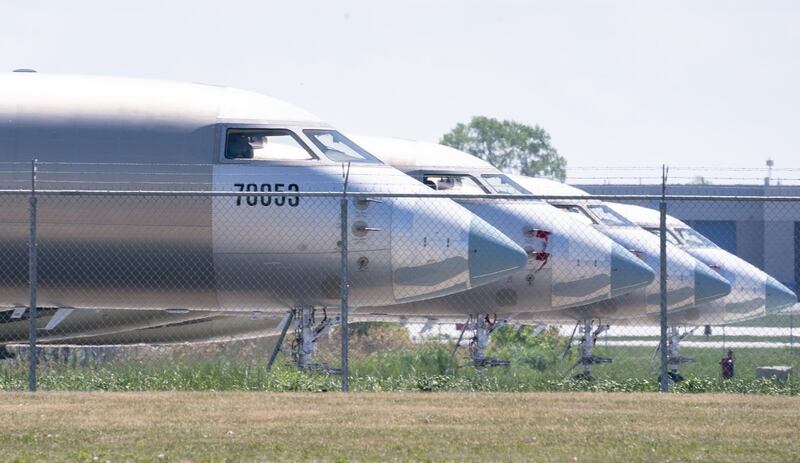
The International Civil Aviation Organization, the UN’s aviation agency, declined comment on Trump’s remarks but said “aircraft certification must remain grounded in safety, technical evidence and internationally agreed standards.”
The FAA and Gulfstream were not immediately available for comment. Bombardier referenced an earlier statement where it called for a quick resolution.
Private aviation attorneys have told Reuters that any delays in certifying Gulfstream’s latest jets have not impacted its orders in the small Canadian market.
Earlier on Tuesday, Canadian Industry Minister Melanie Joly said the country will do all it can to support Bombardier.
" We will do all we can, of course, to support the company and the aeronautical sector," Joly told reporters.
Joly, who also said she had spoken to Bombardier CEO Eric Martel on Monday, did not give details.
(Reporting by David Ljunggren in Ottawa and Allison Lampert in Montreal. Additional reporting by David Shepardson in Washington)

