A Calgary man who travelled to Syria more than a decade ago to join ISIS has been sentenced to 16 years in prison, with eligibility for parole after serving eight years.
Jamal Borhot, 35, was found guilty in December of three counts of participating in a terrorist group for assisting ISIS activities in 2013.
Justice Corina Dario handed down her decision Wednesday afternoon, citing the serious and deliberate nature of Borhot’s offences.
“Terrorism is reprehensible and those who engage in it must pay a heavy price. It must be dealt with in the most severest of terms,” Dario said.
Court heard Borhot, alongside his cousin Hussein Borhot, illegally entered Syria through Türkiye in 2013 with the intent to join ISIS.
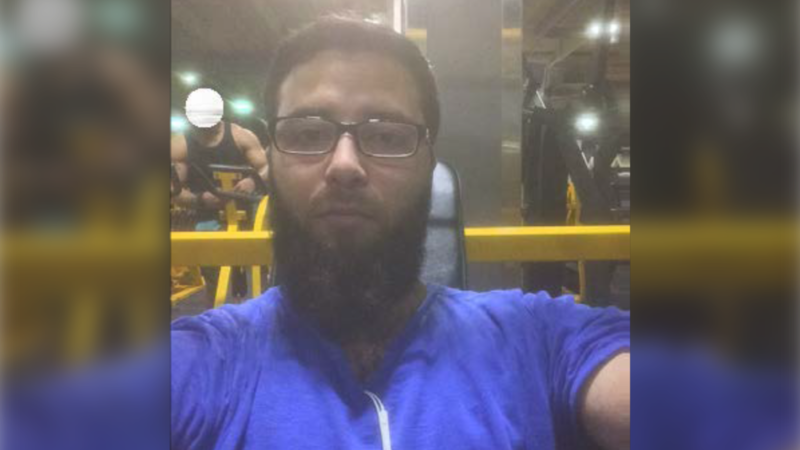
While there, he participated in training, attempted to recruit others, carried out administrative and leadership duties and engaged in activities to further the group’s violent agenda.
He returned to Calgary in April 2014.
The judge emphasized that Borhot’s actions went far beyond the battlefield.
He used firearms, including AK-47s, with intent to harm, engaged in propaganda efforts and actively sought to recruit others to join ISIS.
Dario noted these actions were aggravating factors that warranted a lengthy sentence.
“This offender played a central role in a scheme that could have killed several helpless people,” the judge said.
“He set out and trained in terrorist camps, engaged in planning and was involved in terrorist activities for a significant period.”
Borhot’s lack of a guilty plea also factored heavily into the sentence, the judge said.
Unlike his cousin Hussein, who pleaded guilty in a separate case and received a 12-year sentence in 2022, Jamal exercised his right to trial.
The absence of a guilty plea meant he was not eligible for the reduced sentence normally applied for early admissions of guilt, the court noted.
“While Hussein Borhot pleaded guilty to two offences and received mitigation for his plea, Jamal Borhot was convicted at trial on three counts and did not admit guilt. This is a significant distinction,” Dario said.
The judge also noted that Borhot’s participation in ISIS included leadership and management responsibilities, which added to the severity.
“He was involved in planning, executing and enhancing the organization’s violent agenda for nearly a year in Syria.”
These factors, combined with his ongoing extremist beliefs and the lack of demonstrated remorse, outweighed any mitigating circumstances, Dario said.
The defence had previously argued for a 12-year sentence, pointing to Borhot’s cousin’s prior sentence and his return to Canada without further incident.
They emphasized his young age at the time of the offences, family support and potential for rehabilitation, claiming that Borhot was radicalized at the time and believed he was travelling to help civilians being targeted by the Syrian government.
Those arguments were rejected by the judge.
Crown prosecutor Kent Brown, who sought the 16-year term, said the sentence reflects the serious nature of the offences and the need for deterrence.
“I thought it was a very well-reasoned decision,” Brown said outside court.
“Terrorism offences are considered some of the most serious in the Criminal Code. They’ve been described as an existential threat to the Canadian way of life, and that’s something the judge found in this decision. A significant sentence like this sends a strong message.”
Borhot’s family was in court Wednesday, shedding tears as the sentence was laid down.
They waved to him while he remained reserved, staring straight ahead.
Defence lawyers and Borhot’s family declined to comment further after the sentencing.
Borhot will now serve his sentence at Bowden Penitentiary.
He received pre-sentence credit for 76 days already served, and an additional 114 days were credited, meaning he will spend a minimum of eight years in custody before being eligible for parole.
The judge also imposed a lifetime weapons prohibition and a mandatory DNA order pursuant to the Criminal Code.

