Dr. Fan-Wah Mang worked in family medicine for 27 years and she cared deeply for her patients. But a few years ago, she noticed a simmering stress was building inside her. She felt increasingly angry and irritable at work, a shift that she says was entirely out of character.
The culprit was largely mounting paperwork, which Mang says was consuming up to 20 hours a week.
“I was working late hours and evenings at home, and weekends. All of it was on the computer, facing an inbox that was never going to get under control,” she said.
The physician based in Mississauga, Ont. found herself spending less time with patients and more time navigating a flood of forms and documents. It wasn’t just the expected blood tests or imaging results: it was a rising tide of insurance forms, pharmacy reports for minor ailments, and constant requests from employers and other organizations.
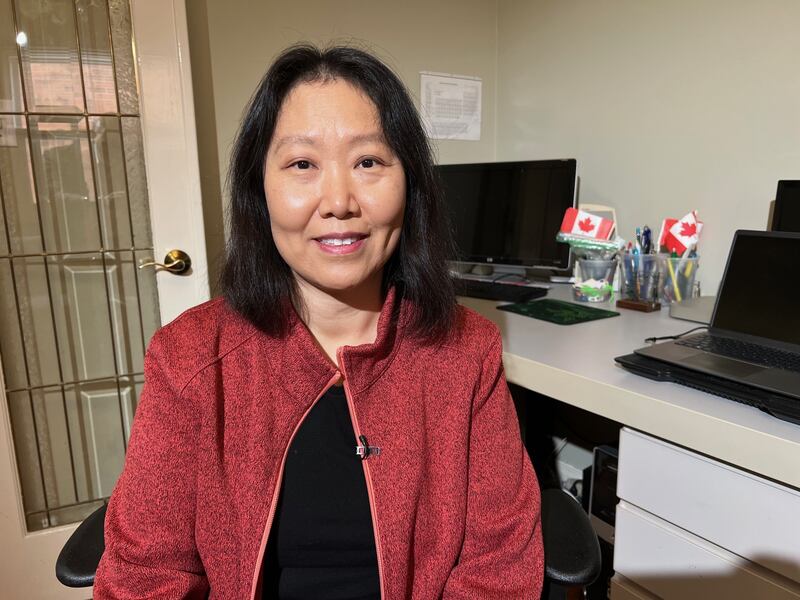
“I just felt that wasn’t my role, and it was taking time away from seeing patients,” says Mang. “It wasn’t like this 20 years ago.”
While Mang was compensated for patient visits, she says much of the administrative burden was unpaid. As the paperwork mounted, she saw fewer patients, her income dropped while the overhead expenses at the practice she shared with two other doctors continued to rise, she said.
Pushed to the extent of a burnout, Mang left the practice which closed in June 2024. She now works several part-time positions, including teaching. While her income is lower, her quality of life has improved.
“I can actually spend time with my children. I can look after my own personal health. These things were put on the back burner when I was on the computer all the time,” says Mang.
Meanwhile, Mang is far from alone. A recent report from the Canadian Medical Association (CMA) and the Canadian Federation of Independent Business found that the administrative burden has one in four doctors considering leaving the profession or retiring early.
In a survey, family physicians reported spending an average of more than nine hours a week on administrative tasks, noting they consider 47 per cent of that work unnecessary. In response to the pressure, 54 per cent said they are considering cutting their clinical hours.
“There’s a lot of duplication. There’s a lot of forms that could be standardized, that would make our lives simpler,” says Dr. Margot Burnell, president of the CMA.
The CMA recently saw some success lobbying provinces to eliminate the requirement for sick notes for short-term illnesses. Doctors are also calling for other changes including to the Disability Tax Credit form, which takes an average of nearly 40 minutes to complete and is 16 pages long.
“We’re advocating to have that really simplified, so that patients can complete it themselves,” says Burnell, adding that a physician or nurse practitioner would then certify what was written.
The CMA also believes more forms could be integrated into electronic health records and auto-populate medications or demographic information.
“It would make it much simpler for physicians,” says Burnell.
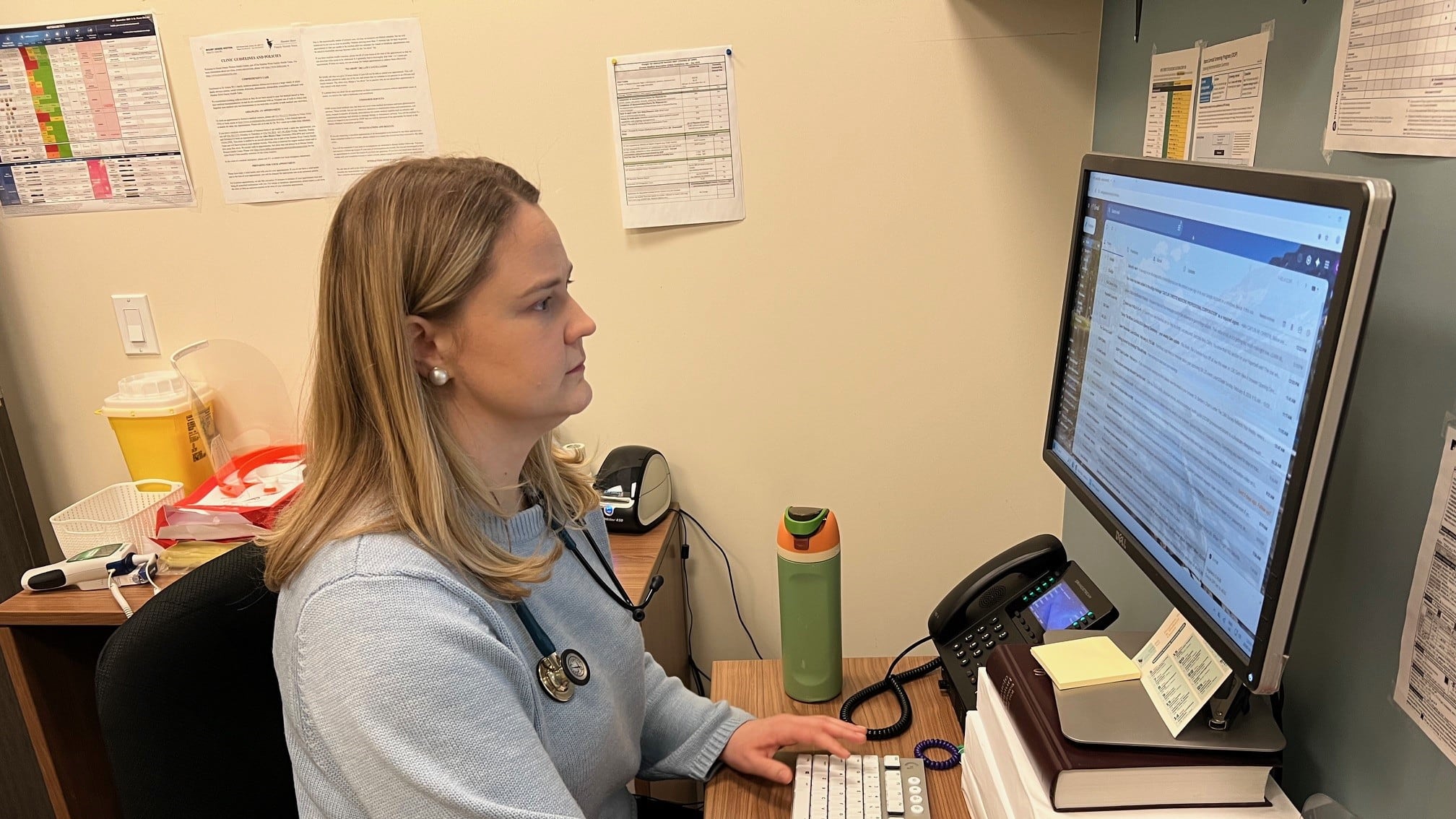
Dr. Caitlin Christie agrees that reining in or offloading some of the administrative tasks would help.
A family doctor in Toronto for 10 years, Christie now limits patient visits to three days a week to ensure she has two days to tackle among other things the administrative backlog that can include a lot of paperwork.
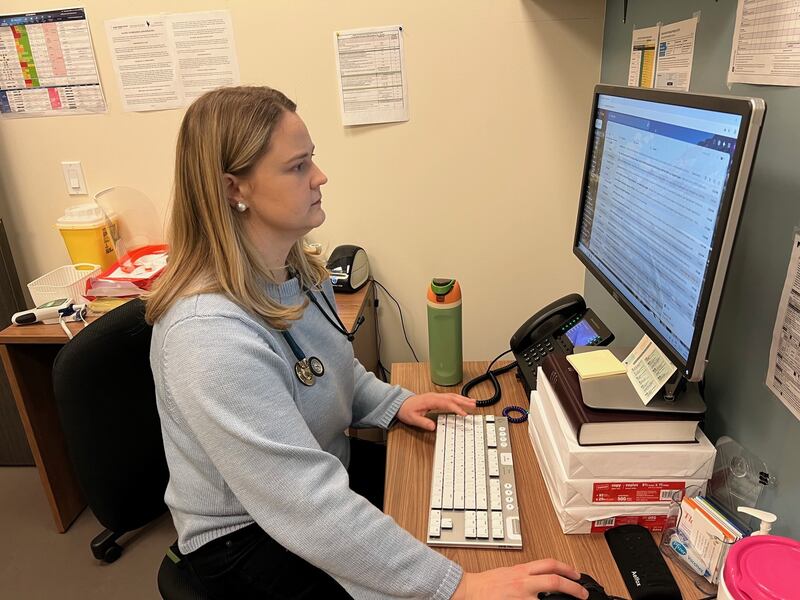
“Just the volume of forms that patients come in with to document work absences or disability claims or for social support… A lot of those things require signatures or documentation from a physician,” says Christie.
“I think employers, insurance companies can do their part to make those forms more straightforward.”
After having twin boys five years ago, Christie returned to a workload that nearly drove her out of the field. Among other things, she found she was staying late to finish forms and her situation got so difficult that she contemplated a total career change.
“I considered joining a friend selling essential oils or working as a medical advisor for a tech startup,” says Christie.
By condensing her patient facing hours into three days, she says she has found a way to maintain her well being. She still sees the same number of patients and works in a team setting where her patients can still receive urgent care if she’s not in the clinic.
“Making these changes now certainly does come at a cost. But it means that I’m more likely to be here in general family practice 10 to 20 years from now. Because the rate that I was going at before I was ready to leave medicine,” says Christie.
She now coaches other female physicians, in particular family doctors, who are struggling to cope with the demands of the job and feeling burned out.
Christie also believes artificial intelligence may eventually help with administrative tasks.
“I think that AI can absolutely support family physician, and I think we’re seeing that already,” says Christie.
“There’s a lot of doctors using AI scribes to help write the notes and document the visit. And I think that’s a huge benefit.”

