A local startup is changing how boats move – by lifting them out of the water.
Waterloo, Ont.-based ENVGO has secured new seed funding to accelerate the launch of its electric hydrofoil boat.
ENVGO was founded by a group of diverse robotic and aerospace engineers, all coming together with a shared interest in redesigning boats from the keel up.
“We live an electric lifestyle, the whole world is going electric, and we just found that there was a market opportunity to actually implement electric technology but do it in a way where you didn’t have to sacrifice range and speed,” said Paul Masojc, the startup’s COO and co-founder.
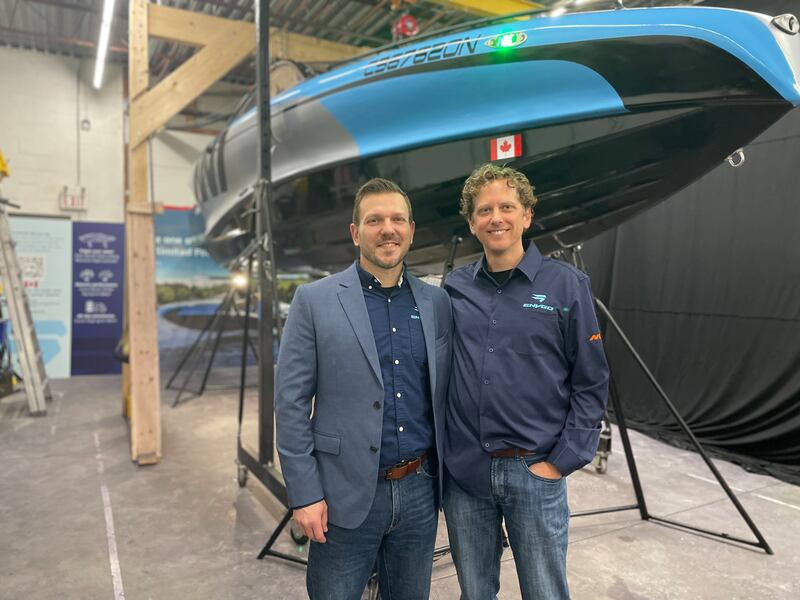
The company announced the close of its first funding round in June, led by Toronto firm Two Small Fish Ventures, with continued support from early investor Garage Capital.
The money will be used to advance testing, prepare for production and develop partnerships within the marine industry.
ENVGO’s flagship vessel, the NV1, is a 25-foot, six-passenger cruiser electric boat designed for inland lakes.
“We basically took an aerospace grade flight controller and implemented it in our boat,” Masojc explained. “Our pilots, all they need to do is hit the throttle and steer, and the flight controller takes care of everything else.”
The team says the trade-off — between performance and battery life — has long limited electric boats. Instead of adding heavier batteries, ENVGO’s solution is to remove resistance.
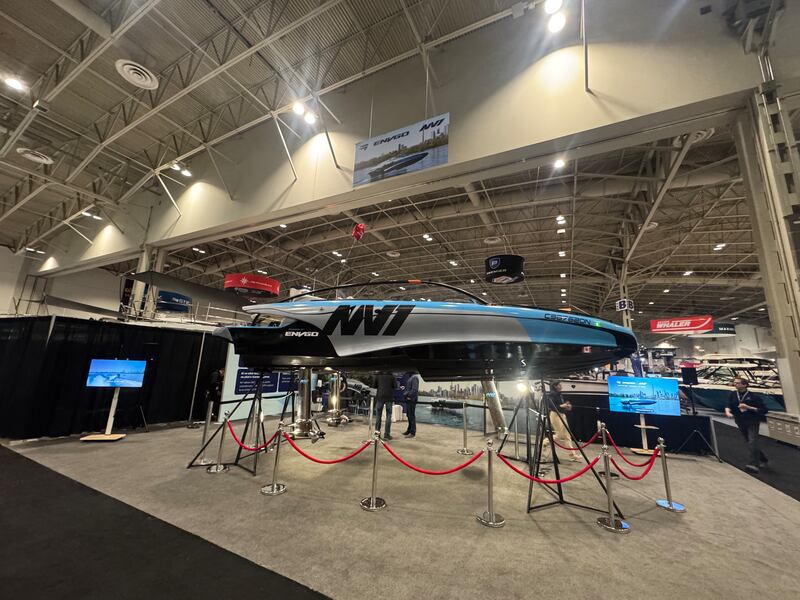
“We implemented a technology called hydrofoils, which are like wings that sit underneath the hull, lifts the entire hull out of the water and gets rid of all that resistance and all that drag. So, now you’re flying over the water,” said Masojc.
Jerry Mailloux , the company’s vice president of engineering, said the new technology makes NV1 three to four times more efficient than a planing boat.
“It takes about eight seconds. The boat starts flying automatically at 35 km/h, and our target top speed is 80 km/h.”
ENVGO said their technology also makes the boat easier to operate than traditional vessels. When it’s time to charge, users can plug it in just like an electric vehicle.
“Auto docking [means] the boat just dock itself,” Mailloux said. “Things like cameras [are] all around the boat looking for obstacles.”
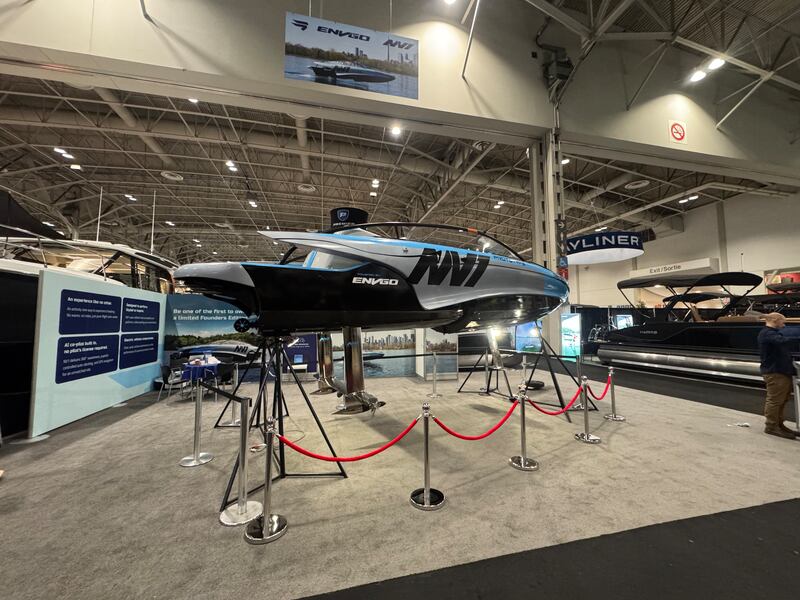
With testing ramping up, ENVGO hopes its “flying” vessel is just the first step in transforming the boating industry.
“Everybody understood what the limitations are of electric, how flying solves it,” Masojc said. “We were really about building out our waitlist, generating that kind of demand and then finding our early adopters to book sea trials this coming spring.”

