A growing number of Canadians are bypassing the doctor’s office for artificial intelligence to get information about their health.
However, a new survey from the Canadian Medical Association warns that seeking medical advice from AI can do more harm than good.

But not everyone agrees.
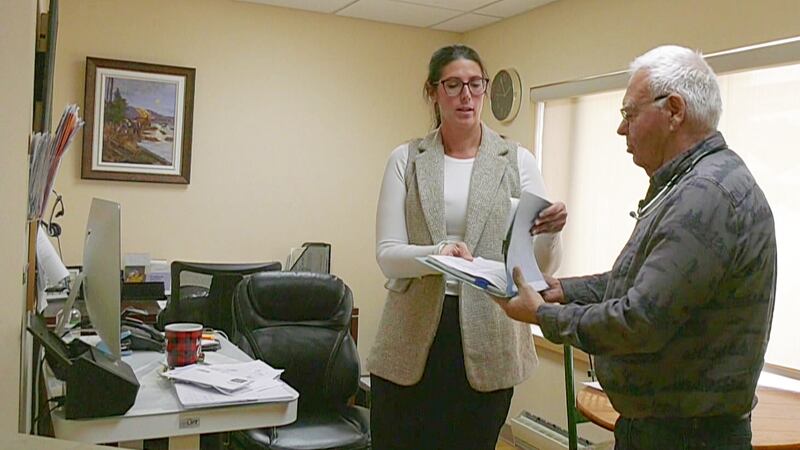
Dr. Maurice St. Martin has seen medicine evolve in the last four decades. Lately, more patients have been arriving at his Sudbury office who have already used AI to seek information on their health.
“That has happened a few times,” Martin said.
“And then my job is to find out what they’re looking for, what their concern is and then allay their concerns appropriately. They may be on the right track. And if they’re not, I need to spend a bit of time to educate them.”
A recent CMA survey of 5,000 Canadians found nearly everyone is going online for health answers. Half of those surveyed are using AI tools like Google or ChatGPT and roughly 2,500 of them said they are taking treatment advice from an algorithm.
CMA president Dr. Margot Burnell said AI is an alternative for people in need of health-care advice.
“They do not have either a family doctor or they do not have a nurse practitioner or a team to which they can go to,” Burnell said.
“If they do, sometimes they want that information very quickly. It’s more convenient to go online than to book an appointment.”
But the CMA president said AI-driven misinformation is causing real-world physical harm.
“The biggest concerns are still the amount of false information that they are seeing when they search on an AI platform,” Burnell said.
“I applaud patients that take the effort to try to research some of their symptoms and problems.”
— Sudbury physician Dr. Maurice St. Martin
“Those individuals that then accept the treatment recommended on the AI platforms are having an increased risk of adverse effects -- five times the amount than if they do not follow that advice.”
But St. Martin said he believes that, if used correctly, AI isn’t a replacement for a doctor but is just another tool in the medical toolbox.
“I applaud patients that take the effort to try to research some of their symptoms and problems,” he said.
“I always tell people, if you have a certain cancer, I expect you to be more versed in that disease than I. Because I need to be a generalist. I’m a family physician. I need to know a lot about a lot of things. I’ll be your coach … But at the end of the day, you’re still the boss for yourself.”
Burnell said the solution is increasing access to family-based care teams, to ensure that when Canadians have a medical question, they aren’t forced to turn to an algorithm for an answer.

