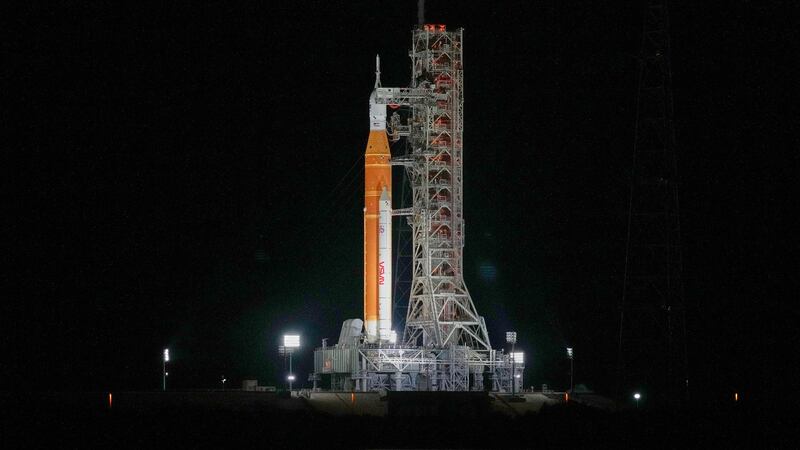
NASA engineers are reviewing the results of a confidence test this weekend as the organization eyes a launch window of early to mid-March of its Artemis II mission to the moon.
According to NASA, a confidence test was held on Feb. 12 in which operators partially filled the Space Launch System (SLS) rocket’s core stage liquid hydrogen tank to assess newly replaced seals in an area used to fill the rocket with propellant.
During the test, teams encountered an issue with ground support equipment that reduced the flow of liquid hydrogen into the rocket. Teams were able to “gain confidence in several critical objectives of the test,” and data was obtained at the core stage interfaces, taken at the same time in the test where they encountered a leak during the previous wet dress rehearsal earlier this month.
NASA says engineers will “purge the line over the weekend to ensure proper environmental conditions and inspect the ground support equipment before replacing a filter suspected to be the cause of the reduced flow.”
Engineers will now examine the findings of the confidence test before setting a timeline for a second wet dress rehearsal later this month.
Wet dress rehearsals are critical as they serve as prelaunch tests to fuel the rocket and are designed to identify any issues and resolve them before attempting a launch.
March remains the earliest potential launch window for Artemis II after potential February launch dates were scrubbed following several issues arising during the initial wet dress rehearsal, primarily a spike in the liquid hydrogen leak rate.
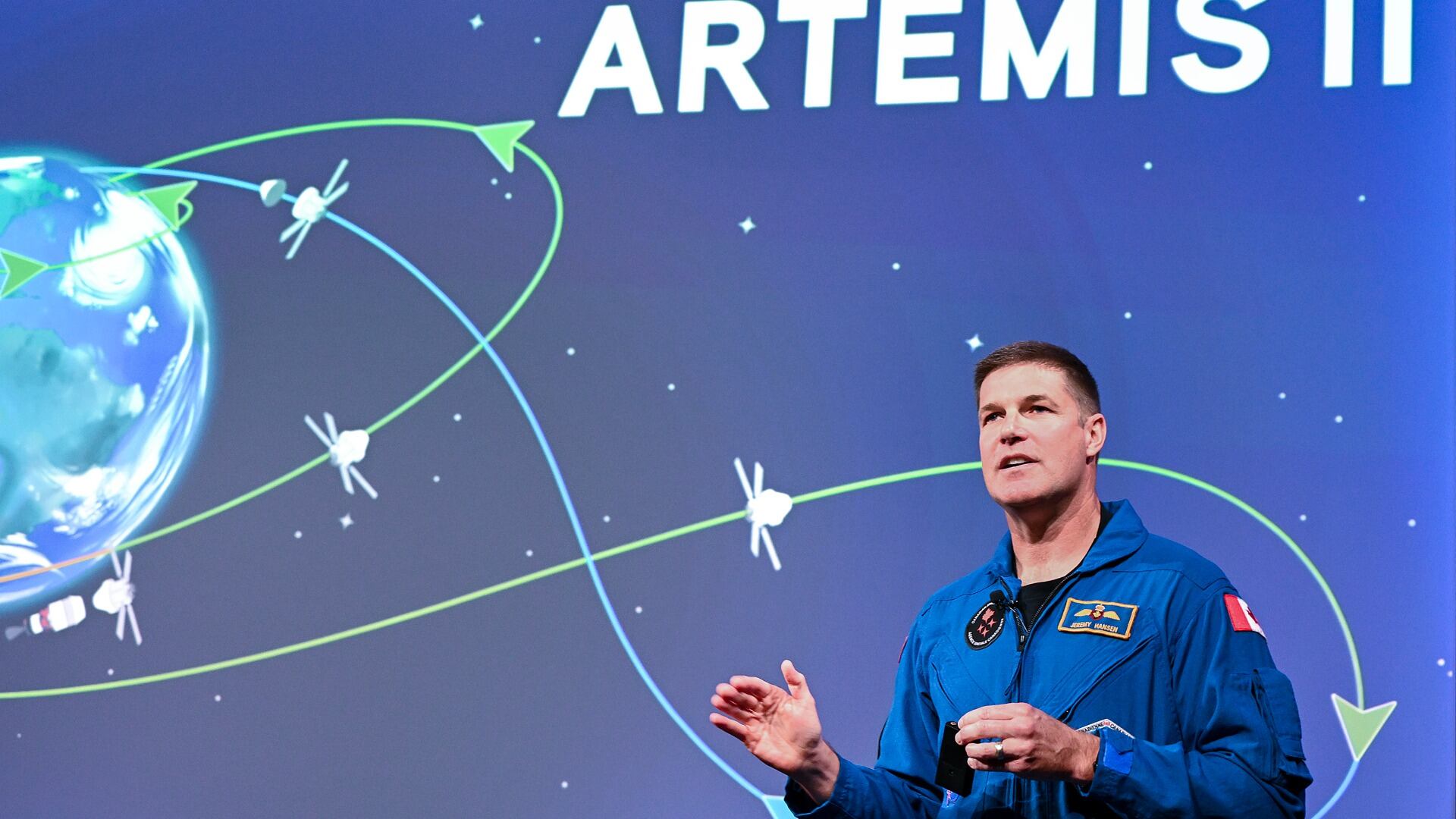
Since emerging from quarantine, NASA astronauts Reid Wiseman, Victor Glover, and Christina Koch, and Canadian Space Agency astronaut Jeremy Hansen of London, have continued training activities.
The earliest potential dates for launch are March 6, 7, 8, 9, and 11.
The Artemis II mission will travel to the far side of the moon and conduct a lunar flyby, travelling more than one million kilometers. It will serve as a stepping stone for future manned missions to the moon where astronauts will land on its surface.