Marco Mendicino is a former federal prosecutor, federal cabinet minister for immigration and public safety and chief of staff to Prime Minister Mark Carney. He is now senior counsel at Cassels, Brock & Blackwell LLP. He is a political analyst for CTV News and a columnist for CTVNews.ca.
For generations, Canada lived under a durable assumption: integration guarantees security. We carried the flag for multilateralism in the postwar period, embedding ourselves in alliances, supply chains and global markets, confident that economic openness and collective defence would reinforce our sovereignty.
By and large, that strategy helped Canada prosper. But in today’s volatile world, it no longer holds.
Prime Minister Mark Carney gave voice to this reality at Davos when he warned that the old assumptions underpinning the international rules-based order had eroded. With characteristic clarity and composure, he declared: “You cannot live within the lie of mutual benefit through integration, when integration becomes the source of your subordination.” Canada could no longer go along to get along.
Our prior paradigm depended on stable supply chains, reliable partners, and a global environment governed by shared rules. Recent shocks caused by higher tariffs and intensifying geopolitical conflicts have exposed the limits of those assumptions. Rather than lament the world as it was, the prime minister challenged us to see the world as it is.
Canada’s newly released Defence Industrial Strategy is the clearest expression yet of that shift. It signals that Canada is taking down the old sign of ‘integration guarantees security’ and replacing it with a new one: ‘Sovereignty through capability.’
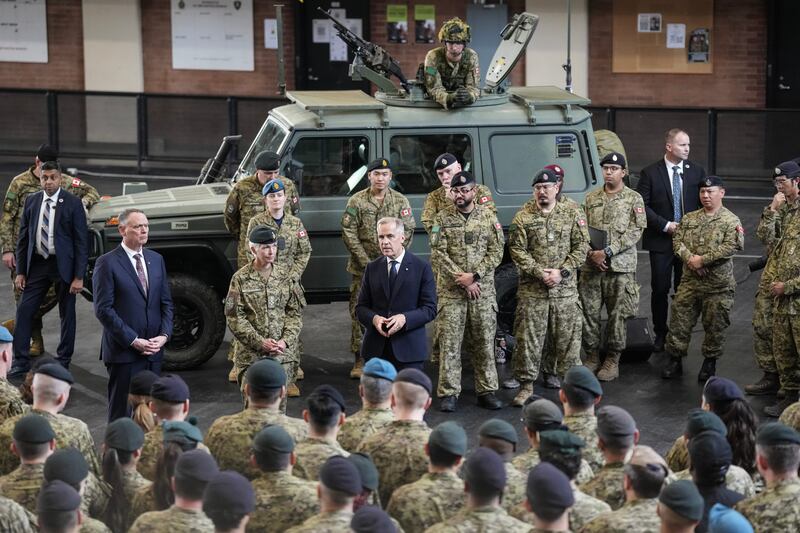
The scale of the opportunity is transformational. The strategy could mobilize as much as half a trillion dollars in defence investment and economic activity over the next decade and support up to 125,000 jobs. For the Canadian Armed Forces, its objective is clear: restore readiness, increase fleet serviceability, and ensure Canada has the operational and technological advantage required to defend our country.
Just as importantly, it positions Canada at the frontier of defence innovation. Canadian firms working in artificial intelligence, autonomous systems, and advanced materials will become strategic partners in building the next generation of capability. New initiatives, including a national drone innovation hub, will help catapult Canada’s ability to compete globally in defence technology.
Canada’s participation in the European Union’s SAFE agreement will also open privileged access to European defence markets, raising the competitive bar for Canadian firms while positioning them to scale alongside trusted allies.
Five pillars of a new defence doctrine
At its core, the strategy reflects a clear-eyed recognition that sovereignty depends on both domestic capacity and partnerships abroad. Its success will depend on execution across five key pillars.
First, renewing the relationship between government and industry. For too long, Canada’s procurement system has been slow and unpredictable. Industry cannot invest in factories, skills, or innovation without clear demand. By providing long-term signals and creating structured engagement through a Defence Advisory Forum, the strategy begins to establish the certainty required to create a rolling pipeline of procurement opportunities that industry can respond to, on time and within budget.
Second, procuring strategically through the new Defence Investment Agency and its “Build-Partner-Buy” framework. This new policy proceeds from the sensible premise that Canada will build at home where it can, partner with trusted allies where it must, and buy abroad only when necessary. The launching of the new DIA is perhaps the most consequential reform that is key to unlocking faster procurement. Encouragingly, the government plans to introduce legislation making the DIA a stand-alone agency by spring of this year. It is imperative that the DIA legislation grants the agency the authorities and accountabilities it needs to drive results. This approach ensures that every defence dollar strengthens Canada’s industrial base while delivering the capabilities the Canadian Armed Forces need.
Third, investing in innovation. Future defence capability will be built as much in the laboratories and code repositories of tomorrow as much as in the shipyards that exist today. The strategy will grow Canada’s defence workforce, align federal programs with urgent sector needs, and create hubs for skilled labour. The Bureau of Research, Engineering and Advanced Leadership in Innovation and Science (BOREALIS) will accelerate research in key sectors such as AI, quantum, and cybersecurity and anchor a national network of secure innovation hubs where researchers, industry, and the military can develop the next generation of sovereign defence capability.
Fourth, securing supply chains. Modern military readiness depends on reliable access to critical minerals, components, and materials. By strengthening domestic production, building strategic reserves, and working with trusted allies, Canada can reduce its exposure to global disruptions and ensure the military is not constrained by dependencies we cannot control.
Fifth, strengthening partnerships across Canada, particularly in the North. As climate change opens new sea routes and strategic competition intensifies in the Arctic, closer collaboration with provinces, territories, and Indigenous governments will be essential to securing Canada’s sovereignty while creating economic opportunity.
Taken together, these pillars reflect a deeper shift.
Our partners around the world, including our closest ally the United States, have unmistakably shifted toward rebuilding their own industrial base and strengthening self-reliance.
Canada’s strategic response in diversifying our relationships does not represent a decoupling so much as it does a rebalancing. Our relationship with the United States is vital to our national interest and remains as necessary as the bridges that connect our two countries.
For decades, Canada relied on integration as its primary source of security, and while that approach brought prosperity and stability, integration alone is no longer sufficient in a more unstable world. The key question now is whether Canada can move with the urgency this moment demands.
History suggests we can.
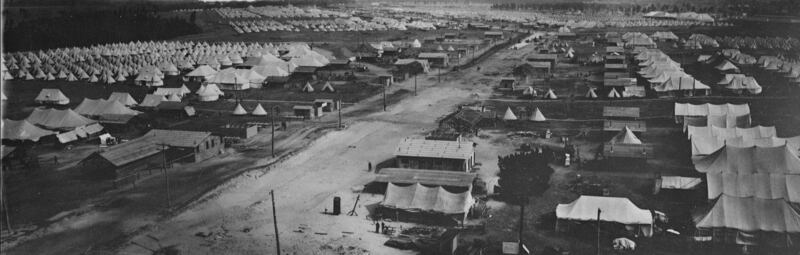
In 1916, Camp Borden rose from cleared farmland and was forged into a national military facility in a matter of months. By the Second World War, it had become part of the industrial and training network that helped secure Allied victory. It stands today as proof that when Canada recognizes the stakes, it can build with speed, purpose, and resolve.
Canada is rediscovering that lesson.
Sovereignty is not declared. It is built. Built on bases. Built in factories. Built in laboratories. Built in classrooms. Built in cyber. Built through the deliberate choices of a country determined to preserve its independence and its freedom to act.
That is the course Canada has now set.
Because in the world that is unfolding, the countries that can build capability will be the countries that can protect their sovereignty.

