MONTREAL – A report into the massive cost overruns and fumbling of the launch of the online platform for Quebec’s automobile insurance board recommends beefing up digital transformation expertise within provincial government ranks, a lesson that could apply to other jurisdictions in Canada, in a world where digital delivery of services is top of the agenda.
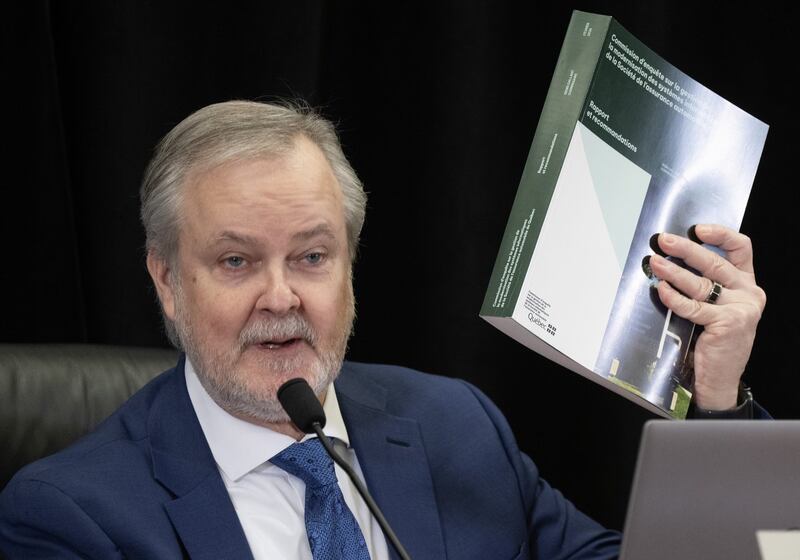
The report, overseen by Judge Denis Gallant, who served as commissioner, pointed the finger at top officials.
“People lied for years,” Gallant said Monday. “It’s difficult to ask people to be honest, that seems to go without saying.”
But Gallant made 26 recommendations, including setting up what he called a “tiger team” of experts that could step in to deal with issues surrounding digital transformation in a variety of public services. This could serve to lessen government agencies’ reliance on contracts with big private services.
When scandal at the heart of the Society of Assuring Automobiles in Quebec (SAAQ) project got underway, it was the largest of its kind in Canada.
In 2017, Quebec issued a contract to a private firm as it was building a platform called SAAQclic, a portal for Quebecers to obtain services like vehicle registration or the renewal of drivers’ licenses. When the project veered off course, private contractors sent in a team of experts – a “tiger team” – to analyze issues that had surfaced, and to determine how much work would need to be done.
The SAAQ told the Gallant Commission that some of the sub-contractors that were brought in were paid up to almost seven times as much as the maximum salary paid to Quebec’s public servants.
“Quebecers were victims of a hold up of public funds,” said Haroun Bouazzi, an opposition critic for Quebec solidaire.
The Gallant commission heard from 130 witnesses over the course of 75 days of hearings and poured over more than 200,000 documents to look for solutions.

Its first recommendation is to ensure there is internal expertise within government ranks to try and ensure a smooth and cost-effective digital transformation projects. The union representing around 2,000 workers of the SAAQ and the The Quebec Union of Public and Parapublic Employees (SFPQ)
“In its report released today, the Commissioner, the honourable Denis Gallant recommends that the Quebec government move away from external firms and acquire state-of-the-art expertise for digital transformation,” wrote the SFPQ in a news release.
SFPQ president Christian Daigle testified that Quebec’s public service lacks internal resources in computer technology and is dependent on private firms.
“The hike in the cost of projects is directly linked to the shortage of high-tech workers in the public service,” said Daigle in a statement. He concludes that it costs taxpayers more to rely on sub-contractors.
Whether or not Quebec, or any other jurisdiction, agree and choose to adopt that recommendation, those who worked on the commission say the scandal should not discourage the goal of digital transformation of services.
“We need these kinds of projects,” said Simon Tremblay, the commission’s chief prosecutor. “We cannot go back to paper.”

