Alberta is moving to expand its aerial firefighting capacity with a major purchase of new water bombers.
It’s a long-term investment aimed at strengthening the province’s response to increasingly severe wildfire seasons.
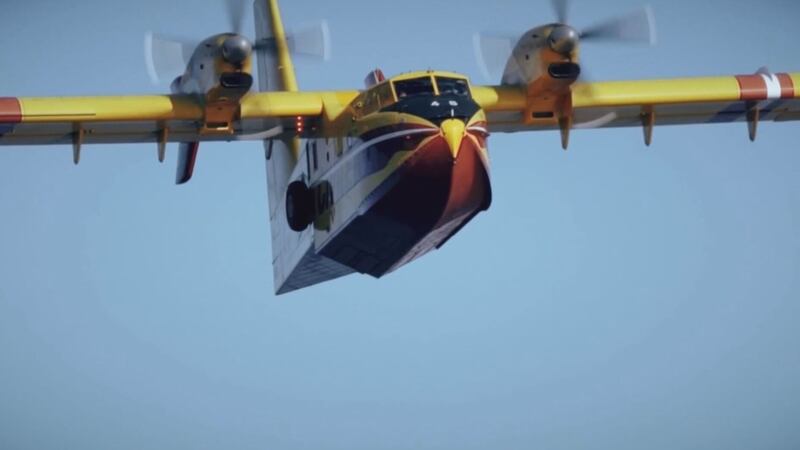
The province has secured a roughly $400-million agreement with De Havilland Aircraft of Canada to acquire five new Canadair 515 amphibious firefighting aircraft—planes that will be built in Alberta.
Provincial officials say the contract is expected to create and sustain about 1,000 jobs while significantly boosting the province’s ability to combat wildfires.
The first aircraft is expected to arrive by spring 2031, with the remaining planes delivered over the following two years.
Premier Danielle Smith said the purchase reflects growing wildfire risks and the need for long-term preparedness.
“Albertans expect their government to be ready when wildfire season hits, and that is exactly what we are doing,” Smith said in a statement.
“These Alberta-built water bombers will strengthen our wildfire response, protect our communities and create hundreds of skilled jobs right here at home.”
Forestry and Parks Minister Todd Loewen described the aircraft as critical infrastructure for wildfire response.
“These planes are essential for battling wildfire and protecting our communities, economy and natural resources,” Loewen said.
The aircraft are part of the next generation of the long-serving “Super Scooper” family of water bombers and are expected to be assembled in the Calgary region.
Wildfire pressure driving investment
The purchase comes as governments across Canada and globally confront longer, more destructive wildfire seasons, driven in part by rising temperatures and increasingly volatile weather patterns.
Eleanor Olszewski, the federal emergency management and community resilience minister, said wildfire behaviour is changing in ways that demand sustained government attention.
“We know wildfire risk is increasing,” Olszewski said during an announcement in Calgary.
“It is fundamentally important for governments to be involved. We’ve seen the losses suffered during some of the worst wildfire seasons on record, and we know these events are becoming more intense.”
Alberta has experienced several devastating wildfires in recent years, including the 2016 Fort McMurray disaster and the wildfire that tore through Jasper in 2024—events that forced mass evacuations and caused widespread damage.
Nationally, wildfire activity has remained high, with millions of hectares burned in recent seasons, stretching firefighting resources and prompting renewed discussion about response capacity.
Purchase tied to manufacturing footprint
Under the agreement, Alberta will acquire the newest models of aircraft in a line of amphibious firefighting planes widely used in Canada and internationally.
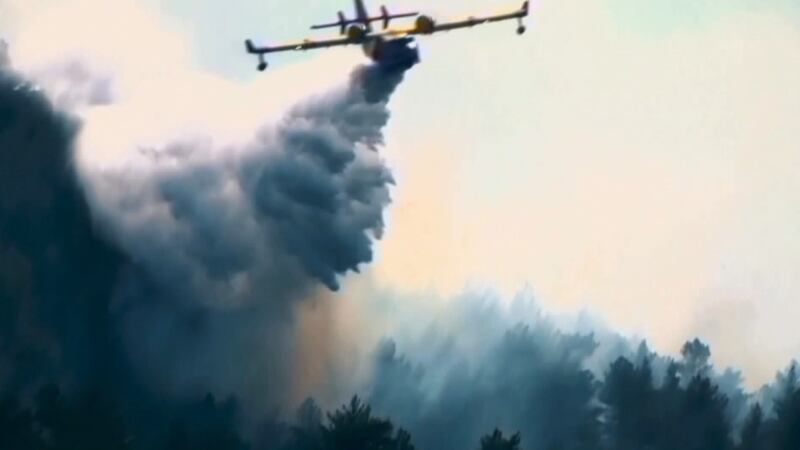
The aircraft are designed to skim across lakes and other large bodies of water, refilling their tanks within seconds before returning to drop water on active fires.
According to the province, the addition of the new planes will increase Alberta’s overall aerial drop capacity by nearly 60 per cent.
Officials say the Canadair 515 carries more water than earlier models and includes updated avionics and performance upgrades.
The aircraft can fly up to 330 km/h—roughly 15 per cent faster than Alberta’s existing CL-215 planes—refill its tanks in about 12 seconds and carry more than 6,100 litres of water.
Alberta already owns several older water bombers and regularly contracts additional aircraft during wildfire season.
The new planes are expected to complement the existing fleet rather than replace it.
The order also represents a significant boost for De Havilland Aircraft of Canada, which relocated its headquarters to Calgary in 2022 and holds the manufacturing rights for the Canadair amphibious aircraft program.
De Havilland is advancing plans for a large aircraft manufacturing and assembly complex east of Calgary known as De Havilland Field, currently under development in Wheatland County.
The facility is expected to include a runway, final assembly buildings, parts manufacturing operations and distribution centres, positioning Alberta as a growing centre for aerospace manufacturing.
De Havilland CEO Brian Chafe said the provincial order will help scale production.
“Building the Canadair 515 in Alberta will create thousands of skilled jobs, fuel economic growth and strengthen Canada’s aerospace industry,” Chafe said.
Federal role emphasizes capacity, co-ordination
While provinces remain primarily responsible for wildfire management, the federal government has also moved to increase national capacity through funding and co-ordination initiatives.
“Budget 2025 included $255 million for the leasing of water bombers,” Olszewski said.
“What we’ll be able to do is add extra capacity. If provinces are short in terms of aerial wildfire fighting ability, they’ll be able to use those leased assets.”
She said the leasing model is intended to provide flexibility, particularly for jurisdictions that might lack the financial or operational ability to purchase their own fleets.
Wildfire response in Canada frequently involves resource sharing among provinces and territories, especially during peak periods when multiple regions are battling large blazes.
“Politics and partisanship have no role in emergency management,” Olszewski said.
The Alberta purchase also lands amid broader federal efforts to strengthen domestic industrial capacity, including the unveiling of Canada’s first Defence Industrial Strategy on Tuesday.
That federal announcement aims to prioritize Canadian suppliers and expand domestic production in sectors such as aerospace and advanced manufacturing.
For Alberta, the water bomber purchase represents a long-term investment in wildfire preparedness as officials warn that extreme fire behaviour may become more common.
“We know these events are becoming more intense,” Olszewski said.
“That means governments must continue working together to ensure Canadians and communities have the resources and support they need.”
SAIT responds
In a statement issued Tuesday, SAIT called the announcement “exciting news for Alberta’s aviation industry and job creation in the field.”
“The Southern Alberta Institute of Technology (SAIT) continues to see high enrolment in our aviation programs, which has nearly doubled training capacity over the last few years to keep up with industry’s demand for skilled talent,” the statement said.
“This is a great example of how SAIT students benefit when major industry players establish roots in our province.”

