

NEW WESTMINISTER, B.C. — Five weeks before Canadian progressives pick which candidate they want to be the next NDP leader, they’ll be hearing directly from each of them in the final and potentially pivotal debate of the race.
Taking the stage in British Columbia’s Lower Mainland on Thursday, the five leadership hopefuls will be looking to carve out space to shine, come across as a credible leadership figure, and break away from the pack in what party insiders say is a too-close-to-call campaign.
“Thursday night’s debate is the last moment really for widespread persuasion. Voting begins on March 9. That is when the GOTV voter turnout begins. And I think that this is the moment that a candidate could break through,” said Kathleen Monk, principal at Monk & Associates and former director of communications to the late Jack Layton.
The only party-sanctioned English-language face-off of the campaign begins at 5 p.m. local, 8 p.m. ET. Over the course of 90 minutes, candidates Avi Lewis, Heather McPherson, Rob Ashton, Tanille Johnston, and Tony McQuail will look to demonstrate their leadership qualities and pitch their visions for the future of the federal New Democrats.
“This is an exciting time for our members to help shape the future of our party and of our country,” said interim NDP leader Don Davies in a statement.
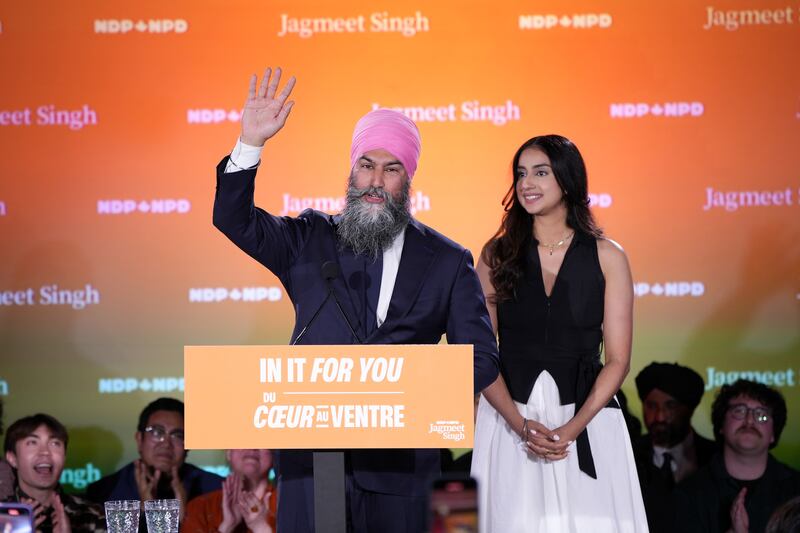
“This is really the key moment when candidates get the opportunity to sort of make their last pitch in a way that gets those – especially those who’ve been members for a long time – an opportunity to really see where they want the party to go,” said NDP Chief Electoral Officer Eric Hebert-Daly.
Since getting underway last fall, in the wake of Jagmeet Singh’s resignation, the seven-month search for the next leader of a party that no longer holds official party status in Parliament, has struggled to capture the attention of the broader Canadian public.
This week’s debate is likely the last chance for the party and candidates to change that.
“The race really isn’t generating the headlines, the buzz that it needs to really change the direction of the party going forward,” Monk said, adding that she thinks most Canadians will start tuning more in to the NDP, when the next leader is named.
In the meantime, with the window already closed on selling party memberships, and the number of eligible voters is already locked-in, the candidates’ focus should be on making the case for their capability to win elections.
“New Democrats have to decide are they just about ideas, or do they actually want to win power to affect policies that will change people’s lives? That’s what members are looking for, to actually get back in and to win back some of those votes that we’ve lost,” she said.
“Since Jack Layton was in power, New Democrats have been shedding votes, election after election, losing to both Liberals and Conservatives. New Democrats have to find a leader on March 29 that’s going to bring back that voter coalition and bring back those ideas to make Canadians lives better.”
“I think it’s critical for people to be able to catch the enthusiasm and energy that existed back in the time of Jack Layton certainly, and in times when the party has really shone,” Hebert-Daly said. “And I think candidates need to demonstrate that that’s going to happen under their leadership.”
Debating sovereignty, energy, public service cuts
The majority of the debate will be in English though after the official French debate in November displayed candidates’ largely lacking proficiency of this country’s other official language, the party has decided to dedicate a small section of the debate to be in French.
The party says during this portion, candidates will be required to respond in French and if they begin speaking English, the moderator, former journalist Hannah Thibedeau, will interject.
Thursday’s debate is shaping up to be wide spanning when it comes to subject matters that could be covered, with the party saying broadly the topics on the table are:
- Economic insecurity and national sovereignty;
- The future and role of the party, as well as rebuilding it;
- Foreign affairs and humanitarian aid;
- Energy and the environment;
- Health care; and
- Public services and fighting austerity
Every candidate will be given a chance to answer each question posed. The moderator will also be able to follow up or ask a prompt question to kick off the open debate portions, during which time candidates can also question each other.
“With these five candidates, what we’ve seen is that they violently agree on so many things. Tonight, I’m hoping that we can see them differentiate themselves from each other,” Thibedeau said.
“With the topics and the questions that I’ve come up with, I’m really hoping you’ll see that – not only for members who are going to vote for the next leader, but also for Canadians who are interested in, potentially, a party that has a lot of space that they can fill in this political realm.”
There will be no studio audience for this debate, meaning only campaign staff, party officials and accredited media will be present.
Candidates have been informed of the ground rules in advance, and they include an edict to “maintain respectful discourse” or their microphones will be turned off.
No props or posters are allowed, nor are electronics. The only items allowed on candidates’ lecterns are party-provided notepads, pens, and water. Candidates have also been told to stay at their assigned place on the stage throughout the debate.
“Leadership races are inherently hard to figure out who’s going to win, because really, only the party has the member list. In a leadership race, you look to things like fundraising to show momentum, but in debates, it’s about credibility,” Monk said.
“So, who looks credible on the debate stage on Thursday night? That’s going to be critical. Who could land those key clips? Who can project a vision for members. That’s going to be critical in how the vote plays out.”
What to know about the candidates
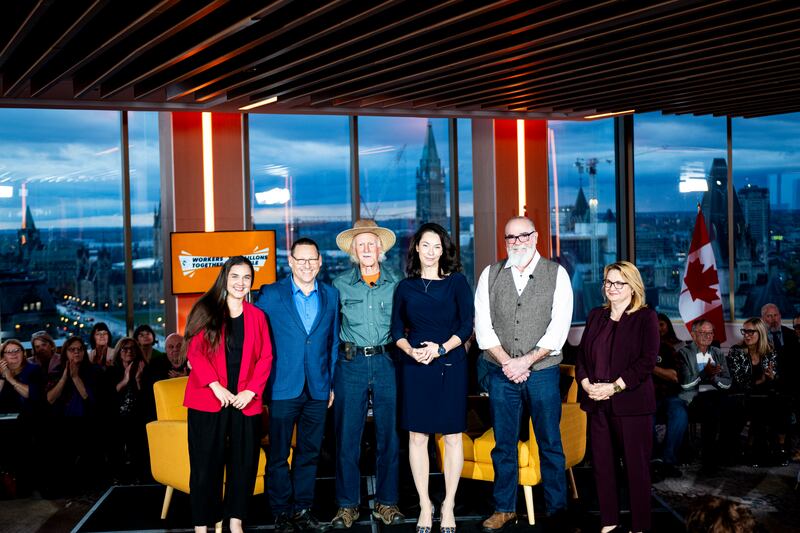
The five candidates who will be on the ballot after clearing all the required campaign checkpoints including paying the $100,000 entry fee, and who will use Thursday’s platform to pitch their unique experiences and ideas are:
- Avi Lewis: A Vancouver-based documentary filmmaker and co-author of the Leap Manifesto. Lewis ran unsuccessfully for the federal NDP previously and entered this race pitching himself as the candidate dreaming big and fighting for fairness. Among his major policy ideas are a wealth tax he estimates would rake in $40 billion in revenue from Canada’s richest, ending government subsidies to the fossil fuel sector, and reviving the digital services tax.
- Heather McPherson: The only sitting MP running, representing an Edmonton, Alta. riding since 2019 with past non-profit experience. McPherson entered the race vowing to make the NDP viable again by “building a bigger table.” While her campaign has focused largely on ideas to rebuild and elect more New Democrats, she’s also pitching more municipal infrastructure funding, and leveraging the Major Project’s Office to expand Canada’s electricity grid and low-carbon energy options.
- Rob Ashton: A longtime B.C.-based dockworker and longshore union leader. Ashton has framed his leadership bid around being the first “working-class” labour candidate. He’s pledged to defend workers and sees a path for the NDP to run the country. Among his policy ideas are a national public transit strategy that includes subsidized fares, and shifting Canada’s defence procurement away from the U.S. He’s also pro-proportional representation.
- Tanille Johnston: The youngest leadership hopeful in this race, a registered social worker and Campbell River, B.C. city councillor. Johnston has framed her candidacy around embodying the qualities she thinks the party needs in its next leader; energy, commitment, and inclusivity. She has pitched free party memberships, a guaranteed livable basic income paid for by higher corporate taxes, and as the first Indigenous candidate to seek NDP leadership, her platform includes a series of reconciliation-centric ideas.
- Tony McQuail: A U.S.-born, Ontario-based organic farmer and repeat party candidate. McQuail has acknowledged he is “the underdog” in this race. Leaning into his campaign pitch to address “the root causes of inequality and environmental collapse,” he wants to see the economy “redesigned” to be fairer. He’d also push for more affordable and communal housing builds, revitalizing roadside plant growth, developing a not-for-profit ride-share program, and scrapping the first-past-the-post voting system.
Monk said Lewis’ fundraising lead, organization, and “digital prowess” shows his campaign has momentum, and for him a successful debate performance could be in ensuring now blows against him land.
While for the other two perceived leading contenders – McPherson and Ashton – Thursday night will be about showing they can command the stage and speak to a wider issue set than what their likely secured supporters want to hear.
“Party members know that a leader is not going to go from … the position that we’re in now to instant success, there’s going to have to be a building process,” Hebert-Daly said. “I think candidates also have to demonstrate that they’re able to build the party.”
Who’s next to who, and what’s next?
The party held a draw to determine the positions each candidate will have on stage, as well as the order for opening and closing statements, and the post-debate scrums.
Lewis will be standing on the far left of the stage, next to him will be McPherson. Ashton will be standing in the middle position, and to the right of him will be McQuail and then Johnston.
McPherson will be the first to deliver an opening statement, followed by Lewis, Ashton, Johnston and then McQuail. That order will be reversed for the closing remarks.
Facing reporters’ questions first will be Lewis, then Ashton, McQuail, Johnston, and finally McPherson.
Once the evening wraps up, the final sprint is on, and candidates have events scheduled in the days ahead to try and lock-in the support of as many members of the party’s rank and file, as possible.
NDP members will be able to start voting as of March 9, and the party is offering mail-in ballot options for those who have requested. Otherwise, there are options to vote by phone or online.
The race will culminate in the final weekend of March, at the NDP’s national convention in Winnipeg.
The party is using a preferential ballot that will ask members to rank by number the leadership contestants in order of their preference. Voters do not need to rank every candidate, and they can opt to rank just one.
Voting will end on March 28, with Hebert-Daly telling CTV News that will allow any potential undecided voters to make their decision after hearing from the candidates one last time at the convention.
The results of the race will be announced on March 29.
“Things can change in a preferential rank ballot, it really is important how you persuade,” Monk said.

