A Conservative-led push to crack down on asylum seekers’ ability to receive health-care services that some Canadians struggle to access was rejected by a majority of MPs on Wednesday.
The proposal – advanced by Conservative immigration critic Michelle Rempel Garner – sparked an at-times heated debate in the House of Commons on Tuesday, with Conservative Leader Pierre Poilievre’s MPs arguing it’s a necessary step to restore fairness to the immigration system.
The motion specifically called on the government to review the health benefits provided to asylum claimants “in order to find savings for taxpayers,” and be more transparent about the federal care offered that citizens often have challenges receiving due to strained resources.
The official Opposition also wanted to restrict rejected asylum claimants’ ability to receive federal health coverage – with the exception of “emergency lifesaving” care only. Defending their handling of the system and highlighting ongoing efforts to stabilize immigration levels, the Liberals said the motion amounted to punching down on “some of the most vulnerable people in this world.”
By a vote of 134 “yeas” to 198 “nays,” the proposal was defeated. Only Conservative MPs supported the motion, while the Liberals, Bloc Quebecois, New Democrats, and the lone Green MP all voted against.
New claimant co-pay plan coming
The motion cited recent data from the Parliamentary Budget Officer (PBO), showing that the cost of the Interim Federal Health Program (IFHP) – which offers medical services to asylum seekers, refugees and other protected persons – has more than quadrupled in the last four years.
The PBO report also projects that the cost of the program was on track to rise to more than $1.5 billion by 2029-30.
Though, the Conservatives made no mention in the motion of the government announcing in the 2025 federal budget a plan to cut costs by introducing a new claimant co-pay system for the IFHP, starting May 1.
The “modest co-payment model,” as the budget document describes it, will apply to supplemental health services such as dental and vision care, psychological therapy and prescription drugs.
The PBO analysis also did not factor in this change to the program but did note that “including this new measure would reduce our estimate of the total cost” for the program.
Rempel Garner’s proposal also wanted the government to “pass policies to immediately expel foreign nationals convicted of serious crime in Canada.”
Minister ‘doesn’t exude confidence’
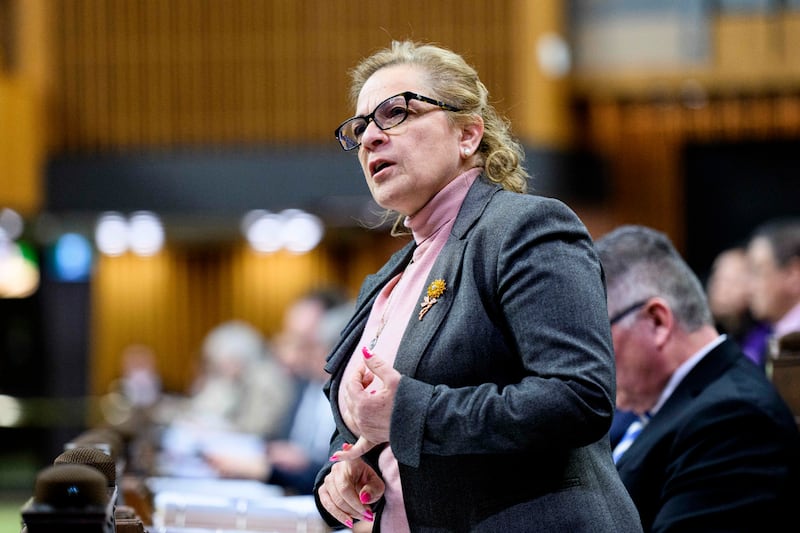
This renewed attention on the Canadian immigration system came alongside heightened scrutiny over the performance of the minister in charge of the file, Lena Diab. Citing community groups and unnamed Liberal MPs, Radio-Canada reported on rising frustration over Diab’s lacking availability.
“We have seen Canada’s immigration consensus crumble over the last year. I am deeply concerned about the hardening attitudes of Canadians towards immigration,” Rempel Garner told reporters Wednesday ahead of question period.
“The problem is… whenever we have the minister at committee, or she’s in the House of Commons, she doesn’t exude confidence in the file,” she said. “I think the prime minister is going to have to fire her and fire her quickly. This file is too important to continue on the path that she’s set it on.”
The calls to fire the federal immigration minister grew during question period, seeing Diab rise to defend herself initially, before past immigration ministers took turns vocalizing their support for her.
“The job that I have is never easy. It is one of the toughest jobs in government,” Diab said in one answer, later adding that she believes her record on the immigration file “speaks for itself,” noting the government remains on track meeting its targets.
As the questions kept coming, other Liberals rose to chide the Conservatives for launching personal attacks and “pitting Canadians against asylum seekers” with their latest motion.
Prime Minister Mark Carney was not in question period on Wednesday. Asked earlier in the day if he still has confidence in minister Diab, Carney said he has “an exceptional cabinet.”

