A Caltech astrophysicist who was shot to death on the front porch of his home in the Mojave Desert in mid-February was a University of Calgary graduate whose parents were mountaineering pioneers in Western Canada.
On Feb. 16, just after 6 a.m., police responded to reports of a shooting in the unincorporated community of Llano, in the Antelope Valley near Palmdale, Calif.
There, they discovered 67-year-old Carl Grillmair on the porch of his home, where he’d been shot.
First responders pronounced Grillmair dead at the scene.
A 29-year-old suspect, Freddy Snyder, was arrested and charged with Grillmair’s murder and carjacking. He was also charged with burglary in relation to a Dec. 28, 2025, event.
A Los Angeles Times article by Salvador Hernandez about the shooting said Snyder had been charged for possibly trespassing on Grillmair’s property in a separate Dec. 20, 2025, incident. Snyder was charged with carrying a loaded firearm and trying to escape the Palmdale jail he was being held in, but the charges were eventually dropped when Snyder agreed to complete a hunter safety course and get a permit.
Grillmair’s death sent shockwaves through the astrophysicist communities at both the University of Calgary and Caltech in Pasadena, where Grillmair was a faculty member.
Old classmates
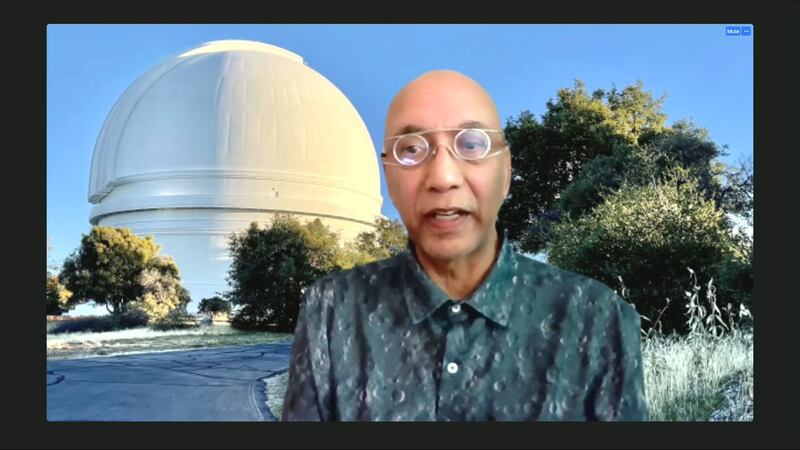
One of his old University of Calgary classmates, Stephen Achal, was planning to visit Grillmair to work on an experiment the two called the “Moona Lisa.”
“His wife, Louise, called me last week,” Achal said. “At first, I was in disbelief. I was in shock.
“And then it hit me,” he said. “She was crying.”
University of Calgary physics professor Barry Sanders went to school with both Achal and Grillmair and the two of them spent a considerable amount of time teaching at universities in Australia. Grillmair got his doctorate from Australian National University.
“Steve sent me a message that Carl had been murdered, and then the news came out after,” Sanders said.
“(I was) horrified,” Sanders said. “I knew Carl. (He was a) great guy – and a great scientist. So I feel terrible."
Grillmair joined Caltech in 1997. He was a member of NASA’s Spitzer Space Telescope Infrared Spectrograph and Infrared Array Camera instrument support teams.
In 2006, he was named by Maclean’s Magazine as one of 39 Canadians who make the world a better place to live.
“He was an amazing gentle giant with a passion for astronomy, especially extragalactic astronomy,” said Achal, “and he was also a person of diverse interests.
“He was also a skilled glider pilot, a skilled mountain climber – in fact, he took me on my first mountain climbing expedition when we scurried up the Grillmair Chimneys just off Mount Yamnuska."
“And the Grillmair Chimneys are named after his father,” he added, “so he comes from a long line of adventurers.”
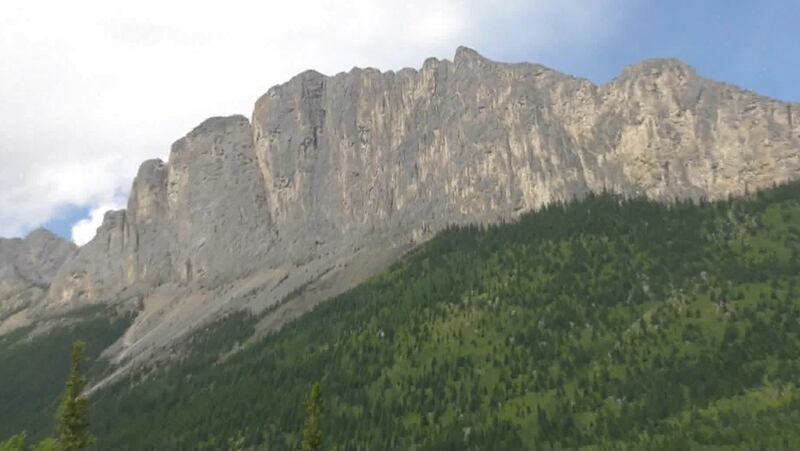
Grillmair’s father was Leo Grillmair, who emigrated to Canada in 1951 from Austria with his friend Hans Gmoser. They became legendary mountaineers who brought heli-skiing to the Rockies.
Flying
Sanders said he used to go flying with Grillmair when both were University of Calgary students.
“He had his own airplane and would invite me to go – so I’d pay half the fee for the cost of the gasoline, and Carl needed the hours to get his pilot’s licence, but we had a really extreme time," Sanders said.
“He would love to go up, stall the airplane, let it drop to the ground, pull out at the last minute with high G’s —and I kind of liked the thrill, too, so we would go out in his airplane and have really exciting times."
‘Moona Lisa’
Achal explained what “Lisa” stands for in the final experiment of Grillmair’s adventurous life.
“LISA - the lunar impact spectrometer assembly,” he said. “and we just put ”Moona" in front.
“We’re developing a spacecraft that will be in low lunar orbit in 2028 or 2029 that will actually do spectroscopy on the light that’s emitted by these micro meteoroids hitting and striking the moon’s surface.
“And so that way, we can get the in-situ chemical abundance at the point of impact.
“And this will give us a precise chemical map of the moon,” he said.
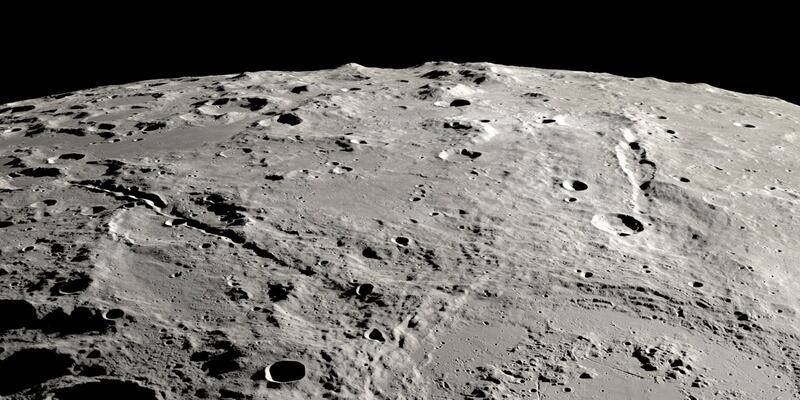
“We’re specifically looking for any hydrogen signatures that can lead us toward either water or ice or hydrated minerals, which is of critical importance for future lunar bases.”
Achal, the CEO of 4pi Lab in Calgary and an astrophysicist, said upon hearing of Grillmair’s death, his first instinct was to cancel the observation planned for next Monday and Tuesday using the Hale Telescope at the Palomar Observatory, but Grillmair’s friends and colleagues talked him out of it.
“Barry (Sanders) and other colleagues and family -- especially the astronomers at Caltech -- said to honour Carl, we must push forward with this experiment,” he said.
“And so it’s with a heavy heart that I’m going to go down and do this on behalf of Carl,” he added. “He would have wanted it – and I’m sure if the situation was reversed, I would have wanted Carl to do it."
Achal’s only wish for the lunar eclipse is a clear sky at night.
“Fingers crossed that the weather co-operates and it’s cloud-free and we can do some excellent science in honour of Carl,” he said.
“We miss him and we’re going to continue his legacy by doing very creative work in astrophysics,” he added.
“I look forward to meeting all of his colleagues who have been friends with him for years, and we’ll probably all be at the observatory, drinking a few bottles of whiskey in his honour and swapping old stories of Carl.”

