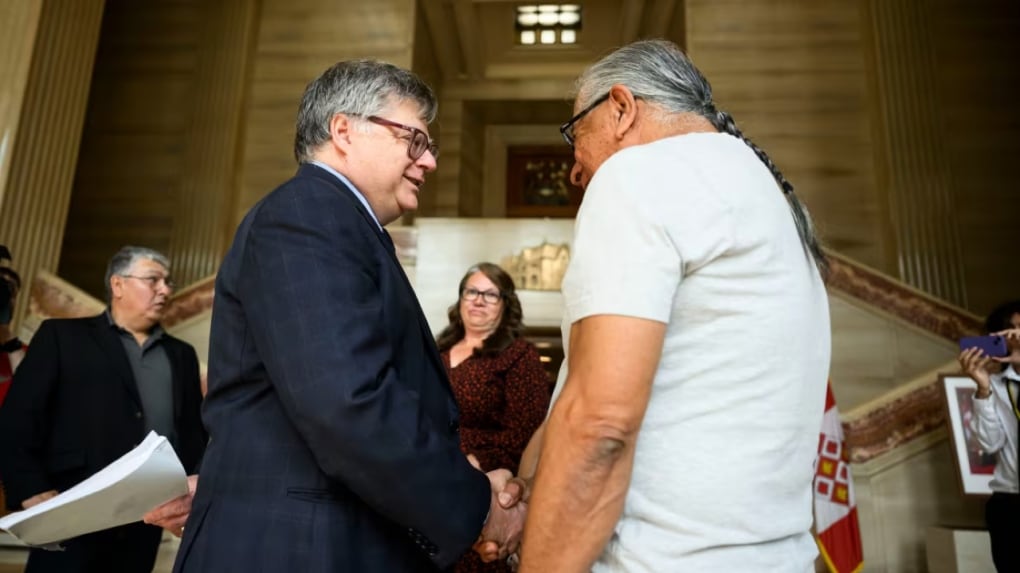
While finding fault with the way the Crown conducted negotiations, the Superior Court of Justice has affirmed a $3.6 billion settlement for claims under the Robinson-Superior Treaty.
The amount compares with the $10 billion received by First Nations under the Robinson Huron Treaty (RHT) settlement in 2023. The $3.6 billion takes into account the smaller population of the communities in northwestern Ontario, as well as income disparity and lower value of the minerals extracted from the area.
Similar to the Robinson Huron Treaty, the 12 First Nations who signed the treaty in 1850 were promised annuity payments in exchange for “ceding their vast territories,” said the decision by Justice Patricia Hennessy.
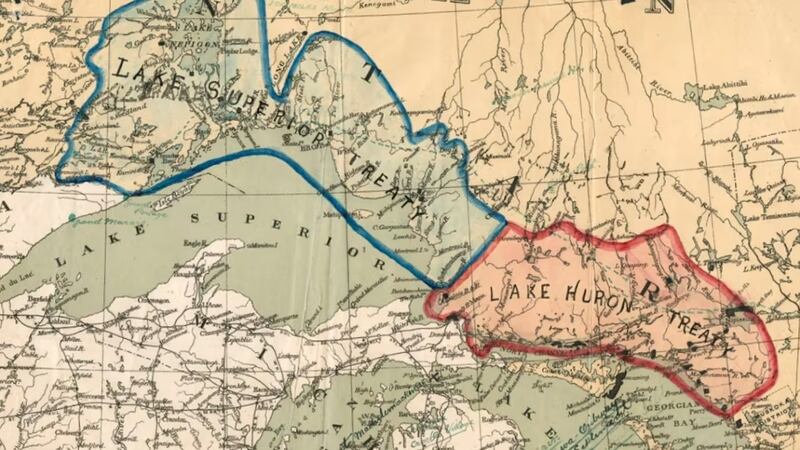
The annuity amount of $4 has been frozen since 1875, despite explicit promises in the treaty to increase the amount over time under the document’s augmentation clause.
“In 2024, the Supreme Court of Canada directed the Crown to engage in honourable and time-bound negotiations with the Superior plaintiffs for compensation for past breaches of the augmentation clause,” the court ruling said.
“No settlement was reached. Having failed to come to a resolution, the Crown exercised its discretion to pay $3.6 billion in compensation to the Superior plaintiffs.”
The plaintiffs opposed that decision, seeking almost $36 billion in compensation and a review of the $3.6 billion award.
‘Honourable’ negotiations
Ontario and Canada were directed to take part in an “honourable” negotiation and engagement process with the First Nations with the goal of coming to an agreement.
But in their appeal, the First Nations said the Crowns didn’t actually negotiate, with representatives simply listening and deferring issues to “decision makers.”
They also refused to promise that whatever compensation they received wouldn’t simply be a pro-rated amount based on the RHT settlement.
After negotiations from August 2024 to January 2025, the two governments came out with the $3.6 billion settlement, with each paying half.
That prompted the Superior plaintiffs to seek a judicial review, arguing the Crowns had not engaged in “honourable” negotiations, as required by the Supreme Court.
Lawyers for Ontario and Canada argued that the settlement was reasonable and that the process was honourable.
‘Blow off steam’
Hennessy ruled that, under direction from the Supreme Court, the Crown was required to make a “reasonable” settlement that is properly communicated to the plaintiffs.
“The reviewing court must focus on the decision actually made, including the justification offered for it,” she wrote in her decision.
While the First Nations argued that the negotiation process was nothing more than giving them a chance to “blow off steam” rather than truly negotiate, Hennessy said that her decision had to focus on whether the result was reasonable.
“This court should focus on the justification of the Crown’s determination, having regard to the honour of the Crown,” she wrote.
“A process or determination which fails to restore the honour of the Crown and advance reconciliation is neither honourable nor reasonable.”
While not taking the form of commitments, Hennessy wrote that the Crowns did respond to concerns from the plaintiffs. But it was their refusal to make commitments that “eroded trust and goodwill.”
However, she also said that proposals from the Superior plaintiffs “were often challenging and unwieldy.”
“Ultimately, the Treaty partners were not aligned on how the process would unfold,” she wrote.
“They had different expectations and were not able to pivot or resolve these differences as the negotiations continued.”
Blame for not reaching a negotiated settlement “cannot be attributed solely to any one of the parties.”
It is important for the Crown to learn from this process that its negotiators in the future must have decision-making authority.
“The Crown must be respectful of the significant personal cost to community leaders who attend multiple meetings away from their homes and communities,” Hennessy wrote.
“Every attendance must be meaningful.”
“The Crown must be respectful of the significant personal cost to community leaders who attend multiple meetings away from their homes and communities. Every attendance must be meaningful.”
— Justice Patricia Hennessy
Lawyers representing the Canadian government said it came to $3.6 billion based on a formula it developed before the RHT settlement, and only compared it afterwards.
It was based on an estimate that $11.152 billion of minerals have been extracted from the region, with a 27 per cent share going to the Superior plaintiffs.
“Canada then proposed to increase its contribution to compensation by $300 million, for a total contribution of $1.8 billion, in response to further information and perspectives Canada heard regarding the nature and severity of the breach, the needs of the First Nations and Canada’s broader social, economic and policy considerations,” the decision said.
Ontario estimated resource revenue to be $2.7 billion, added interest and then compared the amount to the RHT settlement.
For their part, the First Nations estimated the resource revenue to be $56.9 billion, plus about $20 billion in taxes collected by the Crown.
Hennessy ruled that she preferred Canada’s estimate, because it included reasonable deductions for expenses, which the Superior plaintiffs didn’t include, and which Ontario overestimated.
“The Crown approach to and determination of Crown benefits did not meet the high expectations of the Superior plaintiffs, particularly with respect to the measure of revenues captured by the Crown and the interest rate,” she wrote.
“Nonetheless, Canada’s approach to the contentious items included in the (resource revenue) estimate were justified with reasonable, rational and principled explanations.”
Hennessy also awarded the plaintiffs $40 million in court costs.
Read the full decision here.

