Recent breakthroughs have researchers confident they are on the precipice of finding a cure for HIV, but Western University researcher and professor Eric Arts wants to avoid a repeat of what happened when HIV therapies were developed in the mid-1990s
The discrepancy in available treatments for wealthy and impoverished nations is what Arts calls “a horrible stain on humanity.”
For nearly a decade people living with HIV in wealthy nations saw life spans extended dramatically by scientific breakthroughs in treatment, while those in poorer countries continued to be ravaged by the virus that causes AIDS.
“Almost 10 million people died of HIV simply because they weren’t provided the same care and treatment,” emphasized Arts. “There are currently about 40 million people in world living with HIV.”

A visit to the Western campus last year by Ugandan HIV and AIDS researcher Doctor Cissy Kityo Mutuluuza resulted in a strategy designed to ensure economically disadvantaged countries would get similar access to treatments that wealthier nations have.
The public-private partnership is called the ‘immunequity initiative’, bringing together researchers from different disciplines to achieve the best-possible outcomes for all.
“This was an ideal opportunity to combine the work we’re already doing in biomedical engineering with basic work that Doctor Arts is doing in immunology,” said Medical Biophysics Professor Prof. David Holdsworth, “and of course, to work for a very high impact goal - a cure for HIV.”
Canadian businesses and education centers continue to build out their ability to do game changing research. One example is the new Pathogen Research Center under construction on the Western campus.
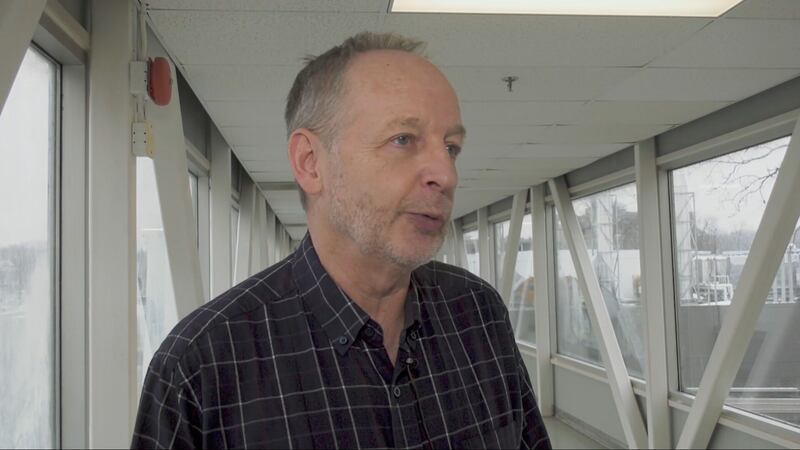
While the $44-million facility is a welcome addition, it comes as cuts are being made to international aid programs around the world.
“Given the fact that G20 countries are just not willing to provide the same support anymore, we need to do something fast,” said Arts. “If we stop treatment, at least half a million people would die within the first year.”
Arts and Holdsworth also want to see other nations bolster their own economies through research and development programs and opportunities.

