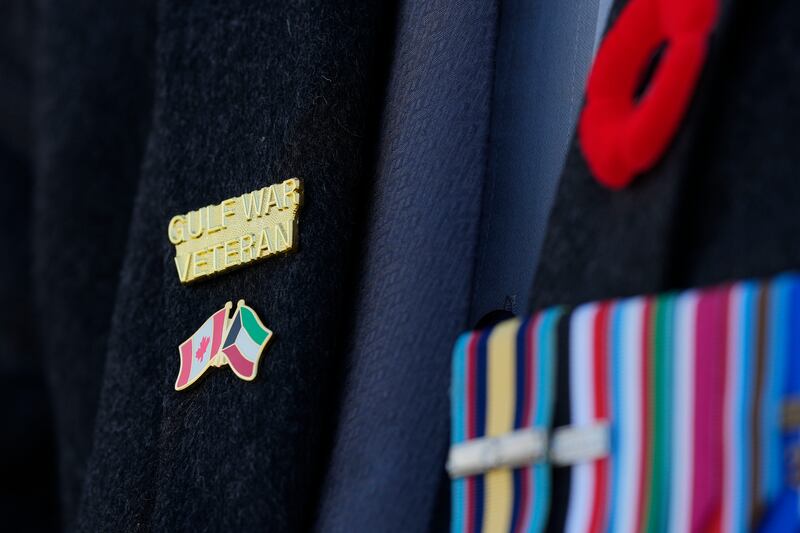
OTTAWA – Thirty-five years after the Gulf War ended, the Canadian Armed Forces service members that contributed to restoring peace in the Middle East at the time, are still fighting for full recognition of their wartime service.
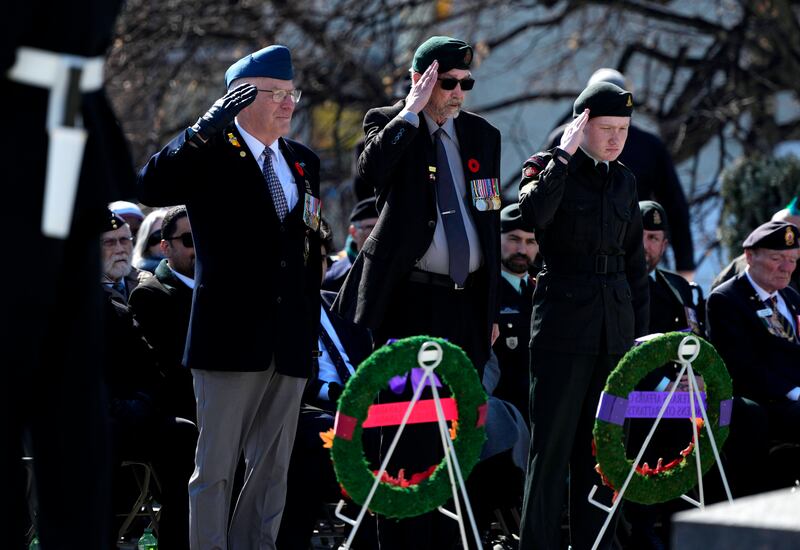
A wreath-laying ceremony marking the anniversary was held at the National War Memorial in Ottawa this week, and as one veteran described it, it was the first time Persian Gulf War veterans sat in the front row and were specifically commemorated.
“One veteran said to me, ‘it’s full circle,’ and that meant the world,” said retired master corporal and Persian Gulf Veterans of Canada president Harold Davis.
Asked if it was full circle for him, Davis said “almost.”
“Now the government has got to recognize us as war veterans. That, we’re still waiting for. (It took) 28 years for the Korean guys, 35 years and we’re still counting,” he said, citing the time it took for Korean War veterans to be recognized for their service as war veterans, a designation his cohort has yet to receive.
“We want to be recognized for serving in a war. Our (Afghanistan War veterans) brothers and sisters would like to be recognized for serving in a war,” Davis said. “It means a lot to a veteran to be recognized with our other veterans of past wars, mentally and just be able to say … ‘I’m a war veteran.’”
No casualties, historic milestone for women
As part of an international coalition between 1990 and 1991, Canada contributed naval, air, and medical forces, supporting operations driving Iraqi forces out of Kuwait.
The Forces’ contributions included securing shipping lines in high-threat environments, conducting air-to-surface strikes, and treating both coalition and Iraqi wounded. But those men and women are not classified as “war veterans” in this country.
There were no Canadian casualties over the course of the conflict, but some of the more than 4,000 members of the Canadian Armed Forces that were part of “Operation Friction” returned home with chronic health conditions and a range of unexplained symptoms.
It wasn’t until last December that the federal government formally recognized “Gulf War Illness” – often referred to as Gulf War Syndrome – as an official diagnosis that will be accepted on disability benefit applications.
The Gulf War was the first major conflict the Canadian military played a role in since the Korean War ended in 1953. It was also the first time Canadian women served in active combat roles in a conflict zone.
“We went to a war,” Davis said. “I was on the ship that went to the minefield and helped get (USS) Princeton out. You don’t do that on a cruise ship,” he said, referencing a February 1991 mission that saw the HMCS Athabaskan go to the aid of the USS Princeton, which had been badly damaged by Iraqi mines off the coast of Kuwait.
Carney promised to review recognition
In the Liberals’ 2025 federal election platform, Prime Minister Mark Carney promised to “expand recognition of service by reviewing the designation of certain military missions.”
The platform document explicitly said this would include service in the Persian Gulf, “so that veterans’ sacrifices in conflict zones are properly recognized.”
Carney said this would be done in consultation with veterans’ groups, the Canadian Armed Forces, and Veterans Affairs Canada “to ensure we develop clear recognition for their service.”
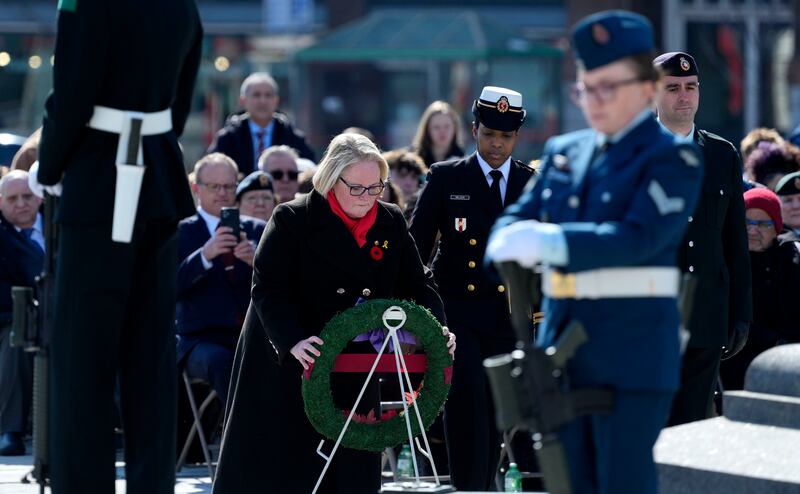
Veterans Affairs Minister Jill McNight attended the wreath-laying ceremony, as well as commemorative events in Halifax last week.
After telling the veterans in the crowd at the ceremony that their service “marked a significant moment in our history,” CTV News asked her if she agreed that Persian Gulf veterans deserved full recognition for their service. She said the ceremony was a first step in that process.
“We are continuing to move forward with acknowledging the service of those who have served our country,” McKnight said. “The contributions of the Persian Gulf veterans were significant.”
Families reflect as another conflict erupts
Ashley Helpin was five years old when her father left for the Gulf War.
“I don’t remember too much, but I do remember that he wrote me a letter and he sealed it, in case he wasn’t going to come back home,” she told CTV News, minutes after laying a wreath at the 35th anniversary ceremony on behalf of the families of the Gulf War veterans.
Her father did make it back and is among the veterans who continues to advocate for his cohort of service members to receive full military recognition.
During her remarks, the veterans affairs minister noted that the Gulf War was also the first conflict many Canadians could watch in real time, thanks to the evolution of instant communication and the 24-hour news cycle.
“Families of deployed members saw events unfold on television. Images were broadcast within minutes. Headlines move faster than reassurances,” the minister said. “They lived with uncertainty, carrying responsibilities at home while events unfolded half a world away.”
As another Middle East conflict has erupted, those who have seen the impacts of Canadians’ past efforts in the region say it made this week’s commemoration all that timelier.
“I think it’s important for Canadians to remember and to pay their respects. And to come together as a nation,” Helpin said.
“Now more than ever.”

