A flood expert is warning about the risk of flooding in some regions across Canada, as snow melts and temperatures rise with spring incoming.
“Flooding is always a problem across Canada,” Jason Thistlethwaite, professor in the School of Environment, Enterprise and Development at the University of Waterloo, told CTV Your Morning on Thursday.
“We’re going to get rapid warming, particularly with this recent weather. Rain combined with frozen and saturated ground means (water) can’t absorb it,” Thistlethwaite said.
READ MORE: Snow melt raising flood risk in parts of southern Ontario
READ MORE: A long way to go until summer in Quebec, says The Weather Network
“The water is going to find a place to go, and it’s going to seek low-lying areas which often means it’s going to find people’s basements.”
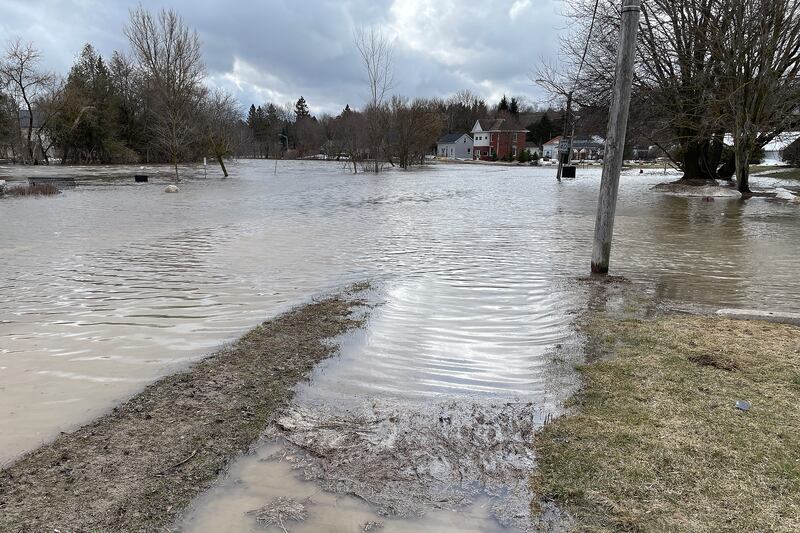
High-risk flood areas
According to Public Safety Canada, Vancouver, Calgary, Edmonton, Toronto, Montreal, Ottawa-Gatineau and Fredericton are located in high-risk flood areas.
Areas that experienced heavy snowfall this winter and are now experiencing warmer weather, like Ontario and Quebec, could be most impacted by flooding, Thistlethwaite says.
Some regions in Ontario have started warning communities about the increased risk of flooding in the last week.
More awareness needed
However, according to Thistlethwaite, more can be done to inform Canadians about the risk of flooding.
“Most people think that because they don’t live near a river, an ocean or a lake, they aren’t going to be affected by flooding,” he said. “It’s actually urban flooding that causes the most risk in Canada, so it’s going to be in low-lying areas with old infrastructure in our cities, places like Toronto.”
About one in 10 Canadian homes are in a high-risk flood zone but most do not know, Thistlethwaite added.
READ MORE: Highway 400 ramp reopens at Essa after flooding
READ MORE: Manitoba releases spring flooding outlook for 2026
A recent national survey of 2,500 Canadians in 10 provinces that Thistlethwaite participated in, found that 94 per cent of respondents did not know they live in a designated flood risk area.
The survey, which asked Canadians about their opinions on flooding, also found that 81 per cent of the respondents had not reviewed their communities’ flood maps.
Another study he was part of that analyzed flood risk assessment and potential economic losses of Canadian residential properties found that residential flood damages range between $1.4 billion and $3 billion each year, with 90 per cent coming from the high-risk flood zones.
READ MORE: Some 30 per cent more Quebec homes to be in flood zones when new mapping takes effect
READ MORE: Several roads in Wilmot Township closed due to flooding
“Approximately 10 per cent of Canadians live in high risk flood areas. That’s about two million people,” he said.
In March, Quebec is expected to release an updated map outlining which homes are in a high-risk flood zone. This comes after the province experienced major flooding in 2017 and 2019.
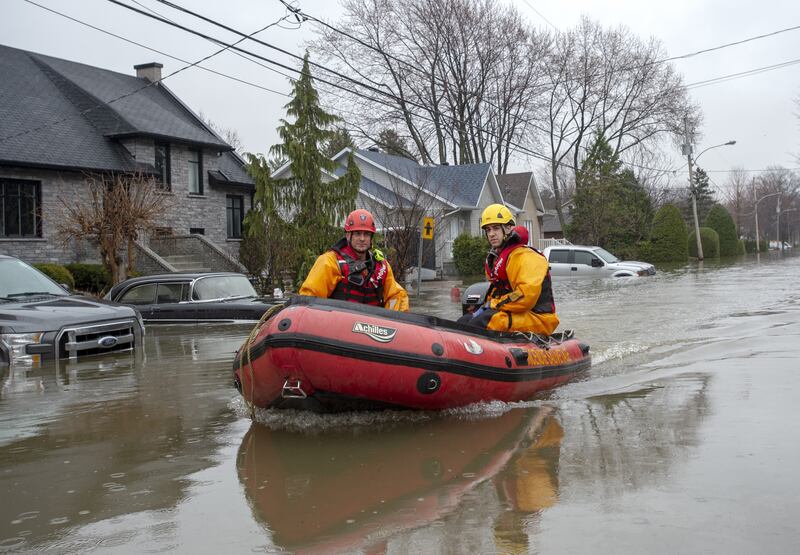
The floods caused more than $1 billion in damages.
READ MORE: MVCA issues flood watch for Maitland and Nine Mile River
READ MORE: Flood watch issued for North Gower area
Public, accessible system for Canadians
With increased flooding expected in some regions, Thistlethwaite believes a public system that makes it easier for Canadians to learn more about their flood risk would be ideal in mitigating the losses occurred.
“This information hasn’t been made public in a way that homeowners can access it. Most countries, the U.S., U.K., Germany and so on, (have a system). You (can) type your postal code into a website and you get a very good, transparent view of your flood risk,” he said.
“This will help Canadians know where the risk is and what steps they need to take to protect themselves and inform their communities about the right course of action.”

