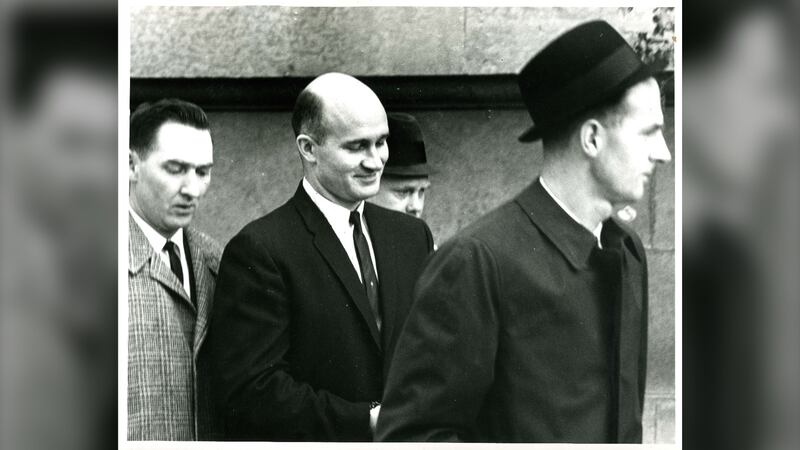
It’s a plot straight out of a Hollywood blockbuster.
A sly salesman from humble beginnings uses his charm and ingenuity to steal a not-so-small fortune in gold from an airport tarmac — a daring scheme that cements his place in the history books as a bona fide folk hero.
While it has mostly escaped the Hollywood treatment, that plot hasn’t escaped the fascination of countless Manitobans and true crime fans alike.
After all, the charismatic criminal and the courageous caper at the plot’s centre are locally grown.
“(Ken Leishman) is said to be the most beloved criminal in Canadian history. I think that that’s probably right, and he’s from Manitoba,” historian Christian Cassidy told CTV News.
A homegrown heist
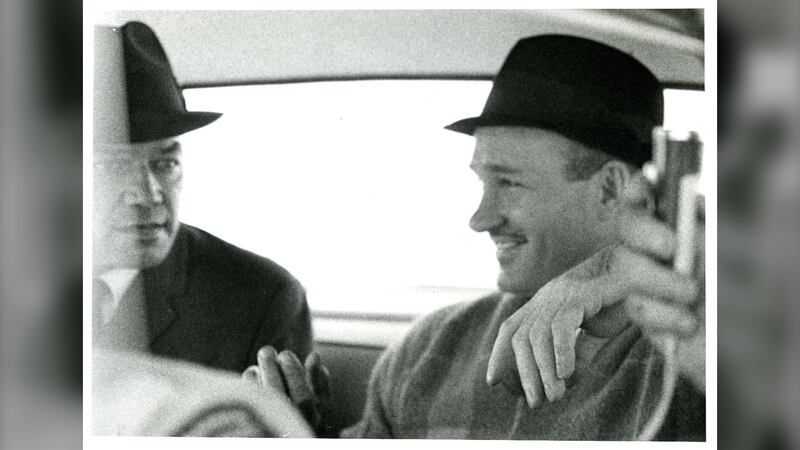
Yes, the infamous crook, known to many as the Flying Bandit due to his penchant to steal and his training as a pilot, was born in 1931 on a small farm in Holland, Man.
According to Cassidy, who researched Leishman for his blog “This Was Manitoba,” drought and the Depression hit the family farm hard. His parents separated when he was 10.
Still, Leishman found himself living in Winnipeg in the early ‘50s, living the life of a family man. He had a home in River Heights, a wife, five kids and a rap sheet, having already served time for numerous thefts carried out while working for his father’s elevator repair company — a job he’d use to case businesses.
Still, the prison time, cut short for good behaviour, didn’t appear to have scared him straight.
According to author Bill Redekop, who wrote of Leishman in his book “Crimes of the Century: Manitoba’s Most Notorious Crimes,” the career conman set his sights on bigger bounties in bigger cities.
“He would often fly to Toronto and rob a bank,” Redekop said.
“He was always very courteous, very charming and didn’t want to hurt anybody, so he’d rob a bank, he’d mail the money back home, and he’d catch the evening flight back to Winnipeg.”

His reputation soon preceded him as the gentleman bandit, owing to his dapper attire and bank-robbing manners even Emily Post would approve of.
No amount of pleases or thank yous, however, got him out of handcuffs after a 1958 robbery gone wrong at a bank on a busy Toronto street.
He pleaded guilty and was given a 12-year sentence, while his wife was pregnant with their sixth child.
He served less than four years at Stony Mountain Penitentiary, with the warden describing the Flying Bandit as a model prisoner.
Still, his most brazen crime was yet to come.
“It was while in prison he cooked up the idea for the gold heist,” Cassidy said.
‘He hung around the airport’
On March 1, 1966, an Air Canada cargo van carrying nearly $400,000 in gold bullion was stolen off the Winnipeg International Airport tarmac.
Today, it would be worth tens of millions of dollars.
The gold had been flown in from a mine in Red Lake, Ont. It was a weekly occurrence, with each valuable shipment encased in wooden boxes, loaded into a van and shipped to the Mint, then in Ottawa.
It was a schedule Leishman knew well.
“He hung around the airport and started watching this gold come in,” Redekop said.
“He started observing, just through the flight deck, watching what they were doing, and figured out that there wasn’t really much security around this, considering the value that was being transported.”
He assembled a crew to help, counterfeit Air Canada uniforms and documentation, and stole one of the airline’s cargo vans from the airport parking lot.
They drove it onto the tarmac on March 1, 1966, flashed the fake credentials, and the gold was loaded into the van.
Early the next morning, as 19-year-old Chuck McCoy was a few hours into his shift DJing an overnight radio show on CKY-FM when the newsroom phone rang.
It was a source with a news tip, saying a massive shipment of gold had just been stolen from the Winnipeg airport.
“That was my first experience of somebody calling in a news tip, so I called the news director, and he came in,” he recalled.
“It ended up being the biggest story this news director ever had because we were the first to have the story.”

Gold buried in the snow
News of the massive gold theft spread through the country, while the bullions were stashed in one of the accomplice’s freezers.
According to Redekop, Leishman seemed to get cold feet with the arrangement, so he took it back to his home with plans to drive it to his sister’s farm in Treherne and stash it there.
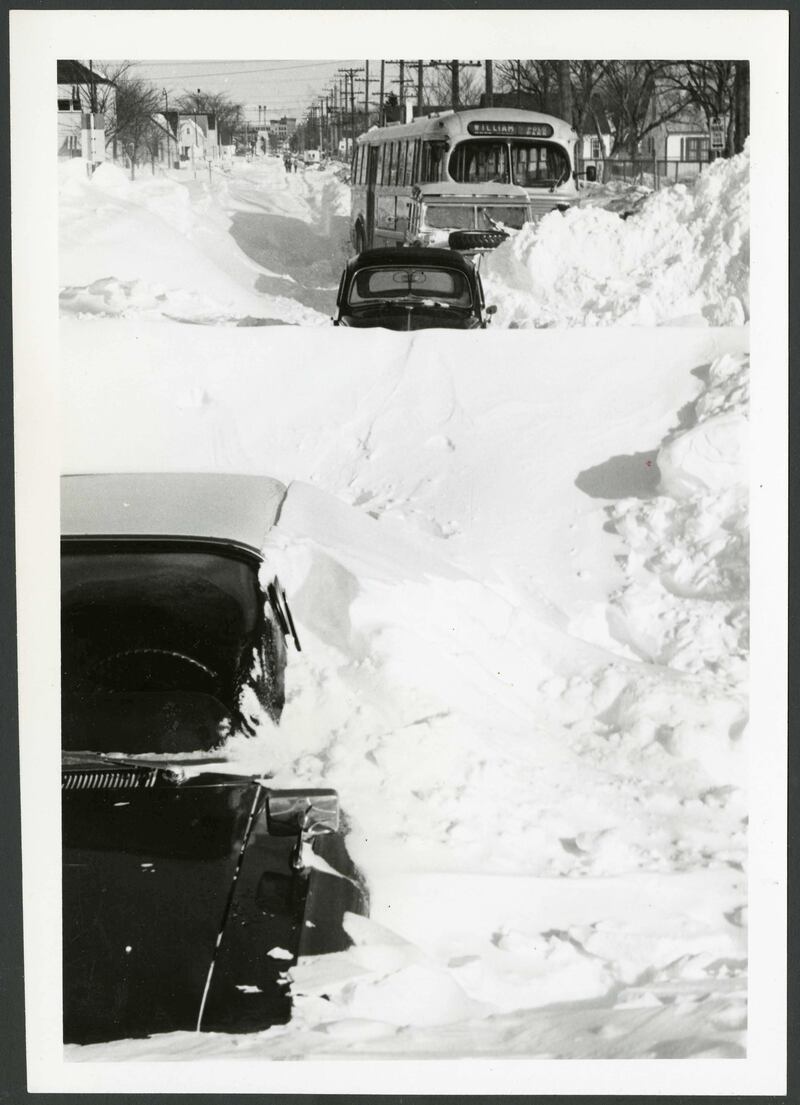
Then the infamous blizzard of ’66 closed the highways and foiled his plan.
“Spur of the moment, he thought he would just dump it in the backyard and let the snow cover it,” Redekop recalled.
“It was a type of high windstorm, whipping up huge snowdrifts. At the end, it was buried under an eight-foot snowbank.”
Months later, Leishman decided to fly to Hong Kong to try to sell the gold on the black market.
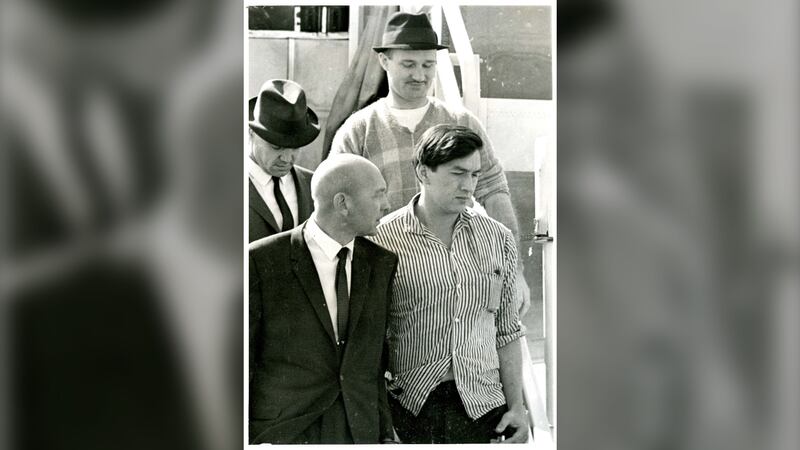
During a stop at the Vancouver airport, he was arrested. He and four accomplices were charged on March 20, 1966, with conspiracy and robbery and returned to Headingley Jail.
A prison break piloted by the Flying Bandit
Not one to let lock-up hold him back, Leishman busted out on Sept. 1, 1966, with nine other inmates.
“It was said to be the biggest manhunt in Manitoba history, and they drove through rural Manitoba until he found a plane,” Cassidy recalled.
The plane was stolen from rural Manitoba.
The Flying Bandit and his crew made it as far as Gary, Indiana, where they were eventually arrested.
Again, Leishman was brought back to jail, agreeing upon his return to show the officers how he managed to pick the locks and escape.
“He certainly was a smart guy,” Cassidy said.
“I guess without the formal education, you have to channel, whether it be his mechanical smarts or his smarts to pull something off, into a criminal side, rather than into a day job.”
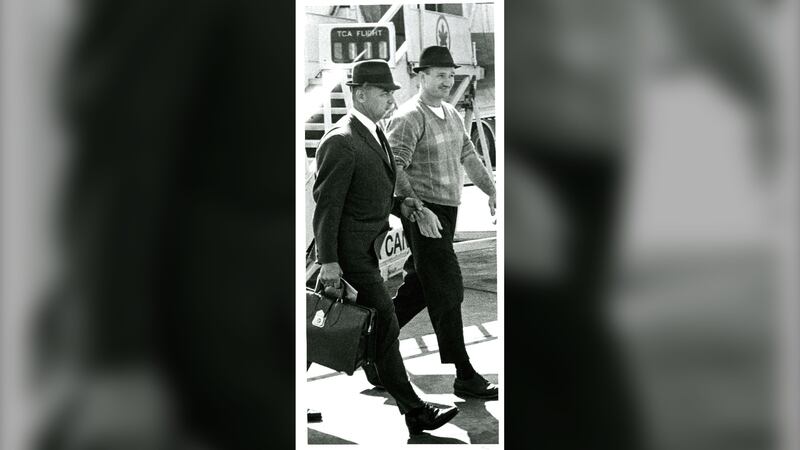
‘A folk hero’
Leishman was eventually handed a nearly 15-year sentence, but by 1974, he was out.
He soon moved to Red Lake, Ont., with his family, opening a store, running a nearly successful bid for mayor, and working as a medi-vac pilot.
He died tragically in a crash in December 1979.
At the 66th anniversary of the great gold heist, the Flying Bandit’s story is that of legend.
“Don’t forget, this was the late ‘60s, and people had a lot of distrust in banks and government and institutions,” Cassidy explained.
“He kind of tapped into that ‘sticking it to the man’ philosophy of the time, with his robberies and his had daring escape from prison where he fled down to the U.S. and was caught. He actually became a folk hero.”
In turn, Redekop heard mostly glowing accounts of Leishman while researching his book, be it from the neighbour who lent him a hacksaw that, unbeknownst to her, was used to whittle off one of the gold bars into a smaller portion, or the random person who met him at a bar.
“He is the most popular criminal Manitoba has ever produced. I don’t think, when researching his story, I barely heard one bad word said against him.”