


OTTAWA -- A Canadian woman caught in a war zone says she’s facing an “impossible” choice to flee with her children and leave behind her husband, who is the only one in the family without Canadian citizenship.
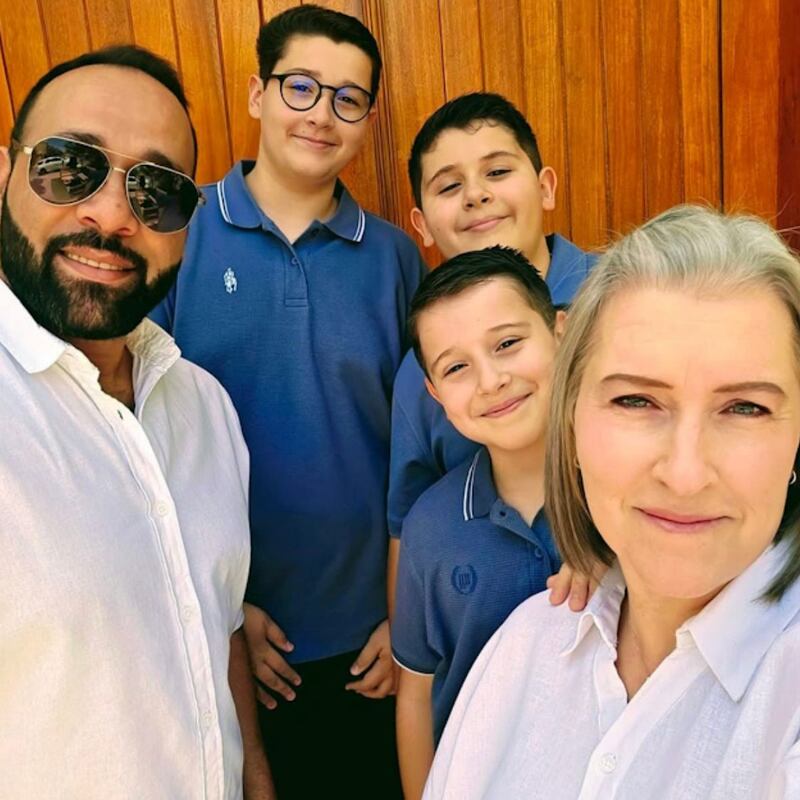
Amy Nikiel has lived and worked in Doha, Qatar, for two decades. She needs help from the federal government to obtain a visa for her Palestinian spouse, Iyad Massoud, so they can get out of the line of fire.
But despite multiple calls and emails with consular officials, Nikiel says Global Affairs Canada has not provided her with the help that she needs.
Among the dozens of email exchanges Nikiel received was an automated response from Global Affairs, which emphasized that consular assistance is for Canadians but noted that in emergency response situations “some assistance may extend to permanent residents of Canada and eligible family members of Canadians as defined in the Immigration and Refugee Protection Regulations.”
Nikiel’s husband Massoud is not a permanent resident of Canada. The couple met in Qatar and raised their children in the Gulf state but often return to Canada to visit.
In one email provided to CTV News, Nikiel was told that: “At this stage we take care of Canadian citizens only,” then was asked whether she “would be willing to leave without the husband.”
“This is stressful as a family. We obviously need to stay together, and the option of, you know, being told that we’re going to take you and your kids is unimaginable,” said Nikiel.
The couple has three sons under the age of 14 years old.
Nikiel is concerned other families like hers, with spouses or children who are not Canadian citizens, could be falling through the cracks.
Saudi Arabia puts strict limitations on issuing visas to Palestinians. Nikiel says she sent several documents to Global Affairs documenting her husband’s previous travels to Canada in hopes that someone would provide advice.
“I know it’s complicated, but I’ve been trying to get answers from the government on how we can have an assisted departure as a family, and I keep getting the runaround,” Nikiel said in a Zoom interview.
CTV News contacted Global Affairs to request clarification on how it deals with cases involving family members who are not Canadian citizens. CTV News did not receive a response by deadline.
Iran has launched missiles into Qatar, forcing the closure of its airspace. Over the weekend, Global Affairs organized several buses to transport approximately 270 Canadians from Doha to Riyadh, located in the neighbouring country of Saudi Arabia.
According to the latest figures from Global Affairs, 1,077 Canadians have requested assistance to depart from Qatar since the U.S. and Israel first launched strikes into Iran.
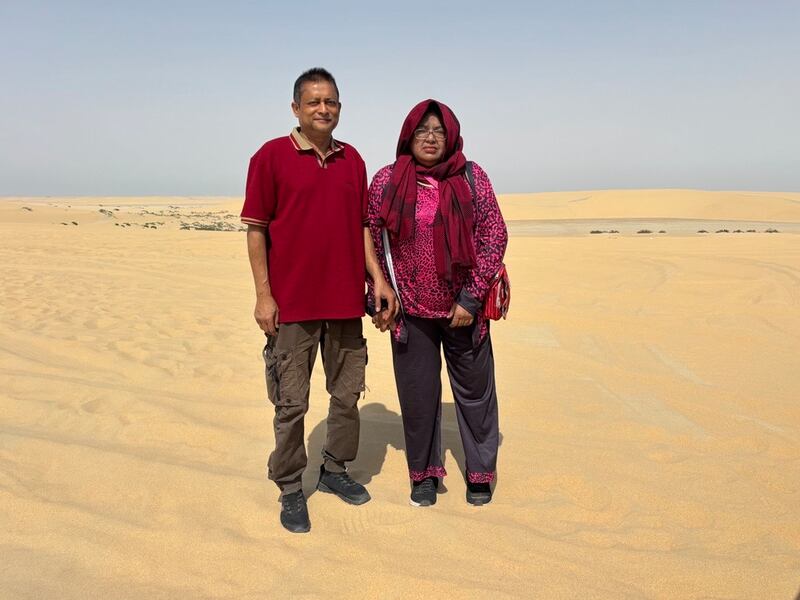
The frustration and fear for Montreal-based couple Mahmud Ahmed and Syeda Banu, who did a stopover in Doha as part of their vacation on Feb. 24, is also increasing. They were outside when Qatari defence forces shot down Iranian missiles overhead.
Ahmed said he is a heart patient and that his wife has limited mobility and can only walk for five minutes at a time.
He says he’s been trying to speak with Canadian Embassy officials for six days but has only received “automated emails.”
With Doha’s airport shut down, Ahmed is trying to find ground transportation on his own after the couple were unable to get a spot on the Canadian buses that left for Riyadh.
Instead of Saudi Arabia, Ahmed is hoping to find a driver to take them east to Muscat, the capital of Oman.
“It’s more than 1,000 kilometers away and about 12 hours journey by road. Still, I’m open to that, because Muscat is at least a little bit outside of the war zone right now,” Ahmed told CTV News.
In a social media post on Sunday, Foreign Minister Anita Anand said that the government is “exploring all efforts to ensure that Canadians who wish to leave are able to do so safely, and swiftly.”
Since March 4, Global Affairs has organized 504 seats on flights and 390 seats on buses for a total of 894 available spaces.
But only 357 Canadians have been on board, which accounts for less than 40 percent of the seat capacity, the government was able to secure with airlines and bus companies.
Anand has previously said that unused passenger seats will transfer to allied nations.
According to Global Affairs, about 110,000 Canadians are registered in the Middle East and 5,267 people have requested assistance departing from the danger zone.

