During a meeting with King Charles on Wednesday, First Nations Chiefs from Saskatchewan and Alberta brought gifts for the Royal Family, along with a formal invitation to attend a Treaty Six commemoration ceremony in August.
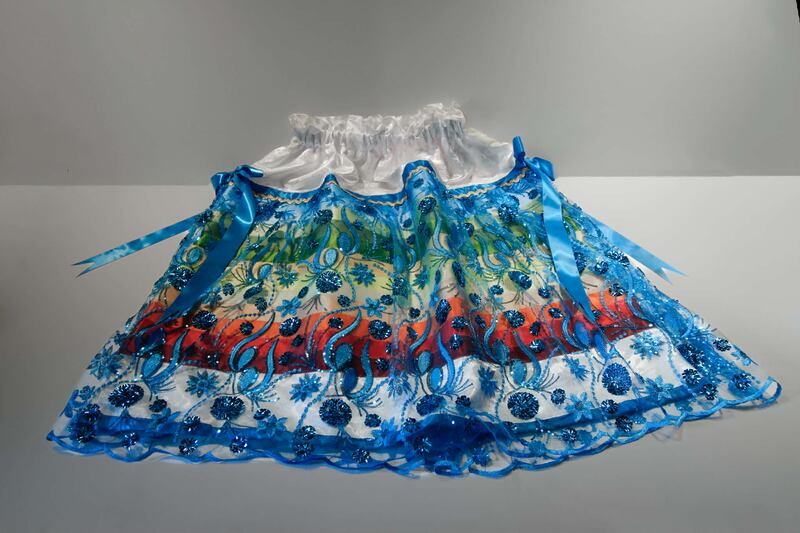
The gifts – a ribbon skirt, medallion and baby moccasins – were handmade by members of the Beardy’s and Okemasis’ Cree Nation (BOCN) and Sturgeon Lake First Nation.
Each item was guided by tradition and symbolic of the treaties signed between Indigenous peoples and the crown.
Anika Mitsuing, a seamstress from BOCN, gets emotional when she thinks of her work now in the hands of the Royals.
“When I got asked, I cried for two days,” she said. “It’s a privilege to be sewing a gift to give to the Royal family.”
Mitsuing learned to sew as a teenager, a skill that her mother and grandmother passed down to her. But it wasn’t until last fall, she made her very first ribbon skirt.
“It’s a representation of cultural identity. It’s resilience and representation of life givers, which are women,” said Mitsuing, who was taught that she must be in a good head space when making a gift for others.
“I want peace, and that’s usually what I put into my ribbon skirts. I pray when I make my ribbon skirts and sometimes I sing.”
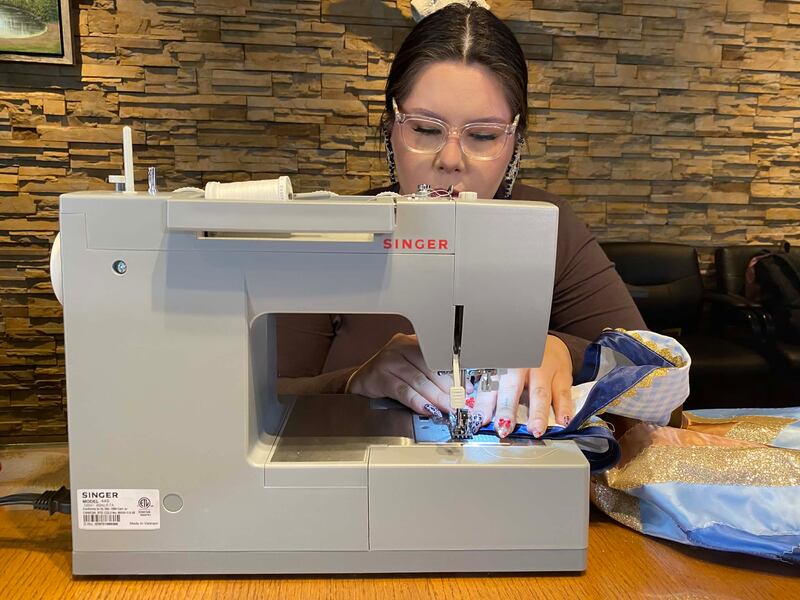
She designed the ribbon skirt, intended for Queen Camilla, based on the treaty commitments that are said to last “as long as the sun shines, the grass grows and the river flows.”
She used blues, greens and reds, along with satin and lace.
“I wanted (the Queen) to have everything that is the best. The best satin and the best lace,” Mitsuing said.
The seamstress hopes to see the Queen, or another member of the Royal family, wear her ribbon skirt during the 150th commemoration of the signing of Treaty Six in August.
‘The highest honour’
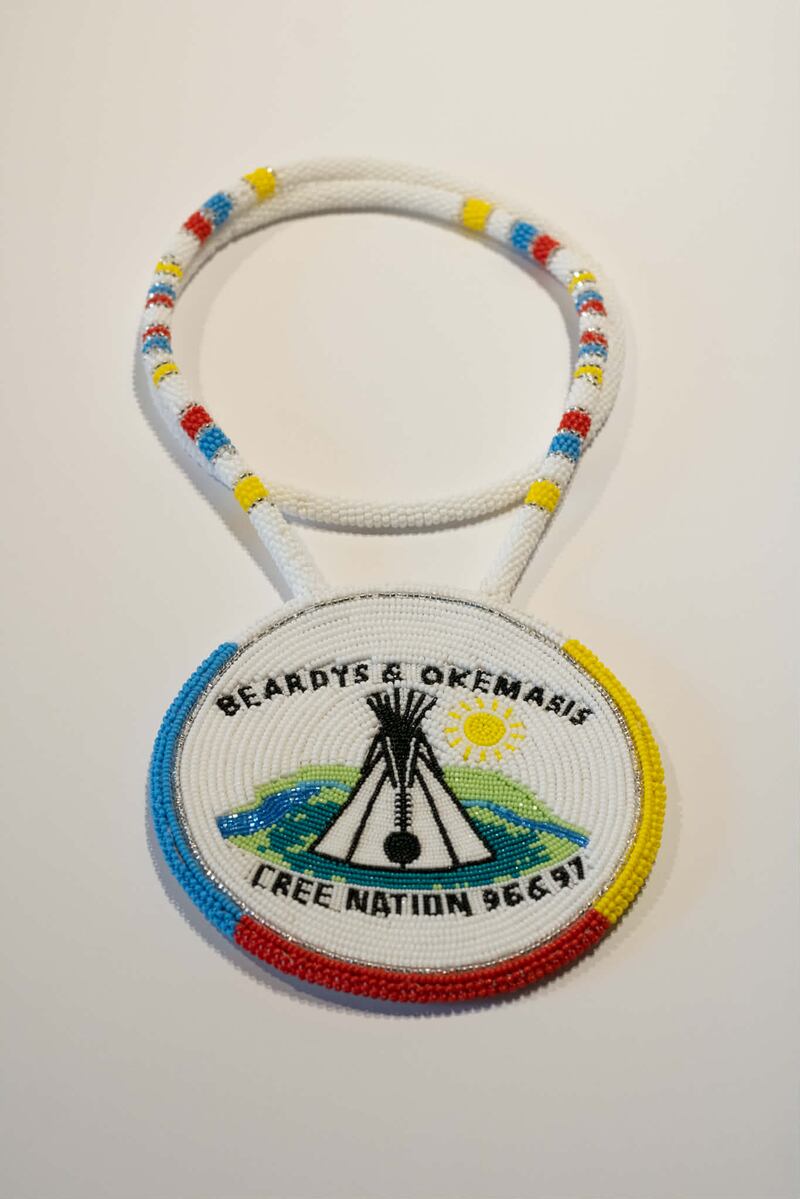
The King was presented with a beaded medallion made by BOCN member Margaret Larocque.
Medallions carry significant importance in Indigenous culture, similar to star blankets, according to Larocque.
“It’s the highest honour (and) honourable gift that you can give,” she said. “That medallion connects who we are.”
Larocque, 67, has been beading since she was 10 years old. Her late auntie taught her the cultural practice.
She started beading jewelry, which later turned into bigger pieces and large work orders. Beading a medallion meant for a monarch was a first for her.
“I was very, very honoured,” she said.
The entire piece, which depicts a teepee on BOCN land, took her more than two weeks to complete.
Every detail has a very specific meaning. That’s how Larocque crafts all her work.
She used countless beads of different sizes in BOCN’s band colours. The white represents purity and the connection to the Creator, Larocque said.
“I hope that (King Charles) understands the importance that we are the people here. We were the people here and we are still going to be the people here on Turtle Island,” she said.
A royal invitation
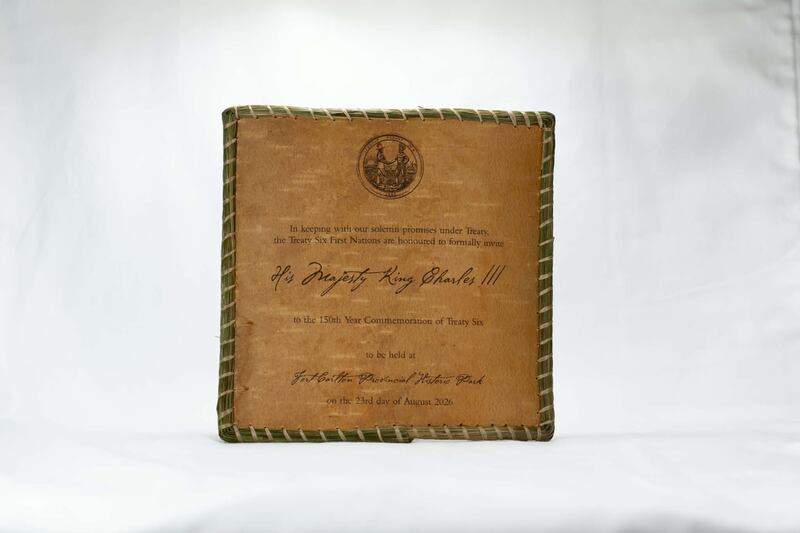
Just as much thought went into the formal invitation presented to the King.
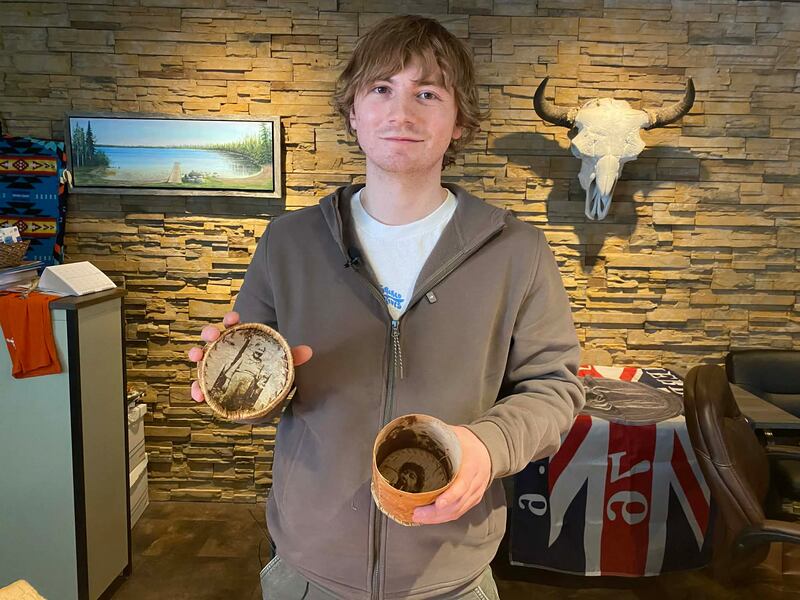
Collin Alexander made the official invite from birch bark that he’d gathered himself, laser-etched with text.
“We all decided that due to birch bark’s role throughout the years in transmitting stories and people and ideas that it would be the perfect medium for an invitation,” he said.
He’s worked with birch for years, laser-etching different images and making baskets. He figured an invitation would only take him a couple of hours.
But he says the pressure set in after soaking the bark in water and steaming it to get it flat.
“I was thinking a lot about the ways in which this piece will have its own history,” he said. “I’m representing a whole territory and then also myself in that work.”
In the end, the piece of history took him two full days to make.
He’s hopeful Charles will accept the invitation to commemorate the Treaty signing anniversary in Saskatchewan.

