This is the second installment of a two-part W5 series on insurance fraud in Canada. Part one is available here.
Strife in Ontario’s tow truck industry often makes headlines for drive-by shootings, arson, extortion, murder and allegations of police corruption.
But one case east of Toronto is offering a window into a different side of what could be a major profit centre for those accused of violence: insurance fraud.
Documents obtained by W5 in the case of Peel Regional Police’s Project Outsource show more than fifty charges in one of the investigation’s sprawling court documents, including for firearms offences and extortion.
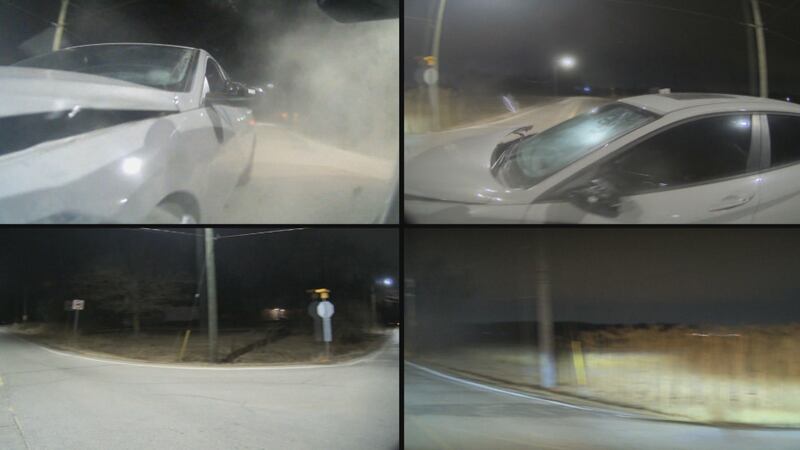
But among the allegations, which also include participating in a criminal organization, are 15 charges of defrauding insurance companies.
“Organized crime tends to find their way into moneymaking schemes. And this could be another one of those,” says Bryan Gast, a vice president of investigative services for Équité, a national not-for-profit that fights fraud on behalf of its members, insurance companies.
Staged collisions are when a criminal group makes a claim on a crash that isn’t what it appears to be.

A crash may be intentional, to get a large payout from low-value vehicles, or it may be done by a professional driver who quickly swaps out of the driver’s seat with a person who will claim medical expenses.
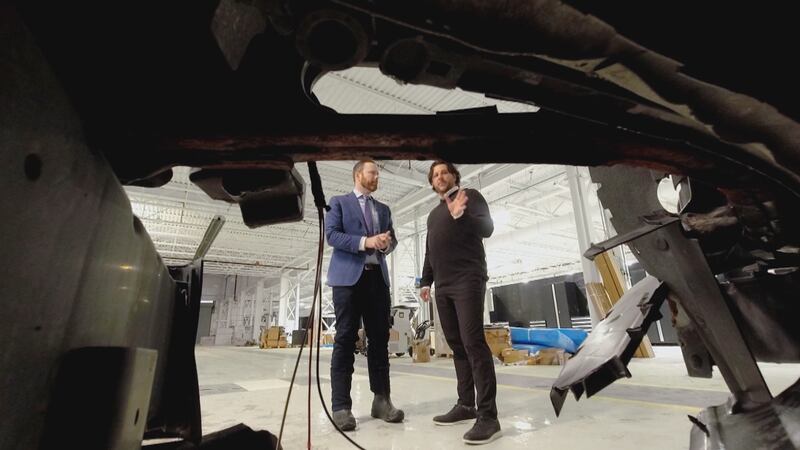
“It can involve the tow companies, the medical facilities, the paralegals, the body shops, the car rental companies, all working together. And it all starts with a tow,” Gast said, adding an individual claim can net as much as hundreds of thousands of dollars.
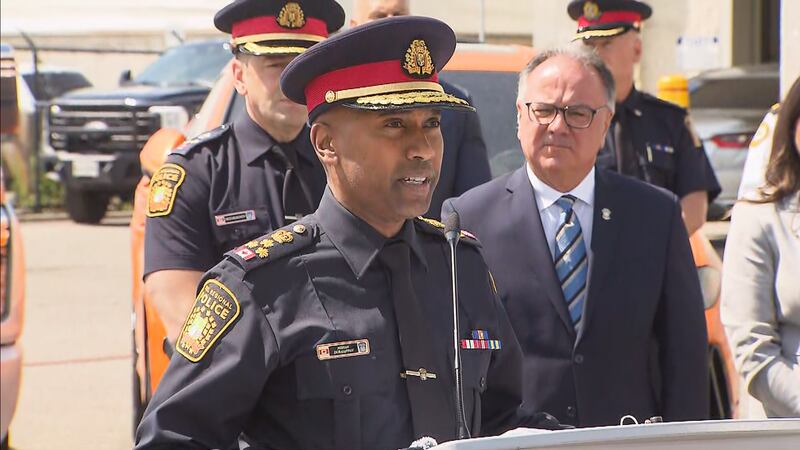
In an announcement in June of 2025, Peel Police Chief Nishan Duraiappah showed off vehicles, guns and bulletproof vests seized as part of Project Outsource, which they said reclaimed $4.2 million from a criminal network tied to the towing industry.
Among the list of alleged victims of what authorities called the “Dhami Criminal Organization” are 10 separate insurance companies, including Aviva, Saskatchewan Government Insurance, Bel-Air Direct, Wawanesa, Security National, Pembridge Insurance, Intact, Economical and Definity Financial Corporation.
“What our investigators have demonstrated is organized crime is no longer specialized in one particular area,” Chief Duraiappah said at the time.
“Today is another example of what diversification of criminal groups looks like, because they find different ways to seek vulnerabilities, exploit them, and turn them into profit,” he said.
None of the charges in that operation have been proven in court, and a lawyer representing some of the accused declined to comment on the record.
Gast said staged collisions have often been a route to make money, but the surge indicates that it may be more systematic now.
Équité’s most recent report shows that auto theft dropped some 18 per cent between 2024 and 2025. But Gast confirmed that a lucrative side of insurance fraud, staged collisions, are on the rise.
The number of staged collisions is up nearly 400 per cent in 2025 compared to the previous year, according to Aviva, an insurance company.
“I think it just tells you that the money is there to be made,” said Aviva’s senior fraud leader Mike Cardillo. “One of the challenges that we’re facing is that they’re getting very sophisticated.”
Aviva has pushed to remove restrictions on who it can blacklist, arguing that government regulations that require insurers to cover potential fraudsters are likely to increase revenue to organized criminals.
Ontario’s regulator, FSRA, has said that its “take all comers” rule requires insurance companies to only refuse to insure customers via approved rules, and punishing them without a conviction would violate a presumption of innocence enjoyed by all Canadians.
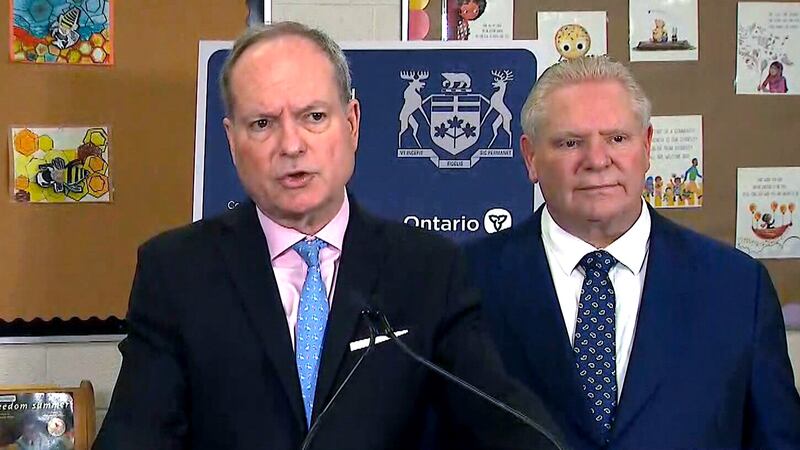
Reached at a news conference on Wednesday, Ontario Finance Minister Peter Bethlenfalvy, whose portfolio includes insurance rules, indicated he was open to measures that could change this.
“There’s no room for bad actions. We’ll always go after the bad actors,” Bethlenfalvy said, pointing to investments that contributed to falling auto theft rates such as an auto theft task force and funding certain police anti-theft projects.
“There’s always more to do. We want to make sure people feel safe in this province,” he said. “We took action. If there’s a bad actor we’re going after them in consultation with insurance companies, with our great police officers. The premier is a huge champion and we’re not going to relent in that regard.”
Gast says his organization can follow certain customers through their attempts to make insurance claims at a variety of companies.
“We’re able to see if that individual has left one insurer to the other insurer, and used the same bad actors in one collision, and another collision,” he said.

