


With the latest floor crossing, Mark Carney has established himself as the prime minister who’s convinced the most opposition MPs to join the governing party since Jean Chretien nearly three decades ago.
First it was Conservative MP Chris d’Entremont in November. Then, Conservative MP Michael Ma in December, both citing the need for unity and a desire to work with Carney. A third Tory, Matt Jeneroux defected last month after initially announcing he was going to leave Parliament.
And now, New Democrat Lori Idlout has left the shrunken NDP caucus to join the Liberal ranks.
So, what’s behind his ability to court across party lines more successfully than many of his predecessors? Experts and political insiders say there’s three main driving factors at play.

The moment Canada, the world is in
To see this many parliamentary party-switchers between elections is rare.
Looking back at the last three decades, the only other prime minister to court as many opposition MPs to cross the floor, was former Liberal prime minister Jean Chretien, who managed to secure five new Liberal MPs through floor-crossings during the 36th Parliament.
Between 1997 and 2000 Chretien pulled in three Progressive Conservatives, one Progressive Conservative-turned Independent, and one NDP MP.
Now, nearly a year into the 45th Parliament, with four floor crossers in just over four months, the prime minister and his inner circle have attributed the governing party’s gains to the “important moment in our history,” as Carney put it in his statement welcoming Idlout “as part of Canada’s new government.”
From the Canada-U.S. trade war and U.S. President Donald Trump’s sovereignty threats to myriad global conflicts and economic challenges, Carney has spoke at length about this country being at an inflection point, amid a “rupture in the world order.”
“I’m not surprised to see colleagues which are doing soul-searching, say: ‘I want to be at the decision table. I want to be there.’ Because, you know, just look at the polls, Canadians are behind the agenda we have put forward,” said Finance Minister Francois-Philippe Champagne.
“The world wants to be more engaged with Canadians… I think that’s what you’re seeing, a number of people saying: ‘I want to be part of that journey.’”

The Liberals’ rising support in the polls
Since Carney became leader, the Liberals have been gaining support across the country, recently opening a 13-point polling advantage over the federal Conservatives.
“It shows right now the trajectory is favouring Mark Carney and the Liberals, and they’re opening up a significant lead,” said Nanos Research chief data scientist Nik Nanos.
Nanos also noted that his preferred prime minister data tracking has shown Carney far ahead of Poilievre for some time, and the polling indicates the prime minister personally is “much more popular than his party.”
“He’s drawing support or drawing attraction or focus from people across the political spectrum,” Nanos said.
As the Liberal party’s fortunes improve, critics have been quick to accuse Carney of achieving through “backroom deals” – as Conservative MP Dan Albas put it Wednesday – what he could not accomplish during the last campaign.
Though, the data indicates past Conservative prime ministers have also courted floor crossers. And, despite the accusations of this maneuver undermining the democratic process, it has always been fair game in the current federal political system.
“These are folks that are democratically elected. We send them to Ottawa to make decisions, and sometimes they make decisions to cross the floor,” said political science professor at the University of Alberta Jared Wesley, who is also a co-author of the book “No ‘I’ in Team: Party Loyalty in Canadian Politics.”
Wesley said that by their nature many of these deals are done behind closed doors. And, while there may be discontent from members of the parties these MPs are leaving, that should be taken with a grain of salt.
“Because some of them – although the NDP is standing out in principle against floor crossing and wouldn’t accept floor crossers, they say – when the shoe is on the other foot, many of them are more than happy to welcome folks into their own caucus,” he said.
“Floor crossings are fairly rare. There have only been several hundred in federal and provincial politics dating back to the 1980s,” Wesley said.
“When they happen though, they seldom happen in isolation. So, it’s not unusual to see one floor crossing begetting another one, which leads to another series as folks start to reconsider their electoral prospects.”
The leadership struggles in other parties
While New Democrats, including interim leader Don Davies, are now expressing concern with “the way that Mr. Carney is trying to stitch together a majority government,” there’s no indication Carney shares those concerns.
As political observers have noted, while the prime minister has downplayed suggestions that he is actively pursuing new parliamentarians, he’s certainly appearing to leverage what he can – whether international travel, or new titles– to attract opposition MPs.
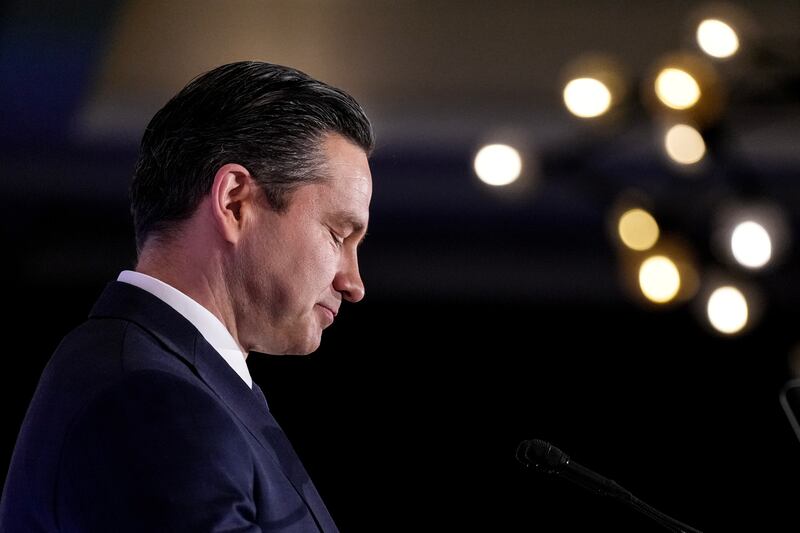
There’s also the factor of the leadership struggles both the Conservatives and NDP have been facing as Carney has convinced MPs to switch teams.
“It’s not just that they’re attracted to the leader that they’re joining, but they’re also, in some cases, being repelled by a form of or style of leadership that they’re leaving,” Wesley said.
While Conservative Leader Pierre Poilievre pulled through his leadership review, the strength of his caucus’ support as the first few floor crossings happened was questioned. And, New Democrats are in the midst of voting for who their next leader will be.
“I think there’s a very good chance that once that leadership race is finalized, there’s a chance that some of the folks that are currently in the in the NDP caucus, may choose either to sit as Independents or to cross the floor to the Liberals still,” said political analyst Lori Williams.
“There are rumors of other Conservatives that might be in play, and I would assume that the government is lavishing those people with attention, trying to make that decision a little bit easier for them,” said CTV News political analyst Scott Reid.
To beat Chretien’s record, the prime minister would need to convince two more MPs to cross the floor during this Parliament.
And with the session now looking more stable – thanks in part to the floor crossers, but also the party’s electoral prospects in next month’s trio of byelections – time may be on the Liberals’ side.
With files from CTV News’ Brennan MacDonald

