Defence Minister David McGuinty says Canada is “leaving the door open” to providing assistance in the Middle East — as the conflict in Iran exceeds two weeks and spreads further throughout the region — but he also insists Canada “will not be engaging offensively.”
“We’re leaving the door open to be, I think, of assistance to any neighbouring states that might require such assistance, but we will not be engaging offensively in this war,” McGuinty said Monday, speaking to reporters following his announcement that the federal government is spending $200 million to lease a Canadian-owned space-launch pad in Nova Scotia.
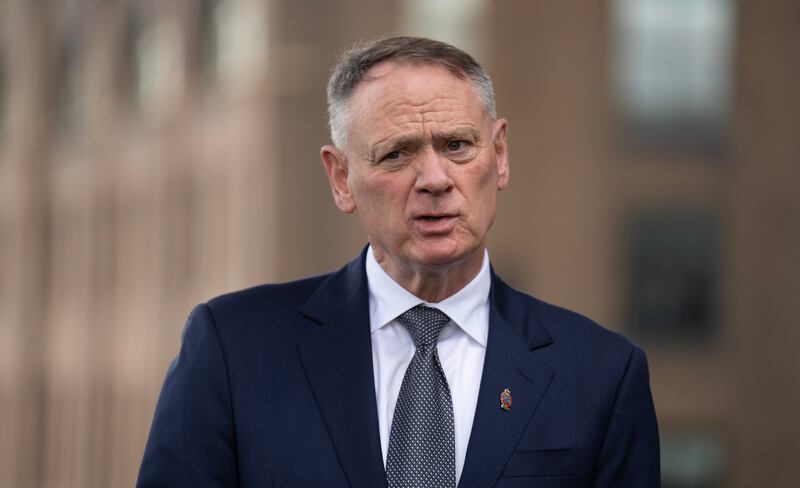
“I want to be very clear: we’re not going to be engaging offensively in this war,” he repeated, when asked whether Canada could help secure the Strait of Hormuz.
Late last month, the United States and Israel launched strikes on Iran, targeting the country’s leadership, with retaliatory strikes on U.S. bases and embassies, as well as other Gulf states, since widening the conflict in the region. Iran has since blocked the Strait of Hormuz, a global oil trade chokepoint.
About one quarter of the world’s seaborne oil transits through the narrow sea channel, according to the International Energy Agency. Iran closing off access has caused oil prices to spike globally.
Brent crude, which is the global benchmark for oil prices, remains at $100USD per barrel, the highest level since 2022.
Question of the strait is ‘evolving’: McGuinty
On Sunday, U.S. President Donald Trump told reporters aboard Air Force One that he’s demanded several countries send warships to the region to keep the vital strait open.
McGuinty said the question of the strait is “evolving,” and that “it’s hard to get hard information.”
“We’re not quite sure what the overture was or is not,” he added, seemingly referencing Trump’s comments. “So, we’re going to talk amongst our NATO allies, and we will govern ourselves accordingly.”
When asked whether Canada has the capacity or desire to send naval ships to the region to help protect traffic, McGuinty said Canada was not consulted before the start of the war, and it is not involved.
“There has been no formal ask with Canada with respect to playing a deliberate offensive role in the prosecution of this war,” he said. “That’s where we stand today, and Canada is monitoring the situation.”
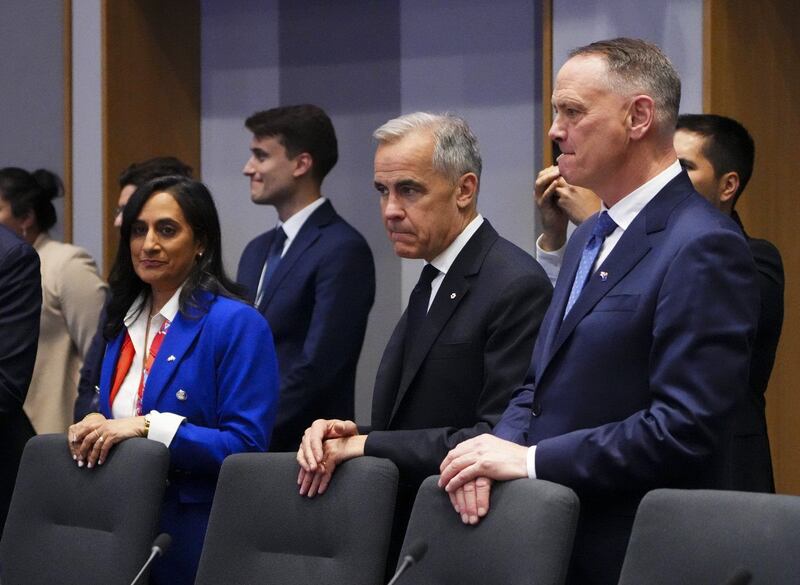
And, when asked about Trump’s comments that NATO should help secure the strait or face a “very bad future,” McGuinty said the president’s overture is “something that all NATO members are examining.”
But, he added, Canada has “no intention of getting involved offensively in prosecution of the war in the region.”
“That’s the choice made by the Israeli and American governments,” he said. “Obviously, we’re talking amongst NATO members. We will continue to consult, but we’ve always managed to find a way to manage our relationship with the United States, and we will manage our way through this as well.”
Prime Minister Mark Carney, meanwhile, is in the U.K. and met with U.K. Prime Minister Keir Starmer on Monday.
According to a readout from the U.K. government, the two leaders discussed the conflict in the Middle East, “and agreed on the importance of restoring freedom of navigation in the Strait of Hormuz, underlining the need for stability and the protection of international shipping routes.”

