From doctors to nurse practitioners, health-care professionals are flocking to British Columbia by the hundreds in response to a campaign aiming to recruit Americans, according to Premier David Eby.
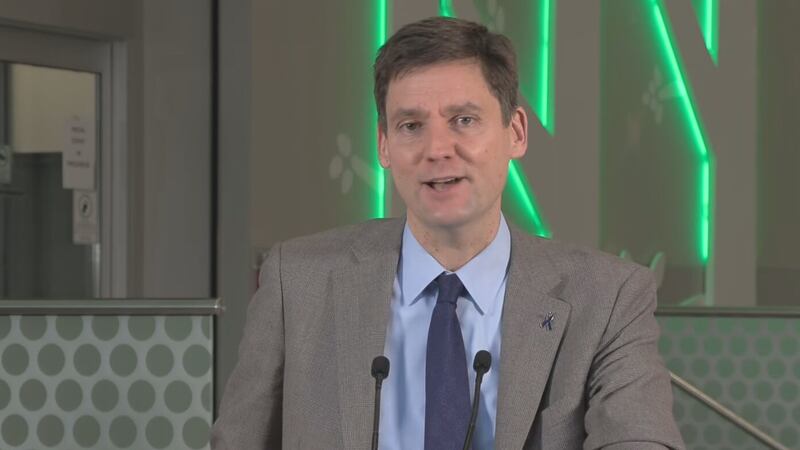
At a Tuesday announcement at BC Children’s Hospital, Eby highlighted the public health-care system, lifestyle and socially progressive values as reasons highly trained professionals are choosing to immigrate to the province.
“A very high standard of living. A great place to grow your career as a medical professional. A place where we respect reproductive rights, where we respect science that informs our policy,” Eby said.
“And we have a universal health-care system where you don’t have to pull out your credit card to access care or put your family into debt for the rest of their lives.”
According to the province, 414 American health-care professionals have begun working in the province in the approximately one year since the campaign began.
That number includes 89 doctors, 260 nurses, and 42 nurse practitioners.
An additional 23 allied health professionals have also made the move.
The province defines that category as including occupational therapists, psychologists and speech-language pathologists, among other professions.
Eby said that between March 2025 and January 2026, more than 2,750 U.S.-based health-care workers applied to work in the province.
Credential streamlining
According to Health Minister Josie Osborne, the province has changed the administrative process for U.S.-trained doctors and nurses who wish to work in B.C.
“They’re building new lives and we knew that we had to make that as smooth as possible. So, we brought together what we’re calling a ‘Team B.C.’ approach, working closely with regulatory colleges, with Health Match B.C., and health authorities to streamline credential recognition,” Osborne said.
Seattle psychologist made the decision after 2024 U.S. election
Eby and Osborne were joined at the news conference by Dr. Ianto West, a psychologist from Seattle who moved to Vancouver to take a job at BC Children’s last July.
He said he had been considering a move to Canada since 2014, and in preparation had booked his credentials with the National Registry of Physicians.
“That meant when November 2024 came around, and our family made the decision to move to Canada, the process went a little smoother,” West said.
He said it took about six months to become registered as a psychologist in B.C., a job offer was on the table about a month after that, and then the family moved to Vancouver within weeks.
“The neighborhood has been so welcoming. I’ve never had such a neighborly daily life before. We were just talking about it. I have ‘cup of sugar’ friends,” West said.
“I can walk down the street, borrow a cup of sugar, pick each other’s kids up from the pool. Like, I’ve never had that kind of a neighborhood before.”
BCNU: ‘A drop in the bucket’
The president of the B.C. Nurses’ Union welcomes the 260 American nurses who have made the move in the last year, but said there are still about 4,500 nursing vacancies across the province.
“It really is a drop in the bucket. Especially if we are going to be successful at implementing nurse-to-patient ratios in this province,” Adriane Gear said in an interview with CTV News.
That’s a commitment the B.C. government made to nurses in the last round of collective bargaining agreement negotiations.
Gear would also like to see the province focusing on recruiting locally by opening more post-secondary seats for nursing programs.
“Government’s own data indicates that they’re predicting, and I think this is before ratios, that they’re going to need to hire many, many more nurses by 2035. I believe over 30,000,” Gear said.

