
FREDERICTON — The New Brunswick government is projecting a nearly $1.4-billion deficit in its 2026-27 budget, tabled Tuesday in the province’s legislature.
The $15.6-billion budget adds almost $2 billion to the province’s net debt, increasing its debt-to-GDP ratio to 30.8 per cent, and predicting future budgets will further increase that to 36 per cent in 2028-29.
The projected net debt for 2027 is now $15.9 billion — more than ever before.
The year’s real GDP growth is estimated to be one per cent, a projection shaped by slowing population growth due in part to Ottawa’s immigration policy, trade and tariff uncertainty and a slowdown in residential construction.
For months, Premier Susan Holt has been warning New Brunswickers about this budget, saying the unpredictability of the current economy and slowing population growth could mean a number of cuts along with increasing fees and permits.
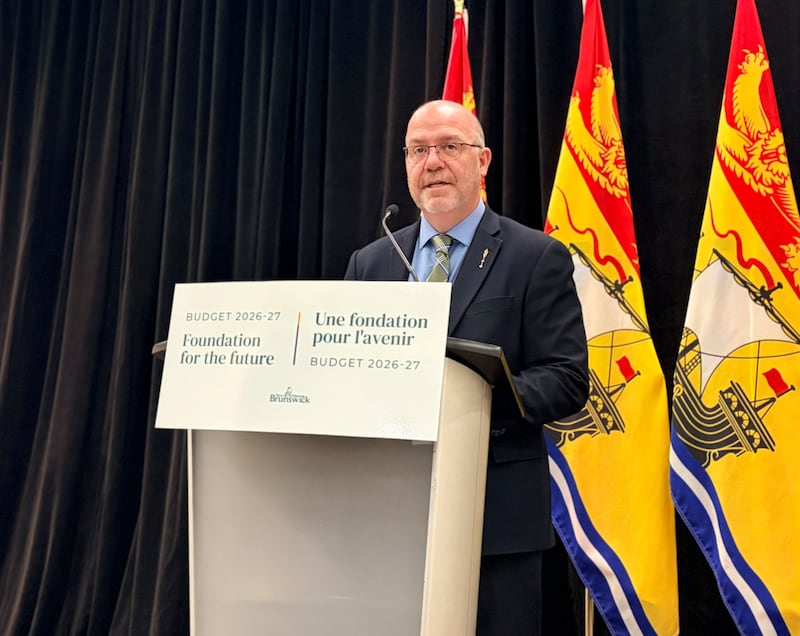
On Tuesday, Finance Minister René Legacy warned that this budget is only the beginning of changes that need to happen within the province to combat rising debt.
“There are more decisions happening, we’re just in a position right now strategically that we don’t have to be rash. We can take our time,” he said.
There are a number of reductions: a promise to cut a portion of the civil service by about 1,400 positions saving up to $100 million over three years, moving away from offering provincial veterinary services and either closing six parks and museums or transitioning them to a community partner.
Those museums include the Sheriff Andrews House in Saint Andrews, Bonar Law Common in Rexton, Doak House in Doaktown, MacDonald Farm in Lower Newcastle, Antique Automobile Museum in Edmundston and North Lake Provincial Park near the Canada-United States border.
That park only opened in 2022.
Other parks “will remain open while transition discussions take place,” including Val-Comeau, Anchorage, Oak Bay and Cape Enrage.
Tolls near Nova Scotia-New Brunswick border
The province will place a toll booth near the Nova Scotia-New Brunswick border in Aulac — but not until 2028. Government officials say the move needs legislation, and the process could take 18 to 24 months to achieve. Once installed, they estimate the tolls will bring in $10.4 million, which will go toward bridge and road repairs.
“It was picked based on volume,” said Legacy. “We have to make some capital investments, so we need a return.”
He said the province has an agreement with the federal government not to place tolls near the Quebec border and that the province hasn’t consulted with neighbouring Nova Scotia on those tolls.
University grants frozen
Despite warnings of cuts coming, only four departments are seeing reductions in their annual budgets. The rest are seeing increases, including the Department of Health — which will see $710 million more, a 17.4 per cent increase. The province says it’s the largest year-over-year increase ever.
Despite a lot of concern about budget cuts to N.B.’s four publicly funded universities, the province is choosing instead to freeze their operating grants this year.
Enrolment at those institutions has dropped from a high of 25,000 students in 2004 to about 20,000 today. That is expected to further decrease with the decline of international students expected in the coming years because of Ottawa’s immigration policy.
Provincial funding per post-secondary student amounts to $12,000 a year — the second highest in the country.
Legacy said he wants to give universities a chance to have a more “fulsome discussion” on what changes can be made to cut back on costs in the future.
To questions on whether the budget delivers enough reductions or is as painful as the Holt government was preparing New Brunswickers for, Legacy said he feels this budget is very difficult.
“I wouldn’t say that any of these are going to be easy,” he said.

